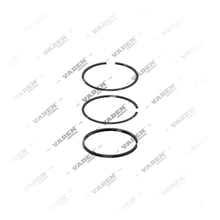
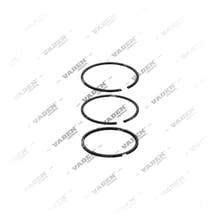
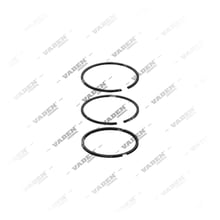
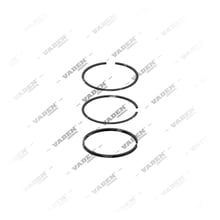
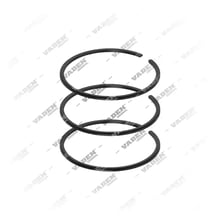
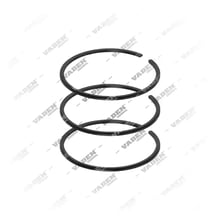
What Is a Compressor Parts Piston Ring?
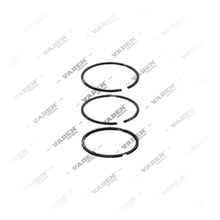
A Compressor Parts Piston Ring is the spring-loaded metal band fitted into the grooves machined into an air brake compressor's piston, closing the gap between piston and cylinder liner. It sits in the Compressor Parts sub-branch of the Air Brake Compressors category and directly decides how much air the compressor can actually deliver. In the field it goes by several names - piston ring, compressor ring, ring set - and is found in single- and twin-cylinder compressors on trucks, tractor units, buses, trailers and heavy off-road equipment, usually handled together with the piston, liner and gasket set during an overhaul. Once it wears out, the compressor keeps turning but stops building adequate pressure.
How Does a Compressor Parts Piston Ring Work?
The ring presses against the liner wall under its own spring tension and blocks air from blowing past into the crankcase during the compression stroke. Pressure above the piston also pushes on the ring's back, forcing it harder against the liner, so the seal only gets tighter as pressure rises. The oil control ring in the lower groove works the opposite way, scraping excess oil off the liner and returning it to the crankcase. Together, these two jobs let the compressor build pressure fast without carrying oil into the air line.
- Sealing: Stops compressed air escaping between the piston and liner, so the air tank reaches its target pressure quickly.
- Oil control: Leaves a thin oil film on the liner while returning the excess to the crankcase, keeping oil away from the dryer and valves.
- Wear balance: Deliberately softer than the liner, so it takes the wear itself and protects the piston assembly.
Compressor Parts Piston Ring Technical Specifications
Compressor piston rings are made from grey cast iron, nodular cast iron or spring steel; on heavy-duty applications the working face is hardened with a chrome- or molybdenum-based coating. Sizing comes down to three figures: nominal piston diameter (O), ring thickness and ring height. Piston diameters on heavy commercial vehicles typically run 60 to 100 mm, and a single piston usually carries two compression rings and one oil control ring. End-gap clearance varies with material and temperature, so the current service manual governs installation.
- Oversize class: A compressor with a honed (rebored) liner needs an oversize ring set, not the standard one; the two look alike but are not interchangeable.
- Groove fit: Ring thickness must match the groove height - too thin and it rattles, too thick and it binds.
- Set integrity: During an overhaul, fit a complete set sized for every groove on the piston rather than swapping in a single ring.
Compressor Parts Piston Ring Types and Subgroups
- Plain-face compression ring: The classic top-groove type; takes the highest temperature and pressure and carries most of the sealing load.
- Taper-face compression ring: A slightly conical face that beds into the liner quickly and, in the second groove, also helps scrape oil.
- L-shaped and stepped rings: Special profiles where pressure pushes the ring against the liner; found on higher-pressure designs.
- Oil scraper ring: A slotted, oil-drain body that gathers oil off the liner wall - the main part keeping oil out of the air line.
- Spring-loaded oil ring assembly: A segmented design with an expander spring that keeps contact pressure even on a worn liner.
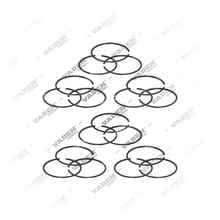
- Complete ring set: A kit covering every groove on one piston; fitting it restores the compressor to full output.
How to Choose the Right Compressor Parts Piston Ring
The most reliable approach is to work from the OE reference number stamped on the compressor body or its tag. If the number cannot be read, match by measuring piston diameter, groove count and ring thickness instead. Since the same model can carry different compressors depending on engine option, make and model alone are not enough to decide.
Compressor Parts Piston Ring selection and compatibility criteria| Criterion | How to determine it | What to watch for |
|---|
| OE reference number | From the compressor body or tag | The most reliable match |
| Piston diameter | Measure the removed piston with calipers | Roughly 60-100 mm on heavy vehicles |
| Groove count | Count the grooves on the piston | Compression/oil ring order must match the original |
| Ring thickness | Measure the groove height | If clearance is out of spec, the piston needs replacing too |
| Oversize class | Check whether the liner has been honed | A machined liner needs an oversize ring set |
| Compressor architecture | Single/twin cylinder, air- or water-cooled | Wabco and Knorr-Bremse types differ in cross-section |
Compressor Parts Piston Ring Maintenance and What to Watch For
- Measure the liner first: Fitting new rings without checking for ovality and taper just brings the same fault back.
- Use a ring expander tool: Forcing rings on by hand creates hairline cracks you cannot see; use ring pliers and a compression band.
- Stagger the end gaps: Ring gaps should never line up - space them evenly.
- Respect the orientation mark: A top-marked ring fitted upside down reverses the oil-scraping direction and sends oil into the air line.
- Renew the intake filter: Dirty intake air is the most common cause of premature wear; follow the service manual for torque and clearance values.
Common Faults and How to Fix Them
- Air pressure builds slowly: Compression rings are worn or stuck in their grooves; measure output flow and renew the ring set and liner together.
- Oil from the dryer or air tanks: The oil scraper ring has worn or was fitted backwards; renew the ring set and dryer cartridge.
- Blow-by from the crankcase breather: Air is passing the rings into the crankcase; check end-gap and groove clearances.
- Overheating and a burnt-oil smell: A leaking ring drags efficiency down; renew the set and clean the cooling and lubrication lines.
- Fault returns soon after an overhaul: Usually the wrong oversize class or a reversed ring; confirm against the OE reference.
Why VADEN ORIGINAL?
- Built to OE dimensions: Ring diameter, thickness, end gap and surface hardness are machined to the original part's technical values.
- Broad OEM coverage: Cross-referenced options for Wabco- and Knorr-Bremse-type compressors on Mercedes-Benz, MAN, Scania, Volvo, DAF, Iveco, Renault Trucks, BMC and Ford vehicles.
- Set-level thinking: Rings are engineered alongside the piston, liner, gasket and valve plate groups, so an overhaul finishes in one pass.
- Exported to more than 100 countries: The range is refined using field feedback from fleets running across many climates and roads.
Conclusion
The Compressor Parts Piston Ring is a small but critical sealing component that decides how much pressure an air brake compressor can produce. Match the correct oversize class and follow the installation rules, and the compressor returns to its original output - the air tank fills quickly and oil stops reaching the air line. Planning a ring change alongside a liner inspection is what keeps the fault from coming back.
Frequently Asked Questions (FAQ)
What does a compressor piston ring do?
It closes the gap between the piston and the cylinder liner, stopping compressed air from blowing past into the crankcase. The oil scraper ring, in turn, sends excess oil on the liner wall back to the crankcase. Together these two jobs let the compressor build pressure quickly without carrying oil into the air line.
How can you tell a compressor piston ring has worn out?
The most typical sign is that air pressure builds slowly and the compressor runs under load almost constantly. Blow-by from the crankcase breather and oil showing up from the air dryer or tanks also point to worn rings. In that case the compressor's output flow should be measured and the piston assembly inspected.
Does the cylinder liner need replacing along with the rings?
If the liner shows ovality, taper or visible scoring, fitting new rings alone will not be a lasting fix. Once measurements fall outside the allowed limits, the liner should be renewed, or machined and paired with an oversize ring set. Refer to the vehicle and compressor manufacturer's current service manual for the acceptable limits.
How do I choose the correct ring set?
The most reliable method is matching against the OE reference number on the compressor body. If the number cannot be read, measure the piston diameter, groove count and ring thickness instead. Because the same vehicle model can carry different compressors depending on engine option, make and model alone are not enough to go on.
Which compressors do VADEN ORIGINAL rings fit?
Cross-referenced options are available for Wabco- and Knorr-Bremse-type air brake compressors used on Mercedes-Benz, MAN, Scania, Volvo, DAF, Iveco, Renault Trucks, BMC and Ford heavy vehicles. It is recommended to confirm the compressor type and oversize class before ordering.
Related technical guide: Compressor Piston-Ring & Connecting Rod: Repair Guide