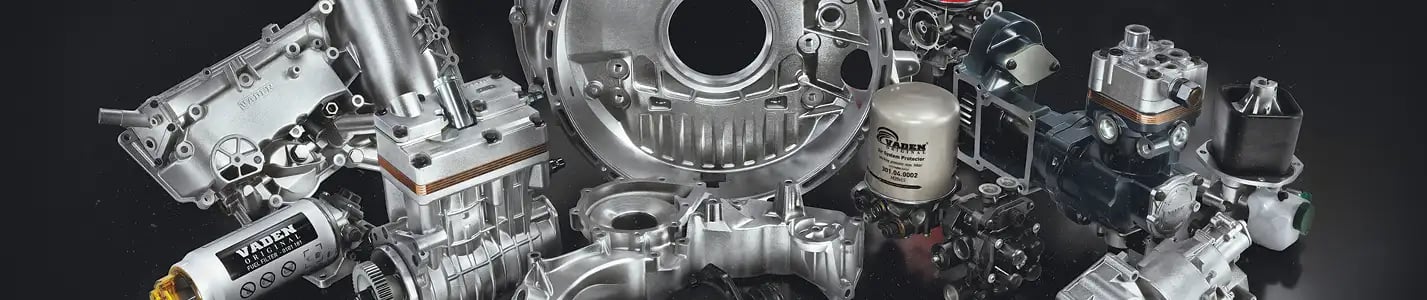
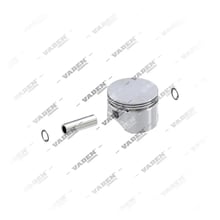
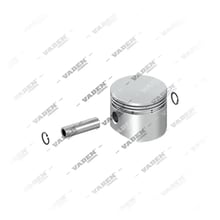
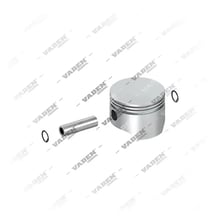
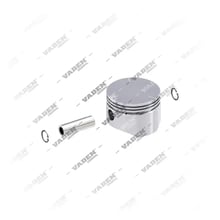
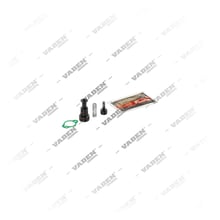
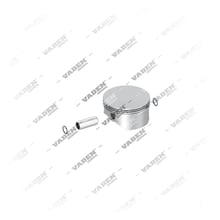
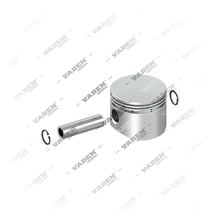
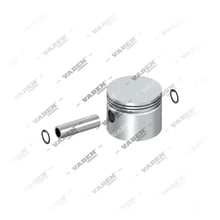
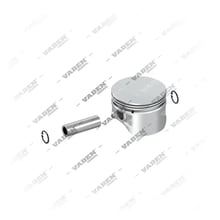
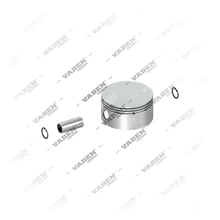
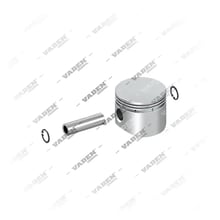
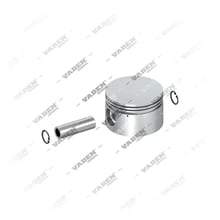
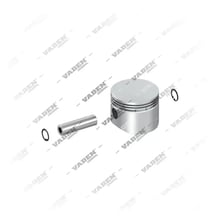
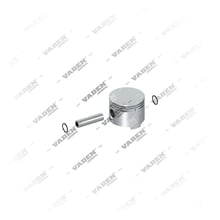
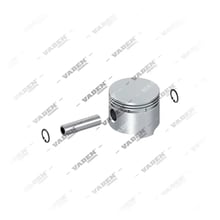
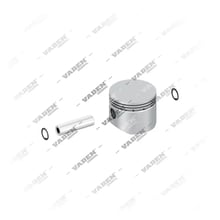
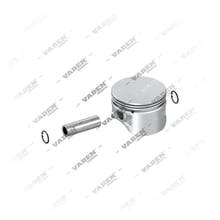
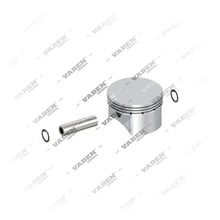
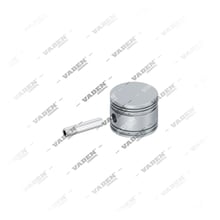
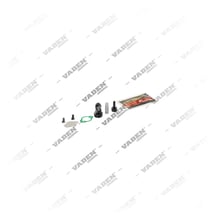
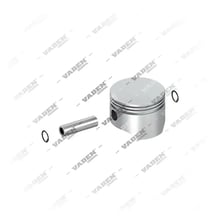
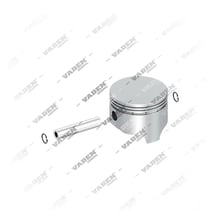
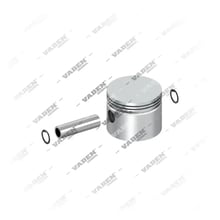
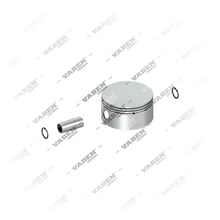
What Is a Compressor Parts Piston?
The Compressor Parts Piston is the moving component that travels back and forth inside the cylinder liner of an air brake compressor, compressing the atmospheric air drawn into the chamber. It belongs to the Compressor Parts subgroup of the Air Brake Compressors main category - not an engine piston, but an internal part of the compressor unit that generates brake air. In the field it is also referred to as the compressor piston or compression piston. Together with its rings and connecting rod, the piston determines the compressor's air output.
How Does a Compressor Parts Piston Work?
The piston moves inside the cylinder as the rotational motion it receives from the crankshaft is converted into linear motion by the connecting rod. On the downstroke the intake valve opens and filtered air fills the cylinder; on the upstroke the air is compressed and pushed out through the delivery valve, through the dryer, and into the air tanks. Once the regulator senses cut-out pressure, the compressor is unloaded. The dimensional precision of the piston and the sealing quality of its rings determine how quickly system pressure recovers.
- Intake stroke: The piston descends, the resulting low pressure opens the intake valve, and air fills the cylinder.
- Compression stroke: As the piston rises, the volume shrinks, the air is compressed, and its temperature increases.
- Delivery phase: Once cylinder pressure exceeds tank pressure, air is delivered into the brake circuit.
- Sealing: Compression rings prevent air from escaping into the crankcase, while the oil ring keeps oil out of the air side.
Compressor Parts Piston Technical Specifications
Compressor pistons are mostly manufactured from a low thermal-expansion aluminium alloy, while heavy-duty units also use cast-iron-bodied designs. The piston crown is flat or slightly recessed to match the valve plate in the cylinder head. Bore diameter typically ranges from 60-110 mm depending on the compressor family; besides the standard size, oversize pistons are available for liners that have been rebored.
- Material: Aluminium alloy or cast-iron body; surface treatments reduce friction.
- Sizing logic: Cylinder bore, stroke length, and pin diameter are all evaluated together.
- Ring layout: Typically features two compression ring grooves and one oil ring groove.
- Tolerance: Piston-to-liner clearance is held within a narrow range; the vehicle manufacturer's current service manual is authoritative for exact values.
Compressor Parts Piston Types and Subgroups
This category ranges in scope from a single piston to a complete piston-and-connecting-rod assembly. The required variant is determined by measurements taken once the compressor has been disassembled. If the liner is still sound, renewing the piston and rings is sufficient; if it has been rebored, a more comprehensive kit is needed.
- Single piston: Piston body only; used in repairs where the rings and connecting rod are still in good condition.
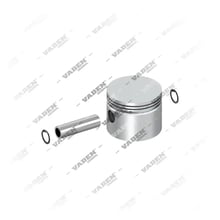
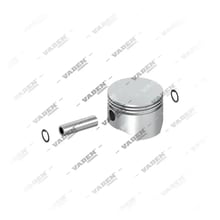
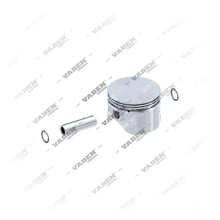
- Piston and ring set: Supplies the piston, rings, and pin together; the most common overhaul scope.
- Piston-and-connecting-rod assembly: Preferred for units showing wear at the small end of the connecting rod.
- Standard-size pistons: Manufactured to the original liner bore diameter; used in compressors that have not been rebored.
- Oversize pistons: Fitted to match the enlarged bore in units whose liner has been rebored.
How to Choose the Right Compressor Parts Piston
The most reliable starting point is the OE number and type plate stamped on the compressor housing. The second step is verifying the removed part's dimensions with calipers and a micrometer. The table below summarises the criteria to check before ordering; the ranges given are general, and the final value should be confirmed against the vehicle manufacturer's current service manual.
Compressor Parts Piston selection and compatibility criteria| Criterion | What to check | Practical note |
|---|
| OE / OEM number | Cast and label number on the housing | The most reliable way to cross-reference |
| Cylinder bore | Liner inner diameter, generally 60-110 mm | Measure at three points; reboring is needed if out-of-round |
| Size class | Standard or oversize | A standard piston cannot be used in a rebored liner |
| Pin and ring groove | Pin bore diameter, number and height of grooves | Pistons of the same diameter differ by these measurements |
| Vehicle application | Mercedes-Benz, MAN, Scania, Volvo, DAF, Iveco, Renault Trucks | The compressor can vary by engine even within the same series |
Compressor Parts Piston Maintenance and Key Considerations
Replacing the piston requires disassembling and cleaning the compressor and inspecting the liner surface. A new piston fitted into a scored liner will wear out again in a short time. Ring end gaps should be staggered relative to one another, and surfaces should be lubricated with assembly oil. Because torque values vary by unit, the vehicle manufacturer's current service manual should be used as the reference for tightening specifications.
- Measure the liner: Check inner diameter, ovality, and taper; plan for reboring if they exceed the limit.
- Position the rings correctly: Ring orientation, groove sequence, and end gap all affect compression efficiency.
- Renew the intake path: A clogged intake filter or damaged hose will wear a new piston out quickly.
- Inspect the valve assembly: Intake and delivery valves, the valve plate, and gaskets should all be checked during the same service.
Common Faults and Solutions
Piston-related problems most commonly show up as pressure loss, oil consumption, and noise. Reading the symptom correctly prevents unnecessary parts replacement. Below are the most frequently seen symptoms along with their likely causes and recommended actions.
- Pressure recovers slowly: Worn piston skirt or fatigued rings; the liner should be measured and a correctly sized piston set fitted.
- Oil accumulating in the tank: The oil ring has lost its function; the piston assembly should be renewed and the dryer cartridge checked.
- Metallic knocking: Clearance at the pin or connecting rod bushing; the piston-and-connecting-rod assembly should be replaced and the crankshaft bearings inspected.
- Carbon buildup on the piston crown: Operation at high temperature or an oil leak; the cooling and lubrication circuit should be checked.
- Scoring and sticking in the liner: Dust ingress through the intake or insufficient lubrication; the filter and hose should be replaced.
Why Choose VADEN ORIGINAL?
VADEN is a manufacturer specialised in air brake compressors and compressor parts. Pistons in this category are machined to OE dimensions and cross-referenced against an extensive OEM list. Producing the compressor unit under the same roof ensures the piston, rings, liner, and valve assembly are supplied as a matched set.
- Manufactured to OE dimensions: Bore diameter, pin size, and ring grooves are machined to the original unit's tolerances.
- Extensive OEM cross-referencing: A cross-reference list compatible with Wabco- and Knorr-Bremse-type architectures.
- A complete product tree: Piston, rings, liner, valve plate, and gasket set are all sourced from a single supplier.
- International reach: Exports to more than 100 countries and field-usage data across a wide range of climates.
Conclusion
The Compressor Parts Piston is the fundamental component that determines an air brake compressor's air-generating capacity; correctly selected, it delivers a far more economical repair than replacing the complete unit. Selection requires verifying the OE number, liner bore, and size class together; the liner surface and valve assembly should be inspected before assembly. For torque and tolerance values, the vehicle manufacturer's current service manual is authoritative.
Frequently Asked Questions (FAQ)
Is a compressor piston the same as an engine piston?
No. The pistons in this category are compression elements that work inside the air brake compressor and generate the brake air. An engine piston operates in the combustion chamber, whereas a compressor piston only compresses air - their dimensions, material, and ring layout are all different.
How can I tell the compressor piston needs replacing?
The clearest signs are slow air pressure recovery, oil accumulating in the tank and lines, and metallic knocking coming from the compressor. For a definitive decision, the compressor should be disassembled and the piston skirt, ring grooves, and liner bore measured.
Should I buy a standard-size piston or an oversize piston?
If the liner has not been rebored and its inner diameter is within tolerance, use a standard-size piston. If the liner has been rebored due to wear or scoring, choose an oversize piston that matches the enlarged diameter. The liner bore must always be measured before ordering.
Should I replace the rings when I replace the piston?
Yes, renewing the rings along with the piston is recommended. Old rings may not seat properly in the new piston's groove dimensions, leaving compression efficiency low. For this reason, pistons and rings are most often supplied as a set.
Which vehicle brands use this compressor piston?
Piston options are available for the compressor families used in heavy commercial vehicles such as Mercedes-Benz, MAN, Scania, Volvo, DAF, Iveco, Renault Trucks, and BMC. The correct part is determined by the compressor's OE number rather than the vehicle brand alone.
Related technical guide: Compressor Piston-Ring & Connecting Rod: Repair Guide