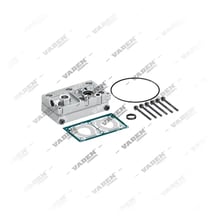
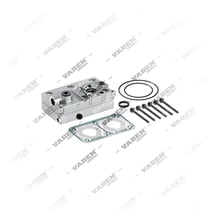
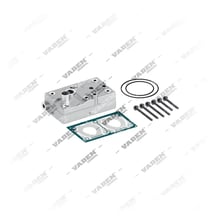
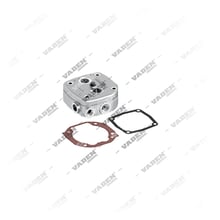
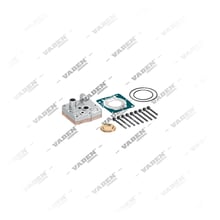
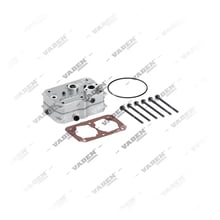
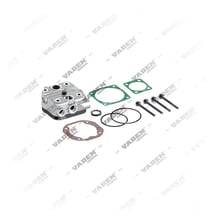
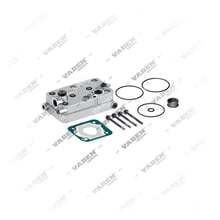
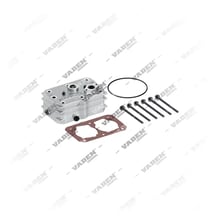
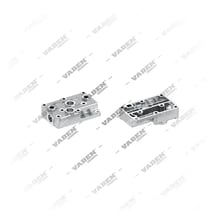
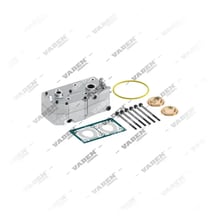
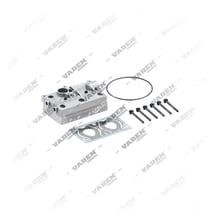
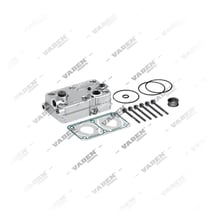
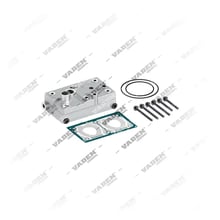
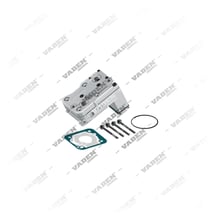
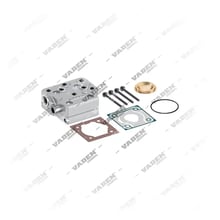
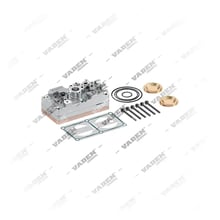
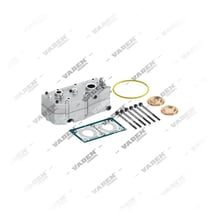
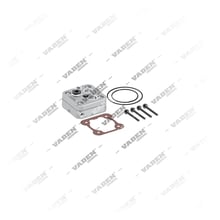
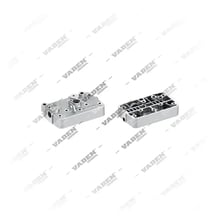
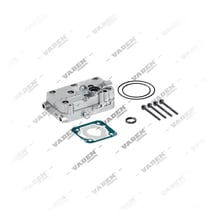
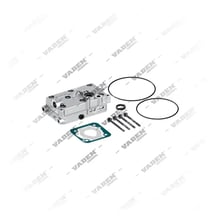
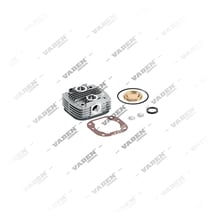
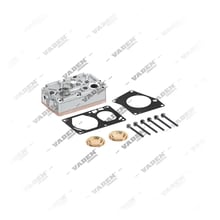
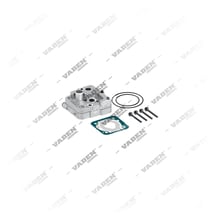
What Is a Compressor Parts Cylinder Head?
A Compressor Parts Cylinder Head is the cast service component that sits on top of an air brake compressor's cylinder block and seals the compression chamber from above. It belongs to the Compressor Parts subgroup under the Air Brake Compressors main category, and it exists to let a workshop rebuild a compressor in place rather than replacing the whole unit. In the field it is also called the compressor cover, top cover, or cylinder cover. Inside the head are the seats for the inlet and discharge valves, the internal air passages, and the cooling cavities, so this single part directly governs both the compressor's air output and its running temperature.
What Does a Compressor Parts Cylinder Head Do?
The cylinder head holds the pressure the piston generates inside the chamber and routes it into the air circuit in the correct sequence. As the piston moves down the inlet valve opens, and as it moves up the discharge valve opens; the seating surfaces for both valves are machined into the head. The head also carries away part of the compression heat and houses the ports through which the unloader signal arrives.
- Sealing the compression chamber: Together with the gasket and valve plate, it keeps the pressure the piston builds fully contained.
- Valve seating: It carries the seating surfaces for both the inlet and discharge valves.
- Air routing: It channels the compressed air from the discharge port toward the air dryer and the air reservoirs.
- Heat rejection: Cooling fins or a water jacket slow down oil coking and valve sticking.
- Control connection: It houses the ports where the unloader and governor lines connect.
Compressor Parts Cylinder Head Technical Specifications
Cylinder heads are made predominantly from grey cast iron, with aluminium alloy used in some light-duty applications. The defining dimensions are cylinder count, bolt hole pattern, discharge port thread type, valve seat bore diameter, and cooling type. Even a very small deviation from flatness on the sealing face is enough to cause a gasket leak. Because torque and tolerance values vary by compressor type, the vehicle manufacturer's current service manual should always be the reference.
- Material: Predominantly grey cast iron, machined for dimensional stability.
- Cooling type: Either a finned, air-cooled body or a water-jacketed body connected to the engine cooling circuit.
- Bolt pattern: Compressor-specific hole count, spacing, and dowel-pin location.
- Port dimensions: The bore and thread type of the intake, discharge, unloader, and water ports must match the original exactly.
Compressor Parts Cylinder Head Types and Subgroups
This category groups together the head types that vary by compressor architecture. Because the same vehicle model can use a different compressor depending on engine option, selection should always be based on the compressor's own reference number.
- Single-cylinder heads: Compact types fitted to vehicles with moderate air demand.
- Twin-cylinder heads: Close off both chambers together on higher-output compressors.
- Air-cooled heads: Release heat to the surrounding air through external fins.
- Water-cooled heads: Jacket channels give stable temperatures under sustained high load.
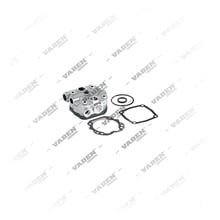
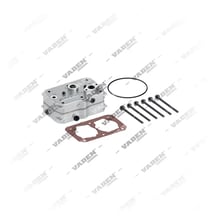
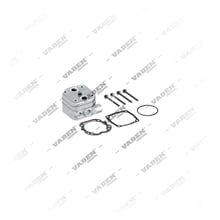
- Heads supplied with valve plate kits: The head, valve plate, and gasket set are offered together.
- Heads with an unloader port: Carry the additional control port that receives the governor signal.
How to Choose the Right Compressor Parts Cylinder Head
The starting point for a correct selection is the OE reference number cast or stamped on the compressor body; cross-matching from this number is far more reliable than guessing from appearance. If the number cannot be read, compare bolt hole pattern, valve seat bore diameter, and cooling type against the old part. It is advisable to renew the gasket and the valve plate together with the head.
Compressor Parts Cylinder Head selection and compatibility criteria| Criterion | What to check | Why it matters |
|---|
| OE reference number | The number cast into the compressor body | Removes guesswork from compatibility |
| Cylinder count | Single- or twin-cylinder body | Determines the valve seat layout |
| Cooling type | Finned air-cooled or water-jacketed | The wrong type leads to overheating |
| Bolt pattern | Hole count, spacing, dowel-pin location | Ensures even gasket clamping pressure |
| Port dimensions | Intake, discharge, and unloader port threads | Guarantees leak-free connections |
| Companion parts | Valve plate, springs, gasket set | Leaks persist if these are not renewed |
Compressor Parts Cylinder Head Maintenance and Key Points
A cylinder head is a long-lived part when it is fitted correctly; most failures trace back to an installation error. Before removal, the air pressure must be fully released, and the block face must not be scratched. When fitting a new head, the sealing surfaces must be cleaned of every trace of the old gasket. Bolts should be tightened in a crossing pattern and in stages, and the vehicle manufacturer's current service manual should be the reference for torque values.
- Surface cleanliness: Clean the block and valve plate faces without leaving scratches.
- Staged tightening: Torque the bolts in several passes, working from the centre outward.
- Renew gasket and valves: Replace the gasket set and the valve plate together with the head.
- Check the intake filter: A clogged filter increases valve load and head temperature.
- Leak test: After reassembly, pressurise the system and check around the head with soapy water.
Common Faults and Solutions
Problems traced to the head usually show up as air loss, overheating, or oil consumption. Reading the symptom correctly prevents an unnecessary compressor replacement.
- System fills slowly: The discharge valve is not seating or the gasket is leaking; renew the valve plate and gasket as a set.
- Hissing around the head: Uneven tightening or a warped sealing face is the cause; replace the head if the surface is damaged.
- Overheating with a burnt-oil smell: The cooling passages are blocked; clean the water circuit and the finned surfaces.
- Oil accumulating in the air line: Excess heat is causing oil carryover; inspect the valve assembly and piston rings.
- Cracking or water ingress: Freezing or overheating cracks the casting; a cracked head cannot be repaired.
- Compressor fails to unload: The control port is blocked; clear the port and verify the governor line.
Why VADEN ORIGINAL?
VADEN is a manufacturer specialised in air brake compressors and compressor parts, and cylinder heads sit squarely within that expertise.
- Manufactured to OE dimensions: Bolt pattern, valve seat bore, and port dimensions match the original part.
- Broad OEM coverage: Reference-based matching for Wabco- and Knorr-Bremse-type compressors fitted to Mercedes-Benz, MAN, Scania, Volvo, DAF, Iveco, and Renault Trucks vehicles.
- Complete part sets: The gaskets, valve plates, and repair kits needed alongside the head are in the same catalogue.
- International distribution: Exports to more than 100 countries support reliable parts availability.
Conclusion
The Compressor Parts Cylinder Head is the component that directly determines an air brake compressor's ability to build pressure, and when neglected it drags down the fill performance of the whole brake circuit. Choosing the right head means confirming the compressor's OE reference, cylinder count, and cooling type. During installation, surface cleanliness, staged tightening, and renewing the gasket and valve assembly together are the conditions for a leak-free repair. For torque and tolerance values, the vehicle manufacturer's current service manual remains the governing reference.
Frequently Asked Questions (FAQ)
What does a Compressor Parts Cylinder Head do?
The cylinder head closes off the top of the air brake compressor's compression chamber and carries the seats for the inlet and discharge valves. It holds the pressure the piston generates without leaking and directs the compressed air from the discharge port toward the air dryer and the reservoirs. It also carries away part of the compression heat from the body.
How can you tell a cylinder head needs to be replaced?
A hissing sound around the head, the system filling slower than normal, overheating, or a crack in the casting with water intrusion are the most common warning signs. When these appear, check the gasket and valve plate first, and replace the head if the sealing surface is damaged or a crack is present. Repairing a cracked head is not recommended.
Should the gasket and valve plate also be renewed when replacing the cylinder head?
Yes, whenever the head is removed and refitted, it is advisable to renew the gasket set, the valve plate, and the valve springs together. A gasket that has already been compressed once will not seal the same way on a second installation and will leak in short order. Replacing these parts as a set reduces both labour and the risk of having to strip the unit down again.
What is the difference between an air-cooled and a water-cooled cylinder head?
An air-cooled head releases heat to the surrounding air through external fins and gives a simpler layout. A water-cooled head has jacket passages through which the engine coolant circulates, giving more stable temperatures on tractors and buses that run under sustained high load. The two types are not interchangeable; the head must match the compressor body's own cooling type.
How do I order the correct cylinder head?
The most reliable method is cross-matching from the OE reference number cast into the compressor body. If the number cannot be read, compare cylinder count, cooling type, bolt hole pattern, valve seat bore diameter, and port thread dimensions against the old part. When in doubt, confirming the reference with technical support removes the risk of ordering the wrong part.
Related technical guide: Truck Air Compressor Overhaul Kit: Head, Valve Plate, Gasket