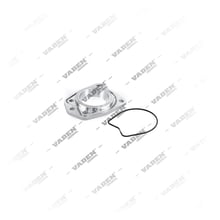
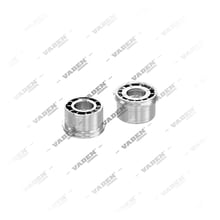
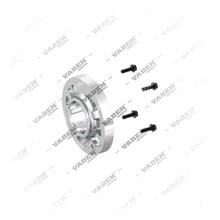
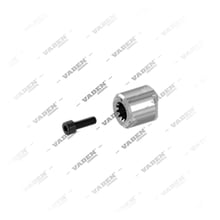
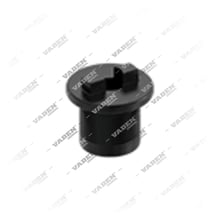
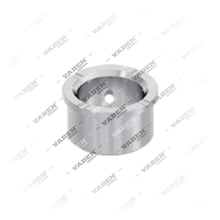
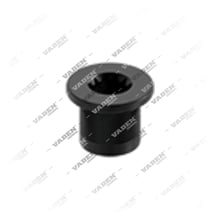
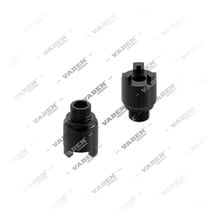
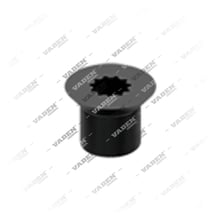
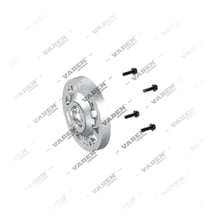
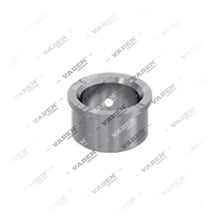
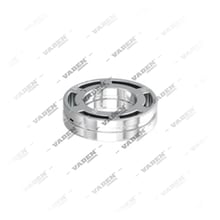
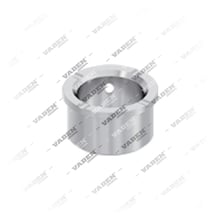
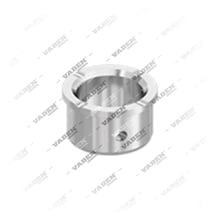
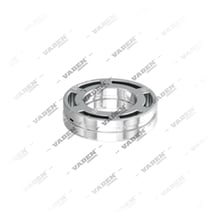
What Is a Compressor Parts Adapter?
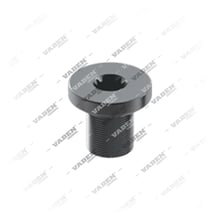
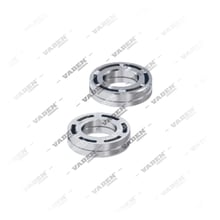
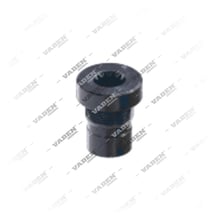
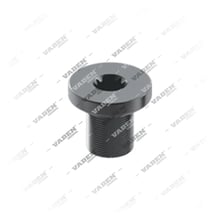
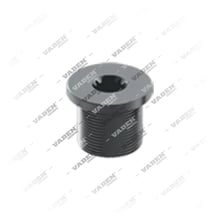
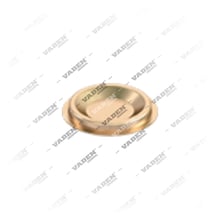
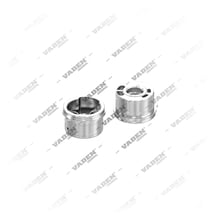
A Compressor Parts Adapter is a metal transition fitting that connects the air brake compressor housing to the air intake line, the oil circuit, or a mounting point, reconciling different connection sizes so the parts can be joined without leaks. In the field it is also known as a "compressor union" or "reducing nipple." Within the Air Brake Compressors > Compressor Parts subsystem, this part lets the compressor connect to other components (air filter, oil line, pressure regulator, mounting bracket) without any loss of sealing. On heavy commercial vehicles such as Mercedes-Benz, MAN, Scania, Volvo, DAF, Iveco, Renault Trucks, and BMC, the Wabco- and Knorr-Bremse-type compressors often have a connection standard that does not match the vehicle's line diameter, which is exactly where the Compressor Parts Adapter comes in.
How Does a Compressor Parts Adapter Work?
A Compressor Parts Adapter mechanically joins two different thread types, pitches, or connection diameters, so air or oil flow passes from one line to the other without interruption. Tightening the adapter to the correct torque both prevents loosening under vibration and avoids thread damage; installation should always follow the torque range specified in the vehicle manufacturer's current service manual.
- Air Passage: Pressurized air moving through the inlet and outlet ports is routed to the target line through the adapter.
- Sealing: The gasket seat or sealing surface on the adapter prevents pressure loss during the transition.
- Oil Supply: On lubricated compressors, the adapter can carry oil from the engine circuit; internal channel diameter directly affects flow rate.
Compressor Parts Adapter Technical Specifications
Within the Compressor Parts Adapter group, the material of choice is generally forged steel or a brass alloy, both offering dimensional stability and corrosion resistance under high pressure. Thread type follows metric or tapered pipe thread (NPT/BSP-type) standards and is set by the port on the compressor housing and the fitting on the line side. The internal channel diameter must handle the system's air or oil flow rate; too narrow a channel causes pressure loss, while an unnecessarily wide one can make sealing harder. Exact pressure and torque values vary by compressor model, so the vehicle manufacturer's current service manual is always the reference. Surface coating (zinc, phosphate, etc.) adds resistance to moisture and salt.
Compressor Parts Adapter Selection and Compatibility Criteria| Criterion | Evaluation Point |
|---|
| Connection Type | Exact match between the compressor port and line-end thread type (metric/tapered) |
| Material | Forged steel or brass, chosen for pressure and corrosion resistance |
| Internal Channel Diameter | Sized to meet air/oil flow rate without restricting the flow |
| Sealing Surface | Flat or conical surface providing full contact with a gasket or copper washer |
| Vehicle/Compressor Compatibility | Conformity with Wabco or Knorr-Bremse compressor housing standards |
| Coating | Zinc or phosphate coating for added corrosion protection |
Types and Subgroups of Compressor Parts Adapter
- Air Inlet Adapter: Connects the compressor housing to the air filter or intake line, so intake air reaches the compressor in a controlled way.
- Air Outlet Adapter: Directs compressed air to the pressure regulator or the air reservoir.
- Oil Line Adapter: Carries oil from the engine circuit to the compressor; its channel size is set by the required oil flow rate.
- Reducing (Diameter-Reduction) Adapter: Joins two lines of different diameters without any loss of dimensional accuracy.
- Thread-Conversion Adapter: A connection piece that allows transition between metric and tapered pipe thread.
- Mounting Bracket Adapter: A transition component used to secure the compressor to the vehicle chassis or engine block.
How to Choose the Right Compressor Parts Adapter
Choosing the right Compressor Parts Adapter starts with correctly identifying the housing port size for the compressor's make and model. The vehicle's chassis number or the compressor's type label serves as the reference for the connection standard used by the OEM, such as Wabco or Knorr-Bremse. The circuit the adapter will serve (air inlet, air outlet, or oil line) should be clearly identified, and the channel diameter chosen to meet the system's flow requirement. When in doubt, verifying against the original part number or an OEM cross-reference prevents installing the wrong adapter.
Compressor Parts Adapter Maintenance and What to Watch For
- Follow the Installation Torque: Overtightening causes thread damage, while undertightening causes leaks - apply the specified value.
- Renew the Sealing Element: After removal, always fit a new gasket or copper washer rather than reusing the old one.
- Check the Thread Surface: Before installation, check for burrs, dirt, or corrosion on the threads.
- Perform Periodic Leak Checks: At service intervals, check connection points with a soapy-water test or a pressure measurement.
- Use the Correct Wrench: Use the correct size and type; pliers and similar tools round off the corners and make removal harder.
- Choose Original-Size Parts: Use a VADEN ORIGINAL adapter sized correctly for the compressor.
Common Compressor Parts Adapter Failures and Solutions
- Air Leak: Worn gasket or loose installation; renew the sealing element and retighten to the specified torque.
- Oil Leak: Copper washer deformation or cracking; replace the washer, or the whole adapter if it is cracked.
- Stripped Threads: Incorrect torque or an incompatible thread type; remove the damaged adapter and fit a new one in the correct standard.
- Installation Mismatch: An adapter ordered against the wrong OEM reference; verify the port size and get the correct part number.
- Seizure Due to Corrosion: Prolonged moisture and salt exposure; apply penetrating oil and loosen with incremental torque.
Why Choose VADEN ORIGINAL Compressor Parts Adapter?
- OEM-Spec Manufacturing: Produced to original equipment dimensions, giving broad compatibility with Wabco- and Knorr-Bremse-type compressors.
- Durable Material: Forged steel or brass gives dimensional stability under high pressure.
- Corrosion Resistance: Suitable surface coating adds extra resistance to moisture and salt.
- Broad Vehicle Compatibility: Tested on heavy commercial vehicle brands including Mercedes-Benz, MAN, Scania, Volvo, DAF, Iveco, Renault Trucks, and BMC.
- Global Quality Assurance: Made to the VADEN ORIGINAL standard and exported to more than 100 countries.
Conclusion
Despite its modest size, the Compressor Parts Adapter is a critical component that lets the air brake compressor connect to the air and oil circuits without any loss of sealing. An adapter chosen with the right connection type, material, and channel size directly supports installation safety and system performance. VADEN ORIGINAL Compressor Parts Adapter products give heavy commercial fleets a reliable, OEM-spec solution with broad vehicle compatibility.
Frequently Asked Questions (FAQ)
What exactly does a Compressor Parts Adapter do?
A Compressor Parts Adapter is the transition fitting that connects the air brake compressor's housing port to the air inlet, air outlet, or oil line. By reconciling connections with different thread types or diameters, it allows the connection to be made without any air or oil leak in the system.
Which compressor types is the adapter compatible with?
VADEN ORIGINAL Compressor Parts Adapter products are compatible with Wabco- and Knorr-Bremse-type compressors used on Mercedes-Benz, MAN, Scania, Volvo, DAF, Iveco, Renault Trucks, and BMC heavy commercial vehicles. To determine the correct part number, check the compressor's type label or an OEM cross-reference.
What torque should be applied when installing the adapter?
The exact torque value varies by compressor model and adapter size, so the torque range specified in the vehicle manufacturer's current service manual should always be followed. Overtightening can cause thread damage, while undertightening can lead to an air or oil leak.
What should be done if the adapter develops an air or oil leak?
First check the gasket or copper washer for wear, and if necessary renew the sealing element and retighten the adapter to the specified torque value. If the leak persists, inspect the adapter's thread surface for damage and replace the part entirely if needed.
Can the old gasket or washer be reused when removing the adapter?
No, once an adapter has been removed the gasket or copper washer that was used has usually deformed, so reusing it is not recommended. A new sealing element should always be fitted during installation to keep the risk of leaks to a minimum.
Related technical guide: Compressor Connection Hardware: Faults, Replacement, Care