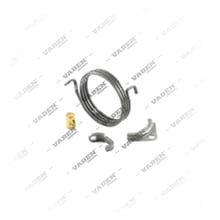
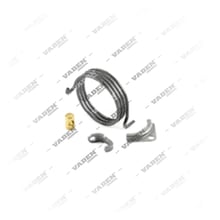
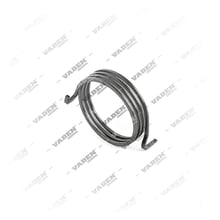
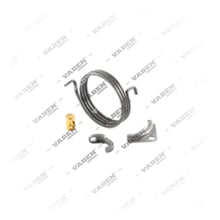
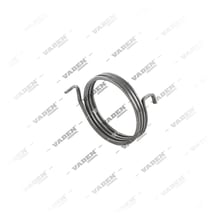
What Is an Actuating Lever Spring?
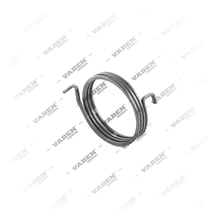
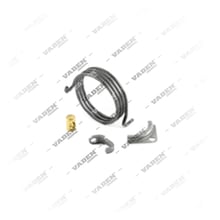
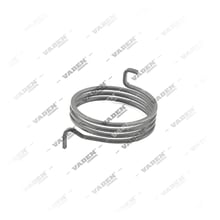
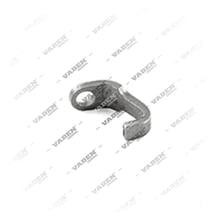
The actuating lever spring is a metal spring component in heavy commercial vehicle brake calipers that holds the actuating lever (also called the actuator lever) in position and pulls it back to neutral once the brake is released. In the field it is sometimes called the "caliper lever spring" or "actuator return spring." The actuating lever inside the caliper transmits motion from the brake valve or actuator to the caliper piston or slack adjuster; the spring ensures this lever returns fully and consistently after every brake application. Correct spring tension and geometry are critical both for repeatable caliper response and for the automatic slack adjuster to track pad clearance accurately. VADEN ORIGINAL actuating lever springs are manufactured to dimensions compatible with Wabco and Knorr-Bremse caliper families.
Functions and Working Principle of the Actuating Lever Spring
The actuating lever rotates under the force delivered by the actuator when the brake pedal is pressed, transferring this motion to the adjuster shaft or piston mechanism inside the caliper. The spring takes on the opposite task: when the brake is released, it pulls the lever back to the ready position for the next application. If spring tension is insufficient or the spring has deteriorated, the lever may not return fully, causing the pad to keep lightly dragging against the disc (brake drag) or delaying the braking response.
- Return Force: Pulls the actuating lever back to its starting position once the brake is released, readying the mechanism for the next application.
- Positional Stability: Prevents the lever from shifting unintentionally due to idle vibration or road shocks.
- Adjuster Mechanism Support: Helps the automatic slack adjuster maintain its correct reference point.
- Consistent Pedal Feel: Guarantees the same starting position at every application, giving the driver a consistent pedal response.
Actuating Lever Spring Technical Specifications
Actuating lever springs are typically made from high-fatigue-resistance spring steel, engineered to withstand thousands of braking cycles under continuous heat, moisture, and vibration. Wire diameter, coil count, and hook geometry vary by caliper model, so the correct spring cannot be selected without knowing the caliper manufacturer and model. The surface coating (usually phosphate or zinc based) resists corrosion, since the actuating lever area is directly exposed to road salt, moisture, and brake dust. Keeping tension within factory tolerances matters both for adequate return force and to avoid overloading the mechanism; for exact values, the vehicle's or caliper's current service manual is authoritative.
Actuating Lever Spring Types and Subgroups
- Torsion-Type Spring: Provides return motion by applying torque against the lever's rotational movement; the type most commonly used in disc brake calipers.
- Tension (Pull) Type Spring: Pulls the lever back via a linear tension force between the lever and the caliper housing.
- Compression Type Spring: Used in some caliper designs to position the lever in the push direction.
- Double-Hook-End Springs: Have a specific end geometry anchored to both the caliper housing and the actuating lever; must be installed in the correct orientation to avoid assembly errors.
- Adjuster-Integrated Springs: Work together with the automatic slack adjuster system, helping the adjuster shaft engage correctly.
How to Choose the Right Actuating Lever Spring
When selecting an actuating lever spring, geometric properties such as wire diameter, free length, and hook orientation must match the original part exactly, alongside the caliper brand and model. A spring with incorrect tension can cause the lever to return late or incompletely, leading to uneven pad wear. The table below summarizes the key criteria for selection.
Actuating Lever Spring Selection Criteria| Criterion | Why It Matters |
|---|
| Caliper Brand/Model | Mounting points and hook geometry are caliper-specific |
| Wire Diameter and Coil Count | Determine correct return force and fatigue life |
| Free Length | Affects preload after installation and the lever's range of motion |
| Hook Orientation | Wrong-direction installation prevents the lever from returning properly |
| Surface Coating | Corrosion resistance extends service life under salt and moisture exposure |
| Vehicle Compatibility | Mercedes-Benz, MAN, Scania, Volvo, DAF, Iveco, Renault Trucks applications |
Actuating Lever Spring Maintenance and Key Points
- Periodic Visual Inspection: During brake service, check the spring for cracks, breakage, or excessive loosening.
- Correct Installation Orientation: When refitting the spring, mount the hook ends per their original position; reversed installation disrupts lever movement.
- Corrosion Monitoring: Replace springs with damaged coating or visible rust before breakage risk develops.
- Evaluate with the Adjuster Mechanism: When replacing the spring, confirm the automatic adjuster system also works correctly, since the two together determine braking precision.
- Use Original-Dimension Parts: Equivalent springs with different tension can cause inconsistent lever movement, so choose VADEN ORIGINAL dimensions.
Common Failures and Their Solutions
- Actuating Lever Returns Slowly or Incompletely: Spring tension may have weakened or the hook may have come loose; remove the spring and check tension and mounting position, replacing it if necessary.
- Brake Drag (Continuous Light Friction): A weak or broken spring can prevent the lever from returning fully; inspect the spring and adjuster mechanism together.
- Metallic Rattling from the Brake Area: A loose or dislodged spring hook end may be the cause; check the installation and replace with a new spring if needed.
- Uneven Pad Wear: If the spring fails to bring the lever to the correct position, the adjuster mechanism takes an incorrect reference point, wearing the pad unevenly.
- Visible Corrosion or Breakage: Springs exposed to moisture and salt for extended periods can suffer coating degradation leading to breakage; periodic replacement is recommended.
Why Choose VADEN ORIGINAL?
- Manufactured to OE Dimensions: Wire diameter, coil count, and hook geometry match original caliper specifications exactly.
- Extensive OEM Coverage: A wide range of actuating lever spring references for Wabco and Knorr-Bremse caliper families are kept in stock.
- Fatigue-Tested Material: Spring steel and protective coating selected to withstand thousands of braking cycles.
- Exported to Over 100 Countries: Proven performance across different climates, backed by an extensive service network.
Conclusion
Despite its small size, the actuating lever spring is critical to the consistent and safe operation of the brake caliper. A weakened or broken spring can lead to brake drag, uneven pad wear, and delayed braking response. With VADEN ORIGINAL actuating lever spring products, you can keep the caliper mechanism operating reliably within factory tolerances.
Frequently Asked Questions (FAQ)
What does the actuating lever spring do?
The actuating lever spring returns the actuating lever in the brake caliper to its starting position after each brake application. This allows the caliper to work consistently and repeatably at every application, so the pad does not needlessly drag against the disc.
What happens if the actuating lever spring fails?
A weakened or broken actuating lever spring can prevent the lever from returning fully, which can lead to brake drag, uneven pad wear, or delayed braking response. If these symptoms appear, the spring and the adjuster mechanism should be inspected.
Which vehicles use the actuating lever spring?
Actuating lever springs are found in Wabco and Knorr-Bremse brake calipers used on heavy trucks and buses from brands such as Mercedes-Benz, MAN, Scania, Volvo, DAF, Iveco, and Renault Trucks. The caliper brand and model must be confirmed to select the correct reference.
How often should the actuating lever spring be replaced?
There is no fixed replacement interval; the spring should be visually inspected during periodic brake service and replaced if tension loss, corrosion, or cracking is observed. The inspection intervals in the caliper manufacturer's service manual should be followed.
What should be considered when installing an actuating lever spring?
The spring's hook ends must be mounted in the correct orientation according to their original position, and its tension should be checked. Incorrect installation can prevent the lever from returning properly and negatively affect braking performance; after the job, confirm that the adjuster mechanism is also working correctly.