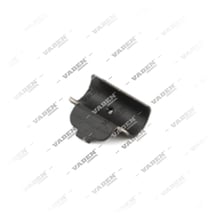
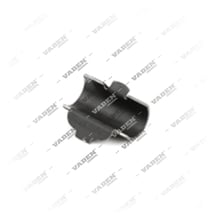
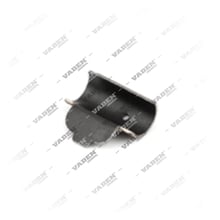
What Is an Actuation Lever Plate?
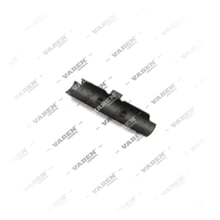
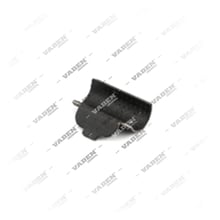
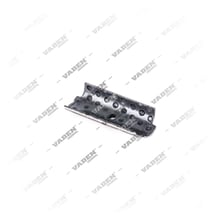
The actuation lever plate is a stamped sheet-steel retaining and support component used in the actuation lever assembly of a heavy commercial vehicle's brake caliper. This part keeps the caliper's actuation lever held in the correct position on the caliper body, fixes the force-transfer point in place, and prevents axial play in the lever. In the field it is also known as the "lever plate", "lever retaining plate" or "lever bracket". The actuation lever plate does not generate braking force on its own; instead, by securing the actuation lever to the caliper body tightly and without vibration, it preserves the consistency of brake response. This sheet-metal part is a standard repair and renewal component in the actuation lever assemblies of Wabco and Knorr-Bremse type calipers, which are widely used on Mercedes-Benz, MAN, Scania, Volvo, DAF, Iveco and Renault Trucks heavy vehicles.
How Does an Actuation Lever Plate Work?
When the brake pedal is pressed, air pressure is delivered to the brake chamber and the piston pushes the actuation lever. The actuation lever transfers this movement to the caliper mechanism, causing the pads to press against the disc or drum. During this transfer, the actuation lever plate stabilizes the contact and bearing point of the lever on the caliper body; it prevents the lever from shifting sideways, moving vertically, or gradually loosening. This way, force is delivered to the pad-to-disc contact surface without deviation or loss. The plate also acts as a thin wear buffer between the lever and the body, reducing the friction and noise that direct metal-to-metal contact would create. An actuation lever plate that thins or deforms over time causes lever clearance to increase and brake response time to lengthen.
Actuation Lever Plate Technical Specifications
Actuation lever plates are generally stamped from high-strength, heat-treated steel sheet, which makes them resistant to permanent deformation under repeated pressure and vibration loads. Thickness and profile are designed specifically for each caliper model, since lever clearance and bearing geometry differ from one manufacturer to another. The key specifications below should be considered during selection and installation.
- Material: Heat-treated, high-strength steel sheet.
- Surface Coating: Corrosion-resistant zinc or phosphate coating.
- Thickness/Profile: Dimensions specific to the caliper model that directly affect lever clearance.
- Tolerance: The vehicle's service manual should be used as the reference for exact clearance and dimensional values.
Actuation Lever Plate Types and Subgroups
- Bearing Retaining Plate: Keeps the pivot axis of the actuation lever fixed on the caliper body and prevents axial shifting.
- Wear Buffer Plate: Sits between the lever and the body to reduce metal-to-metal contact and dampen noise and vibration.
- Locking/Safety Plate: Has a locking geometry that prevents the bolt or pin connection from loosening during operation.
- Clearance Adjustment Plate (Shim): Used to fine-tune the clearance between the actuation lever and the body according to the manufacturer's tolerance.
- Protective Cover Plate: Partially shields the actuation lever mechanism from dust, mud and moisture, extending the life of the internal components.
How to Choose the Right Actuation Lever Plate
The first rule when choosing an actuation lever plate is an exact match to the caliper model and actuation lever type; plates that look similar can have different thicknesses, hole positions or profile geometries and are not directly interchangeable. When selecting a part, the caliper's manufacturer code, the vehicle's chassis number and the OEM reference of the existing actuation lever assembly should be compared. The table below summarizes the key criteria to keep in mind during selection.
Actuation Lever Plate Selection Criteria| Criterion | Why It Matters |
|---|
| Caliper Brand/Model Code | Plate geometry and thickness vary by caliper model, and the wrong code leads to a mismatch |
| Actuation Lever Type | Different lever designs require different bearing and retaining plates |
| Plate Thickness/Tolerance | Directly affects lever clearance; the wrong thickness causes premature wear or binding |
| Surface Coating | Determines corrosion resistance and protects against moisture and salt in the brake area |
| Vehicle Brand/Chassis Fit | Confirms the application is correct for manufacturer platforms such as Mercedes-Benz, MAN, Scania, Volvo and DAF |
| OEM Reference Number | Guarantees an exact match with the original part and correct installation |
Actuation Lever Plate Maintenance and Points to Watch
- Periodic Visual Inspection: During brake maintenance, check whether the actuation lever plate has deformed, cracked or become excessively thin.
- Measuring Lever Clearance: If the actuation lever clearance falls outside the manufacturer's tolerance, the plate may need to be replaced or adjusted.
- Corrosion Monitoring: Rusted plates or those with damaged surface coating should be replaced promptly, since corrosion rapidly reduces strength.
- Correct Tightening Torque: The bolts and pins used with the plate should be tightened to the torque specified by the manufacturer; over- or under-tightening should not be allowed to deform the plate.
- Using Original-Dimension Parts: Plates with an unsuitable thickness or profile cause premature wear and noise in the lever mechanism.
Common Faults and Their Solutions
- Metallic Squeal from the Brake Area: A worn or cracked actuation lever plate; the plate set should be inspected and the worn part replaced.
- Excessive Play in the Actuation Lever: A thinned or deformed plate; the clearance adjustment plate should be remeasured and replaced with one of the correct thickness.
- Delayed Brake Response: Loss of force transmission due to a loosened or broken retaining plate; the plate and its fasteners should be inspected and renewed.
- Vibration and Persistent Noise: Metal-to-metal contact because the wear buffer plate has failed; replacing the buffer plate eliminates the noise and vibration.
- Visible Rust or Corrosion: Corrosion following coating damage; replacing the part with an originally coated plate is recommended.
Why Choose VADEN ORIGINAL?
- Manufactured to OE Dimensions: Actuation lever plates are produced with a thickness and profile that exactly match the original caliper geometry.
- Broad OEM Coverage: Correct reference matches are offered for the different actuation lever versions of Wabco and Knorr-Bremse type calipers.
- Durable Material and Coating: Heat-treated steel and a corrosion-resistant surface coating deliver a long service life under the demanding conditions of the brake area.
- Exported to More Than 100 Countries: VADEN ORIGINAL parts are manufactured to a quality standard tested across a wide range of climate and road conditions.
Conclusion
Despite its small size, the actuation lever plate plays a critical role in the correct, reliable operation of the brake caliper's actuation lever assembly. Inspecting it in time and replacing it with an original-dimension part once it is worn keeps brake response time short and prevents unnecessary noise and vibration in the lever mechanism. VADEN ORIGINAL actuation lever plate products offer heavy commercial vehicle fleets an OEM-quality, long-lasting and reliable solution.
Frequently Asked Questions (FAQ)
What does an actuation lever plate do?
An actuation lever plate holds the brake caliper's actuation lever in a fixed, correct position on the caliper body. By preventing axial shifting and loosening of the lever, it ensures brake force is transmitted to the pad-to-disc contact surface without deviation.
What happens when the actuation lever plate wears out?
A worn or deformed plate increases actuation lever clearance, lengthens brake response time, and causes metallic squealing or vibration noise from the brake area. When these symptoms appear, the plate should be inspected and replaced if necessary.
Which vehicles is the actuation lever plate compatible with?
Actuation lever plates fit the actuation lever assemblies of Wabco and Knorr-Bremse type brake calipers used on Mercedes-Benz, MAN, Scania, Volvo, DAF, Iveco and Renault Trucks heavy vehicles. Exact compatibility should be verified against the caliper code and OEM reference.
How often does the actuation lever plate need to be replaced?
There is no fixed replacement interval; the need to replace it is determined by the wear, deformation or corrosion found during visual inspection. Measuring the actuation lever clearance during regular brake maintenance allows for early diagnosis.
What happens if an actuation lever plate of the wrong thickness is installed?
A plate with a thickness that does not match the caliper model causes lever clearance to become too tight or too wide. This can restrict the lever's free movement or lead to vibration and premature wear, so a plate matching the OEM reference should always be chosen.