What is a brake caliper actuating lever shaft?
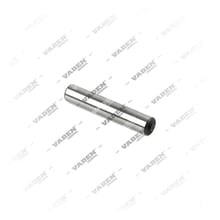
The actuating lever shaft is a cylindrical axle part manufactured from hardened steel that rotates in a bushing or bearing socket in the caliper body. One end of the shaft is fixed to the actuating lever, and the other is supported inside the caliper body; on some designs the shaft has a lubrication channel and can be greased regularly via a grease nipple. Since the shaft repeatedly carries high braking forces, it must be manufactured from a material with high surface hardness and fatigue strength.
What are the functions of the brake caliper actuating lever shaft?
The shaft performs several critical functions together in the caliper's mechanical chain.
- Rotation axis: allows the actuating lever to rotate inside the caliper body in a controlled, frictionless way.
- Force transfer: converts the linear force from the actuator into rotational motion via the lever, transmitting it to the pad-pressing mechanism.
- Positional stability: prevents the lever from shifting axially or radially, keeping brake response consistent every time.
What are the symptoms of a brake caliper actuating lever shaft failure?
When lubrication between the shaft and bushing decreases, the actuating lever stiffens, brake response feels delayed when the pedal is pressed, and higher-than-normal pedal pressure is needed. When wear or scoring develops on the shaft surface, radial play in the lever increases, heard as squeaking or metallic rattling during braking. In advanced wear, the shaft can break or come out of position, in which case the brake at that wheel is fully disabled; this is an urgent safety fault and the vehicle must be stopped immediately. Shaft corrosion is common especially in salty/humid climates and can cause the actuating lever to seize up completely.
How is the brake caliper actuating lever shaft checked?
The actuating lever is held by hand at the caliper and moved axially and radially; noticeable play indicates shaft or bushing wear. If a grease nipple is present, grease coming out old, dirty, or hardened during lubrication shows insufficient lubrication at the shaft area. The caliper is removed and the shaft taken out; its surface is checked for pitting, scoring, or ovalization by measuring with a micrometer and comparing against the manufacturer's tolerance.
What should be considered during replacement?
Before removing the caliper from the vehicle for shaft replacement, the brake system must be depressurized, and the tank drained on air-braked systems. While removing the shaft, the bushing or bearing should also be checked for wear and replaced together if needed; renewing the shaft alone with a worn bushing quickly leads to play returning. Before fitting a new shaft, lubrication channels should be cleaned and a manufacturer-approved high-temperature grease applied. After installation, the actuating lever should be moved by hand several times to confirm it rotates freely and without play.
How to choose a brake caliper actuating lever shaft?
Exact compatibility based on the caliper model and manufacturer code number is required; shaft diameter, length and surface hardness vary by caliper type. Since shafts made from low-quality steel can wear quickly under high braking force, parts with manufacturer-approved hardness values should be preferred.
Brake caliper actuating lever shaft - general reference values| Parameter | Typical range |
|---|
| Radial play tolerance | 0.05-0.15 mm (the vehicle manufacturer's current service manual is authoritative) |
| Material | Hardened alloy steel |
| Lubrication type | High-temperature-resistant lithium-based grease |
| Inspection interval | Every 40,000-60,000 km or at every pad replacement |
Maintenance and service life
Regular lubrication through the grease nipple significantly slows wear by reducing metal-to-metal contact between the shaft and bushing. Keeping the dust boots around the caliper intact prevents the shaft from being exposed to moisture and dirt, reducing the risk of corrosion. With proper maintenance, the shaft can run trouble-free for the caliper's entire service life; on vehicles that are not greased regularly this period shortens noticeably.
VADEN Brake Caliper Actuating Lever Shaft
VADEN offers actuating lever shafts manufactured to OE tolerances for heavy commercial vehicle disc brake calipers, using high-fatigue-strength steel to support brake reliability.
Frequently Asked Questions (FAQ)
Is the actuating lever shaft the same part as the caliper guide pin?
No. The caliper guide pin is a separate part that, on sliding-type calipers, lets the caliper body slide on its carrier; the actuating lever shaft is the axis on which the lever driving the pad-pressing mechanism rotates, and serves a different function.
Does the caliper need to be fully removed to replace the shaft?
In most cases yes, the caliper must be removed from the vehicle and opened on a bench to access the shaft; while on-vehicle service is possible on some models, removing the caliper is recommended for a safe and correct installation.
How long does it take for the shaft to fail without greasing?
The exact time varies with climate and usage intensity, but a shaft that does not receive regular grease can show noticeable wear and stiffening within a few tens of thousands of kilometers, sooner in humid/salty environments.
Is brake squeal always caused by shaft wear?
No, squeal can also come from the pad material, disc surface or the caliper guide pin; for a definitive diagnosis the caliper should be removed and the shaft, bushing and other moving parts checked separately.
Which wheel is affected if the shaft breaks?
Only the wheel where that caliper is mounted is affected, and the brake at that wheel can be partly or fully disabled; this can lead to uneven brake distribution across the other wheels and reduced vehicle control, requiring urgent attention.