What are the functions of the Brake Caliper Actuating Lever Bearing?
The functions of the actuating lever bearing within the caliper mechanism are as follows.
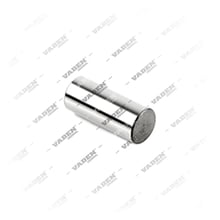
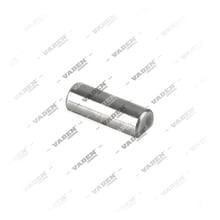
- Low-friction rotation: Allows the actuating lever to rotate within the body with minimum friction, increasing force transmission efficiency.
- Axis fixing: Keeps the lever on the correct axis, preventing lateral play and uneven wear.
- Maintaining response speed: Keeping friction low contributes to the lever responding quickly and consistently when the brake is applied.
- Load bearing: Transfers the mechanical load placed on the lever during braking to the body and balances it.
- Extending mechanism life: Prevents direct metal-to-metal contact, delaying premature wear of the lever and body.
What are the symptoms of a Brake Caliper Actuating Lever Bearing failure?
Wear or breakage in the bearing creates noticeable symptoms in the caliper mechanism.
- Stiff or hardened lever movement: The actuating lever not rotating as easily as before, a feeling of stiffness.
- Metallic squeaking or grinding sound: Abnormal sound heard as the lever moves.
- Delayed brake response: Delayed lever movement due to increased friction in the bearing, softening of pedal response.
- Uneven pad wear: Uneven distribution of clamping pressure on the pad resulting from the lever shifting off its axis.
- Visible wear marks: Pitting, discoloration or dried-out grease on the bearing balls or needles upon disassembly.
How is the Brake Caliper Actuating Lever Bearing checked?
Inspection requires disassembling the relevant section of the caliper to access the actuating lever.
- Manual rotation test: The lever is rotated by hand to feel for stiffness, binding or uneven movement.
- Visual inspection: The bearing is removed and the ball/needle surfaces are examined for pitting, discoloration or cracking.
- Grease condition check: The grease inside the bearing is evaluated for drying out, contamination or depletion.
- Axial play check: The lever's lateral and axial play within the body is measured to determine excessive tolerance.
- Noise test: Abnormal sound from the caliper area is listened to and evaluated during a test drive.
What should be considered when replacing it?
Correct part selection and correct assembly method are decisive when replacing the actuating lever bearing.
- Correct bearing type: The needle or ball bearing type specific to the caliper model must be used; fitting a different type disrupts the mechanism.
- Seat cleanliness: Old grease residue and dirt in the bearing seat must be completely cleaned.
- Proper grease application: The heat-resistant grease recommended by the manufacturer must be applied in the correct amount and manner.
- Correct assembly orientation: Where the bearing is directional, the assembly orientation must be observed.
- Post-assembly movement test: It must be verified after installation that the lever rotates freely and quietly.
How is the Brake Caliper Actuating Lever Bearing selected?
Selecting the right bearing requires evaluating caliper model, bearing type and load capacity together.
Actuating lever bearing selection criteria| Criterion | Description |
|---|
| Caliper model match | Application specific to the caliper mechanism the bearing belongs to |
| Bearing type | Needle or ball bearing, matching the original design |
| Load capacity | Capacity to withstand the mechanical load generated during braking |
| Dimensional precision | Exact match with original inner/outer diameter and width dimensions |
| Grease/sealing compatibility | Internal structure compatible with high-temperature-resistant grease |
Maintenance and service life
The service life of the actuating lever bearing depends on the load, temperature and regularity of grease maintenance it is exposed to; insufficient grease or excessive load can significantly shorten its life. During periodic brake maintenance, the ease of lever rotation and bearing grease should be checked whenever the caliper mechanism is opened. Intact sealing elements against dust and moisture ingress directly affect bearing service life.
VADEN Brake Caliper Actuating Lever Bearing
VADEN offers actuating lever bearings manufactured for heavy commercial vehicle disc brake calipers, matching original dimensions and load capacity. With correct material and precise manufacturing, it supports fast-responding, long-lasting operation of the caliper mechanism.
Frequently Asked Questions (FAQ)
Does a failed actuating lever bearing put brake safety at risk?
A bearing failure can slow down brake response speed and cause uneven pad wear; while it does not directly cause total brake loss, since it negatively affects brake performance it should be inspected promptly.
Is adding grease to the bearing enough, or is replacement needed?
Regreasing can help if the grease drying out is detected early; however, if the balls or needles show pitting or discoloration, regreasing is insufficient and the bearing must be replaced.
Is this bearing the same part as the wheel hub bearing?
No, the wheel hub bearing supports the rotation of the wheel while the actuating lever bearing supports the rotation of the mechanical lever inside the caliper; they have different locations and functions.
What is the effect of using the wrong grease when replacing the bearing?
Unsuitable grease can melt or harden at high temperature, leading to premature bearing wear and increased friction.
Is slight stiffness felt in lever movement always a bearing failure?
No, sometimes dirt buildup or grease drying can cause a temporary feeling of stiffness; however, if the stiffness is persistent and accompanied by noise, disassembling and inspecting the bearing is recommended.