What Is an ABS Sensor Ring?
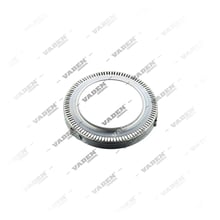
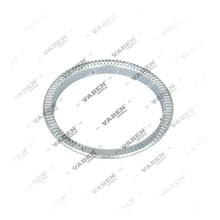
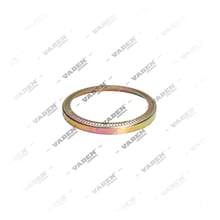
An ABS Sensor Ring is a toothed or perforated metal ring used in the braking systems of heavy commercial vehicles to measure wheel rotation speed. Fitted tightly onto the wheel hub, axle shaft end, or differential output, this ring rotates together with the vehicle's motion, and the evenly spaced teeth or holes around its circumference pass in front of the stationary ABS sensor. In the field it is also known as a tone ring, pulse ring, or reluctor ring. The ABS Sensor Ring does not generate braking force on its own; however, the sensor's ability to produce an accurate signal depends entirely on this ring's geometric precision and installation position. As one of the core sensing components of the ABS group within the Braking System, it forms the first data source for the electronic control that prevents wheel lock-up.
How Does an ABS Sensor Ring Work?
When the vehicle is in motion, the ABS Sensor Ring rotates together with the hub or axle shaft it is mounted on. The teeth or holes around the ring's circumference pass sequentially through the magnetic field or magnetoresistive detection point of the stationary ABS sensor. Each tooth passage generates an electrical signal at the sensor, and the frequency of these signals is directly proportional to the wheel's rotational speed at that moment. The ABS electronic control unit continuously compares these signals from all four wheels to detect any tendency toward lock-up and modulates brake pressure accordingly.
- Speed Signal Generation: Tooth/hole passages create a pulsed signal proportional to wheel rotation speed.
- Synchronous Reference: The ring's axial and radial runout must stay low to keep the sensor air gap constant.
- ABS/EBS Input: The generated signal is the raw data for anti-lock braking and electronic brake force distribution functions.
ABS Sensor Ring Technical Specifications
The ABS Sensor Ring is typically stamped from cold-rolled steel sheet and given a corrosion-resistant surface coating. The number of teeth and tooth spacing are defined by the relevant vehicle's ABS/EBS software; this value cannot be altered and must match the original dimension exactly. The air gap between the sensor and the ring surface is typically kept in the range of approximately 0.5-1.5 mm; the vehicle's current service manual is authoritative for the exact tolerance. The ring's flatness and runout tolerances also depend on the manufacturer's specification, and excessive deviation directly degrades signal quality.
- Material: Corrosion-resistant coated steel sheet with a stamped tooth/hole profile.
- Compatibility Criterion: Tooth count, diameter, and mounting hole pattern must match the original part exactly.
ABS Sensor Ring Types and Subgroups
- Hub-Type Sensor Ring: Press-fitted onto the front or rear wheel hub, available together with the bearing or as a separate part.
- Axle Shaft-Type Sensor Ring: Mounted on the end of the rear axle shaft, it tracks rotation at the differential output.
- Differential Drive Sensor Ring: Positioned close to the differential housing, providing an additional reference for traction control.
- Perforated (Magnetoresistive) Type: Features evenly spaced holes and is used in certain EBS applications.
- Toothed Type: Has a serrated tooth profile around its edge and is the most widely used variant in today's heavy-duty vehicles.
How to Choose the Right ABS Sensor Ring
Selecting the correct ABS Sensor Ring should start with the vehicle's chassis number or the axle/hub OEM code; the tooth count, inner/outer diameter, and mounting orientation are fixed by the vehicle's ABS software, and the wrong part will cause a signal fault. Front and rear axle sensor rings are usually different sizes, so the mounting position must always be specified when ordering. The table below summarizes the key criteria to check during selection.
ABS Sensor Ring Selection Criteria| Criterion | Check Point |
|---|
| Mounting Position | Front hub, rear hub, or axle shaft end; dimensions vary by position |
| Tooth/Hole Count | Fixed by the vehicle's ABS/EBS software, must match the original part exactly |
| Inner/Outer Diameter | Must fit precisely onto the hub or shaft seating surface, with no play or forcing |
| Material and Coating | Corrosion-resistant surface that preserves the ring's magnetic sensing properties |
| Vehicle/Axle Match | Should be confirmed against the chassis number or OEM code |
ABS Sensor Ring Maintenance and Key Considerations
- Keep the Mounting Surface Clean: Do not leave oil, rust, or metal shavings on the ring surface, as contamination disrupts the signal.
- Check the Air Gap: Adjust the distance between the sensor and the ring to the value specified in the service manual.
- Inspect for Physical Damage: If there is bending, notching, or a missing tooth, the ring must be replaced, never straightened or repaired.
- Assess Together with the Bearing/Hub: When the hub bearing is replaced, the condition of the sensor ring should also be checked.
- Correct Seating and Fitting: Pressing or bolting must follow the manufacturer's instructions, and the ring must not sit off-center.
Common Faults and Solutions
- ABS Warning Light Is On: A missing or broken tooth on the sensor ring; the ring and the related sensor should be checked together and replaced if necessary.
- Irregular or Intermittent Speed Signal: Rust, dirt, or slight deformation on the ring; clean the surface, and replace the part if the damage is permanent.
- ABS Deactivates: The air gap has moved outside tolerance; the sensor's mounting position and the ring's seating should be readjusted.
- Incorrect Speed Reading at One Wheel: The ring is bent or off-center; check the runout and fit an original-dimension ring if needed.
- Recurring Fault Code: Hub bearing play may be disturbing the ring's position; the bearing and the sensor ring should be assessed together.
Why Choose VADEN ORIGINAL?
- Manufactured to OE Dimensions: Tooth count, diameter, and mounting geometry match original part tolerances exactly.
- Broad OEM Coverage: Spans a wide range of axle and hub applications, including Mercedes-Benz, MAN, Scania, Volvo, DAF, Iveco, and Renault Trucks.
- Corrosion-Resistant Construction: Coated steel material preserves signal quality under prolonged outdoor use.
- Verified Quality Control: Every batch is dimensionally measured and surface-inspected before shipment.
- Exported to More Than 100 Countries: Proven compatibility and supply continuity across diverse fleets and service networks.
Conclusion
The ABS Sensor Ring is a small but critical component for braking safety; without correct tooth geometry and a solid installation, ABS and EBS systems cannot operate reliably. A sensor ring selected in the correct size for the vehicle and axle, kept clean, and properly mounted delivers a consistent speed signal and stable brake control. Manufactured to OE dimensions, the VADEN ORIGINAL ABS Sensor Ring offers a reliable, long-lasting solution for heavy commercial vehicle fleets.
Frequently Asked Questions (FAQ)
What does an ABS Sensor Ring do?
The ABS Sensor Ring rotates together with the wheel hub or axle shaft, and the teeth or holes around it pass in front of the stationary ABS sensor. These passages generate a signal proportional to wheel rotation speed, which the ABS electronic control unit uses for anti-lock braking.
What are the symptoms of a faulty ABS Sensor Ring?
The most common symptoms are the ABS warning light coming on, an irregular or intermittent speed signal, the ABS function deactivating, and an incorrect speed reading at one wheel. In these cases, the tooth/hole pattern on the ring and the air gap should be checked.
Is the ABS Sensor Ring the same part as the ABS sensor?
No, they are two different components. The ABS sensor is the stationary electronic part that reads the signal, while the ABS Sensor Ring is the mechanical ring that rotates with the wheel and presents the tooth/hole profile to be read by the sensor. For a healthy ABS signal, both must be compatible and correctly positioned.
What should be checked when choosing an ABS Sensor Ring?
The mounting position (front/rear hub or axle shaft end), tooth/hole count, inner/outer diameter, and OEM match based on the vehicle's chassis number should all be verified. Front and rear axle sensor rings usually differ in size, so orders should never be placed without the correct position information.
Can a damaged ABS Sensor Ring be repaired?
No, a bent, notched, or ring with a missing tooth should not be straightened and reused, since such intervention disrupts signal accuracy. A damaged ring must be replaced with a new ABS Sensor Ring of the original dimension.
Related products — Brake System: ABS (view all)