What Is an ABS Tone Ring (Reluctor)?
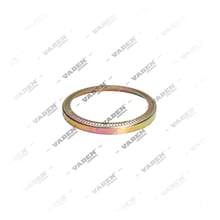
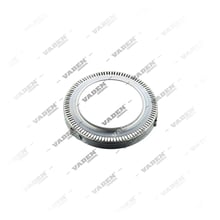
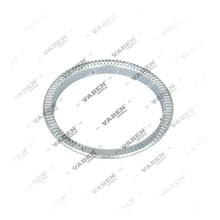
An ABS tone ring is a toothed ring mounted on the wheel hub or axle that transmits the wheel's rotation speed to the ABS wheel-speed sensor through the teeth around its circumference. Also known as a reluctor ring or exciter ring, this part generates an electromagnetic signal as its teeth pass in front of the ABS sensor. On heavy commercial vehicles, that signal is the core data the ABS control unit uses to detect wheel lock-up and modulate brake pressure accurately.
What Does an ABS Tone Ring Do?
- Reads wheel speed: Its toothed profile continuously feeds each wheel's rotation speed to the ABS sensor.
- Generates the ABS signal: As the teeth sweep past the sensor, they create an electromagnetic pulse that supplies data to the control unit.
- Helps prevent wheel lock-up: Accurate speed data lets the ABS system keep the wheels from locking during braking.
- Improves braking safety: It helps preserve steering control and brake balance during hard or emergency stops.
- Feeds EBS and traction systems: On modern vehicles it also supplies reference speed to EBS, ASR and stability control systems.
ABS Tone Ring Technical Summary
| Feature | Detail |
|---|
| Material | High-strength steel / cast metal (wear- and corrosion-resistant) |
| Vehicle type | Trucks, tractor units, buses, trailers and semi-trailers |
| Compatibility | Heavy commercial vehicles including Mercedes-Benz, MAN, Scania, Volvo, DAF, Iveco, Renault, BMC and Ford |
| System | Wabco / Knorr-Bremse based ABS and EBS brake systems |
| OE-equivalent approach | Manufactured to match OE tooth count, diameter and geometry exactly |
| Fitment | Press-fit / interference fit onto the wheel hub or axle shaft |
| Service interval | Visual check during brake-pad and hub service; monitor teeth for damage or contamination |
Types and Related Components of the ABS Tone Ring
- Tone ring (reluctor / exciter ring): The main toothed component that fits on the axle or hub and generates the signal read by the ABS sensor.
- Hub-mounted press-fit ring: A ring pressed onto the wheel hub with an interference fit so it rotates together with the hub.
- Axle-shaft mounted ring: A ring positioned on the differential or axle shaft that measures inboard axle speed.
- Toothed and magnetic-type rings: Alongside classic toothed reluctor rings, some systems use magnetically encoded rings.
ABS Tone Ring Maintenance: What to Watch For
- Regular visual inspection: During hub and brake-pad service, check the teeth for cracks, chips or distortion.
- Keep it clean: Mud, rust, metal filings and debris packed between the teeth can corrupt the signal, so the ring must be kept clean.
- Sensor air gap: The clearance between the ring and the ABS sensor must stay within the manufacturer's tolerance.
- Correct installation: Press-fit rings must not be installed off-centre; avoid any deformation during fitting.
- Choose genuine parts: For the correct tooth count and geometry, choose OE-standard parts such as VADEN ORIGINAL.
Common Failures and Fixes
- ABS warning light comes on: Broken, worn or contaminated teeth corrupt the signal; clean or replace the ring.
- Faulty brake intervention / ABS not engaging: Caused by a missing or incorrect speed signal; check the ring's teeth and the sensor air gap.
- Intermittent signal dropout: A bent or off-centre ring runs out of true; replace the damaged ring with a genuine one.
- Corrosion and lost teeth: Moisture and road salt rust the ring and erode the teeth; fit a corrosion-resistant ring.
- Speedometer / EBS fault codes: Systems sharing the same ring may log fault codes; assess the ring and sensor together.
Why Choose a VADEN ORIGINAL ABS Tone Ring?
- Built to OE standards: Manufactured to match OE tooth count, diameter and geometry exactly.
- Durable material: Wear- and corrosion-resistant materials deliver long, reliable service life.
- Wide vehicle coverage: A broad range to suit truck, tractor unit, bus and trailer applications.
- Precise signal quality: The correct tooth profile delivers stable, error-free speed data to ABS and EBS systems.
- Technical support: Professional help with correct part selection and installation.
Frequently Asked Questions (FAQ)
What is an ABS tone ring (reluctor)?
An ABS tone ring is a toothed reluctor ring fitted to the wheel hub or axle that transmits wheel rotation speed to the ABS wheel-speed sensor. It generates the core speed data the ABS system needs to work correctly.
What happens if the ABS tone ring fails?
Broken, worn or contaminated teeth trigger the ABS warning light, cause faulty brake intervention or disable the ABS altogether. This raises the risk of wheel lock-up during hard braking.
How do you clean an ABS tone ring?
Use a soft brush and a suitable cleaner to remove mud, rust and metal filings from between the teeth without damaging them. A ring that is distorted or missing teeth cannot be cleaned and must be replaced.
Which vehicles use an ABS tone ring?
It is used on trucks, tractor units, buses and trailers from brands such as Mercedes-Benz, MAN, Scania, Volvo, DAF, Iveco, Renault, BMC and Ford, in Wabco and Knorr-Bremse based ABS/EBS systems.
Is the ABS tone ring the same as the ABS sensor?
No. The tone ring (reluctor ring) is the rotating toothed part that generates the signal; the ABS sensor is the pickup that reads those teeth and converts them into an electrical signal. The two work together.
What should you check when replacing an ABS tone ring?
Choose an OE-equivalent ring with the correct tooth count and diameter, avoid off-centre installation, and set the air gap between ring and sensor to the manufacturer's tolerance. Replacement should be done by a qualified technician.
Conclusion
The ABS tone ring is a critical component that keeps the ABS and EBS brake systems on heavy commercial vehicles working safely with accurate speed data. Sound teeth and precise signal quality directly determine your braking safety. For durable, OE-standard ABS tone rings, trust the assurance of VADEN ORIGINAL.
Related technical guide: ABS Wheel Speed Sensor & ECU: Faults, Replacement & Care
Related technical guide: ABS Brake System: How It Works, Warning Light and Faults