What is the engine ventilation (crankcase ventilation) system?
The engine ventilation system is the crankcase ventilation circuit that removes the combustion gases which leak past the piston rings into the crankcase (oil sump) area during combustion, known as blow-by gases, in a controlled way. In heavy-duty diesel engines these gases form continuously, and if they are not evacuated, pressure builds inside the crankcase, leading to oil leaks and strained gaskets. Through the ventilation gasket, drain pipes and hoses, the system separates the oil from the gas and routes it back to the intake line or vents it to the atmosphere.
What are the functions of the crankcase ventilation system?
- Balancing crankcase pressure: By evacuating blow-by gases it prevents pressure build-up inside the crankcase and extends gasket life.
- Preventing oil leaks: The balanced crankcase pressure stops oil from seeping past seals and gaskets.
- Separating oil from gas: It separates the oil droplets carried in the blow-by gas, reducing oil consumption and keeping the intake line clean.
- Protecting the engine oil: By removing combustion by-products and moisture from the crankcase, it slows oil oxidation.
- Limiting emissions: In closed-loop systems, returning the gas to the intake lowers the hydrocarbons released into the environment.
Engine ventilation system technical summary table
| Feature | Description |
|---|
| Material | Heat- and oil-resistant elastomer/rubber hoses, technical plastic and metal fittings; specialized gasket materials for sealing |
| Vehicle type | Trucks, tractor units, buses and heavy commercial vehicles (heavy-duty diesel engines) |
| System | Engine / crankcase ventilation (blow-by) circuit |
| Compatibility | Applications for Mercedes-Benz, MAN, Scania, Volvo, DAF, Iveco, Renault, BMC and Ford heavy-duty engines |
| OE-equivalent approach | Matches original-equipment dimensions and connection geometry; produced as an OE equivalent (application must be verified against the vehicle model) |
| Installation | Carried out by a specialist using the correct gasket and clamp, with sealing checked |
| Maintenance | Periodic inspection; replacement of hardened or cracked gaskets and hoses |
What are the main parts of the crankcase ventilation system?
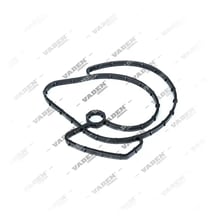
- Ventilation gasket (Gasket): Seals the joint between the ventilation cover and the engine block/rocker cover; when it hardens it causes blow-by gas and oil leakage.
- Ventilation pipe/hose (Pipe): The connecting element that carries blow-by gas from the oil separator to the intake line or drain point; a crack or blockage reduces performance.
- Oil separator connections: Leak-tight connections that link the unit separating oil droplets from the gas to the pipe/hose.
- Clamps and fasteners: Keep the hoses and pipes secure and leak-free under vibration so they do not work loose.
What to watch for when maintaining the engine ventilation system?
- Regular visual inspection: Periodically check hoses and pipes for cracks, hardening and oil weeping.
- Monitoring gasket condition: Replace the ventilation gasket without delay if you see crushing or signs of a leak.
- Watching for blockages: Oil and soot build-up can narrow the pipes; be alert to condensation-related blockages in winter.
- Clamp tightness: Make sure the connection clamps have not loosened and there is no air or oil leak.
- Choosing genuine parts: Use VADEN ORIGINAL crankcase ventilation components for correct geometry and durability.
Common crankcase ventilation problems and their solutions
- Oil leaks and weeping at the engine: Usually caused by increased crankcase pressure from a blocked ventilation or a faulty gasket; clean the hose/pipe and renew the gasket.
- Increased oil consumption: A failed oil separator or hose lets oil be carried into the intake along with the gas; replace the faulty component.
- Pressure and gas escaping from the crankcase: A cracked hose or hardened gasket lets blow-by gas escape uncontrolled; renew the damaged parts with OE equivalents.
- Ventilation freezing/blocking in winter: Condensed moisture and ice can block the pipe; clear the blockage and replace the hose if needed.
- Connection coming apart from vibration: A loose clamp or worn hose lets the connection detach; check and replace the clamp and hose.
Why choose VADEN ORIGINAL engine ventilation components?
- Durable materials: Long service life thanks to hose, pipe and gasket materials resistant to high heat, oil and vibration.
- OE-standard compliance: Matches original-equipment dimensions and connection geometry, built to OE-equivalent production standards.
- Broad vehicle coverage: A wide range for Mercedes-Benz, MAN, Scania, Volvo, DAF, Iveco, Renault, BMC and Ford heavy-duty applications.
- Leak-tight performance: Correct sealing balances crankcase pressure and prevents oil leaks and emission loss.
- Technical support: VADEN ORIGINAL provides expert support for correct part selection and installation.
Frequently Asked Questions (FAQ)
What does the engine ventilation (crankcase ventilation) system do?
It evacuates the blow-by gases that slip past the piston rings into the crankcase during combustion. This balances crankcase pressure, prevents oil leaks and extends the life of the engine oil.
What are blow-by gases?
They are combustion gases that get past the rings between the piston and cylinder from the combustion chamber and into the crankcase area. The crankcase ventilation system removes these gases from the engine in a controlled way.
What happens if the crankcase ventilation hose gets blocked?
Crankcase pressure rises; oil starts leaking past seals and gaskets, oil consumption increases and the engine shows weeping. A blocked hose should be cleaned or replaced.
When should the ventilation gasket be replaced?
It is recommended to fit a new gasket when you see hardening, crushing, oil weeping or signs of a leak on the gasket, or whenever the ventilation cover is removed.
Does the engine ventilation system affect oil consumption?
Yes. A faulty oil separator or damaged hose lets oil be carried into the intake line along with the blow-by gas, increasing oil consumption.
Which vehicles are VADEN ORIGINAL crankcase ventilation parts suitable for?
Applications are available for heavy-duty engines such as Mercedes-Benz, MAN, Scania, Volvo, DAF, Iveco, Renault, BMC and Ford. The vehicle model and engine type should be verified for the correct part.
Conclusion
The engine ventilation (crankcase ventilation) system is a critical component that evacuates blow-by gases in heavy-duty engines, balancing crankcase pressure and preventing oil leaks and gasket damage. Sound gaskets, pipes and hoses directly protect engine life and fuel/oil efficiency. For durable, OE-standard solutions for your trucks, buses and tractor units, choose the assurance of VADEN ORIGINAL.
Related products — Engine: Engine (view all)