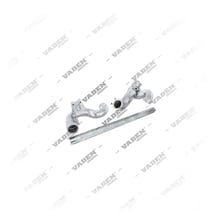
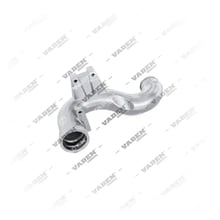
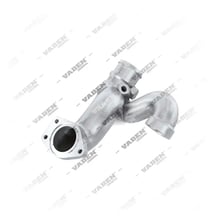
What Is a Thermostat Pipe?
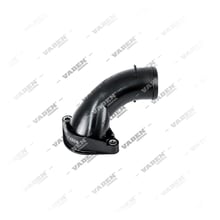
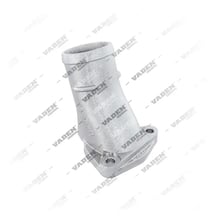
The Thermostat Pipe is the connecting line in the cooling system of heavy-duty commercial vehicles that carries coolant flow between the thermostat housing and the radiator, water pump, or engine block. In the field it is also referred to as the "thermostat hose" or "thermostat outlet pipe." Manufactured with either a metal or a reinforced rubber body, this pipe physically enables coolant to be directed to the short-circuit line (within the engine) or the long-circuit line (via the radiator), depending on whether the thermostat is open or closed. It serves in truck, tractor unit, bus, and trailer-towing vehicle engines, connecting directly to the thermostat housing in Mercedes-Benz, MAN, Scania, Volvo, DAF, Iveco, and Renault Trucks engine families. When the Thermostat Pipe fails, the integrity of the cooling circuit is compromised, which can lead to engine overheating or insufficient warm-up.
Thermostat Pipe Functions and Operating Principle
While the cooling system is running, fluid heated in the engine block first reaches the thermostat housing. If the fluid temperature is below the set threshold, the thermostat stays closed and the Thermostat Pipe routes the coolant through the short-circuit line inside the engine without passing it through the radiator, allowing the engine to reach operating temperature more quickly. Once the temperature threshold is exceeded, the thermostat opens and the same pipe line directs the coolant to the radiator so that heat can be released to the outside air. The pipe's inner diameter, wall thickness, and connection geometry directly affect flow rate in the system; a deformed pipe causes the engine temperature to run unevenly.
Thermostat Pipe Technical Specifications
The material used in Thermostat Pipe manufacturing varies according to its position on the engine; sections close to the thermostat housing that are exposed to high temperature are generally made from aluminum- or steel-based metal pipe, while connection points that require flexibility use heat-resistant reinforced rubber hose. Because pipe diameter and connection flange dimensions differ by engine family, compatibility should always be confirmed using the engine code and chassis number. Exact torque and pressure values should always be taken from the vehicle's current service manual.
- Material: Aluminum/steel metal body or heat-resistant reinforced rubber hose, depending on position.
- Connection Type: Flanged bolted connection, clamped hose connection, or quick-connect fittings.
- Sealing Element: O-ring, flat gasket, or integrated sealing lip.
- Compatibility Criterion: Determined by engine code, chassis number, and thermostat housing revision.
Thermostat Pipe Types and Subgroups
Depending on its position in the cooling system and the engine design, the Thermostat Pipe is manufactured in different structures and geometries.
- Metal Thermostat Outlet Pipe: A rigid, vibration-resistant pipe that provides the transition from the thermostat housing to the upper radiator hose.
- Reinforced Rubber Thermostat Hose: A heat-resistant, multi-layer hose that provides flexibility between metal pipe segments.
- Water Pump Connection Pipe: A short connecting line that directs flow between the thermostat housing and the water pump inlet.
- Heater Circuit Thermostat Pipe: An auxiliary pipe line that carries coolant to the cabin heating circuit.
- Bypass Thermostat Pipe: An internal passage pipe that routes fluid to the short-circuit line without passing through the radiator while the engine is cold.
How to Choose the Right Thermostat Pipe
The first criterion when selecting a Thermostat Pipe is dimension and connection geometry that matches the engine code and chassis number exactly; a pipe that looks similar but has a different inner diameter or flange angle can cause leaks after installation. The second criterion is material strength suited to the area where the pipe is located. Having sealing elements (O-ring, gasket) in the original dimension is the most effective way to prevent coolant leaks. The table below summarizes the criteria to consider during the selection process.
Thermostat Pipe Selection and Compatibility Criteria| Criterion | Why It Matters |
|---|
| Engine code / chassis number match | Pipe diameter and connection geometry vary by engine family |
| Connection type (flange/clamp/quick-connect) | The wrong connection type causes leaks during installation |
| Material durability | Prevents premature fatigue in areas exposed to high temperature and vibration |
| Sealing element size | A non-original-size O-ring/gasket causes coolant loss |
| Thermostat housing revision | Pipe geometry can change across different production periods of the same engine |
Thermostat Pipe Maintenance and Points to Watch
- Periodic Visual Inspection: Regularly check the pipe surface for cracks, swelling, or discoloration.
- Clamp Tightness Check: Make sure connection clamps have not loosened; a loose clamp eventually starts a leak.
- Coolant Quality: Using clean coolant at the proper concentration prevents corrosion on the pipe's inner surface.
- Correct Installation Torque: Overtightening deforms the pipe, while undertightening causes leaks; the values in the service manual should be followed.
- Use of Original-Dimension Parts: Replace sealing elements with new ones in the original size and material.
Common Thermostat Pipe Failures and Solutions
- Coolant Leak at the Pipe Connection: Caused by a worn O-ring or a loosened clamp; the sealing element should be renewed and the clamp tightened to the specified value.
- Engine Overheating: Occurs when a cracked or clogged pipe narrows the flow cross-section; the pipe should be replaced and the cooling circuit bled of air.
- Slow Engine Warm-Up: When the pipe geometry in the bypass line is deformed, short-circuit flow becomes irregular; the pipe and thermostat should be checked together.
- Foaming in the Coolant: A cracked pipe drawing in air at the connection point causes this symptom; the leak point should be located and the pipe replaced.
- Swelling or Softening on the Pipe Surface: Results from chemical aging of the rubber segment; the hose should be renewed in the original dimension.
Why Choose a VADEN ORIGINAL Thermostat Pipe?
- Manufactured to OE Dimensions: Produced with diameter, geometry, and wall thickness verified for each engine code.
- Extensive OEM Cross-Reference: Offers a compatible reference range for Mercedes-Benz, MAN, Scania, Volvo, DAF, Iveco, and Renault Trucks engine families.
- Durable Material: Rubber segments are produced with a compound suited to heavy-duty conditions, and metal segments are treated against corrosion.
- Exported to Over 100 Countries: A consistent quality standard trusted by global fleet operators.
- Sealing Guarantee: Fully compatible installation with original-dimension O-ring and gasket sets.
Conclusion
Although it may look like a small part, the Thermostat Pipe is a critical connecting component that directly affects the integrity of the cooling system and the engine's ability to run at the correct temperature. A Thermostat Pipe selected in the right dimension, the right material, and with original sealing elements reduces the risk of leaks, keeps engine temperature stable, and prevents failures caused by overheating. VADEN ORIGINAL Thermostat Pipe products are engineered to OE dimensions to preserve the cooling system reliability of heavy-duty commercial vehicle fleets.
Frequently Asked Questions (FAQ)
What is a Thermostat Pipe and what does it do?
The Thermostat Pipe is the connecting line that carries coolant between the thermostat housing and the radiator, water pump, or engine block. Depending on whether the thermostat is open or closed, it directs the coolant to the short-circuit or radiator line, allowing the engine to operate at the correct temperature.
What symptoms appear when a Thermostat Pipe fails?
The most common symptoms are engine overheating or slow warm-up, coolant leaking at the pipe connection, foaming in the coolant, and swelling or softening on the rubber hose surface. If any of these symptoms are observed, the pipe and its connection points should be inspected.
What material is a Thermostat Pipe made from?
Sections close to the thermostat housing that are exposed to high temperature are generally made from aluminum- or steel-based metal pipe, while connection points that require flexibility use heat-resistant reinforced rubber hose.
How do you choose the correct Thermostat Pipe?
The most important criterion is dimension and connection geometry that matches the engine code and chassis number exactly. It is also important that the sealing elements (O-ring, gasket) are the original size, which prevents leak risk after installation.
Which vehicles is the VADEN ORIGINAL Thermostat Pipe compatible with?
VADEN ORIGINAL Thermostat Pipe products are manufactured to OE dimensions suitable for Mercedes-Benz, MAN, Scania, Volvo, DAF, Iveco, and Renault Trucks heavy-duty commercial vehicle engine families. Compatibility should be confirmed using the engine code and chassis number before ordering.