What are the functions of a thermostat gasket?
The gasket has one core function: maintaining a complete seal under pressure between the thermostat housing and its mating surface. That single function carries several practical consequences for engine health.
- Pressure sealing: The cooling system typically runs at roughly 1-2 bar at operating temperature; the gasket forms a sealing barrier able to withstand that pressure.
- Preventing coolant loss: Without leakage, the system stays at the correct fluid level, keeping the engine from overheating.
- Blocking air ingress: Prevents air pockets from forming, helping the thermostat operate correctly and temperature sensors read accurately.
- Resistance to vibration and thermal expansion: The gasket must keep its shape and flexibility despite the temperature swings and vibration generated while the engine runs.
What are the symptoms of a failed thermostat gasket?
Over time a thermostat gasket hardens, cracks, or loses its compression set. This shows up through a few characteristic symptoms.
- Coolant leakage: Dampness around the thermostat housing, dried green/orange/pink residue, or active dripping.
- Falling coolant level: A steady, unexplained drop in the expansion tank fluid level.
- Fluctuating engine temperature: An unstable temperature gauge reading or an overheating warning on the dash.
- Emulsion in the sump oil: In advanced leaks, coolant mixing into the oil, showing as a foamy or milky residue on the dipstick.
- Steam or a sweet smell: A characteristic odour when leaking coolant vaporises on hot engine bay surfaces.
How is a thermostat gasket checked?
Inspection should be done with a cold engine. Start with a visual check of the thermostat housing and its surroundings, looking for dried fluid trails, rust staining, or moisture buildup. Housing bolts should be checked against the specified torque, since loose bolts cause uneven gasket compression and micro-leaks. If leakage is suspected, pressurise the cooling system with a pressure tester up to the value specified by the system manufacturer and watch for pressure drop around the housing. On a removed gasket, cracking, hardening, loss of the compression mark, or a distorted profile are all signs of failure, and the gasket should not be reused.
What should be considered during replacement?
Replacing a thermostat gasket is a relatively simple job, but it demands care.
- Surface cleanliness: The mating faces on the block and housing must be completely free of old gasket residue, oil, and rust; use a scraper that will not score the surface.
- Correct gasket selection: Thickness, profile, and bolt hole layout must match the engine code exactly; a gasket for a different model will not seal.
- Torque sequence: Housing bolts should be tightened in the sequence and to the torque value specified by the manufacturer, in stages; overtightening in one pass can crush and distort the gasket.
- The thermostat itself: While the gasket is being replaced, check the thermostat element's opening temperature and mechanical condition, and renew it as well if needed.
- System refill: After assembly, bleed the cooling system of air, refill with the correct coolant type and mix ratio, then check for leaks.
How should a thermostat gasket be selected?
Selection should be based on the vehicle's engine code and chassis number, confirmed against the OEM part number. Material compatibility (the rubber compound must resist coolant additives), thickness tolerance, and bolt hole layout must match the original exactly.
Thermostat gasket selection criteria| Criterion | Description |
|---|
| Material | Rubber or composite resistant to heat and coolant additives |
| Thickness | Matches the original dimension; too thin or too thick breaks the seal |
| Profile / hole layout | Must align exactly with housing and block bolt holes |
| Pressure rating | Suitable for the system pressure specified in the vehicle's current OE service manual |
| Temperature range | Must not lose shape across the engine's operating temperature range |
Maintenance and service life
A thermostat gasket lasts a long time on vehicles that receive regular cooling system maintenance. However, skipping the recommended coolant change interval, using low-quality antifreeze, or frequent heat-cool cycles accelerates hardening. Renewing the gasket every time the thermostat housing is removed eliminates the leak risk that comes with reusing a compressed gasket. A visual check around the housing during routine maintenance is the most practical way to catch a developing failure before it turns into a roadside breakdown.
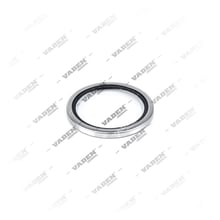
VADEN thermostat gasket
VADEN manufactures OEM-matching thermostat gaskets for heavy-duty commercial vehicle cooling systems, built to the correct material and dimensional tolerance. As with its caliper, engine, and cooling system parts, the goal here is to preserve the vehicle's original sealing performance.
Frequently Asked Questions (FAQ)
How often should a thermostat gasket be replaced
There is no fixed mileage rule; it should be renewed every time the thermostat housing is removed or when leak symptoms appear. A visual check during routine cooling system maintenance is recommended.
Can a failed thermostat gasket damage the engine
If the leak continues, coolant level drops and the engine can overheat, which over time can lead to cylinder head or head gasket damage, so early attention matters.
Is it safe to reuse a thermostat gasket
No, a removed gasket usually loses its compression set and will not seal fully when reinstalled. Using a new gasket at every removal is recommended.
Should the thermostat be replaced together with its gasket
Not mandatory, but once the housing is open, the thermostat's opening temperature and mechanical condition should be checked, and replacing both together is often more labour-efficient if wear is found.
How can a thermostat gasket leak be identified
Moisture around the housing, dried coolant trails, a falling expansion tank level, or fluctuating engine temperature are the typical signs of a leak.