What is the Chassis Mounting Bracket Clamp?
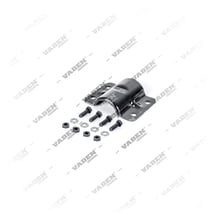
The Chassis Mounting Bracket Clamp is a fastening part, usually in a half-moon or full-ring shape with a bolt hole at each end, mounted onto the bracket. Some models feature a rubber lining on the inner surface, which prevents the pipe or hose from wearing at the clamp edge and dampens vibration. Clamp diameter is determined by the outer diameter of the line or harness being carried.
What are the functions of the Chassis Mounting Bracket Clamp?
- Fixing: securely holds the pipe, hose or wiring harness to the mounting bracket.
- Vibration damping: its inner lining absorbs vibration from vehicle movement, reducing wear on the line.
- Route control: keeps the line running in an orderly, predictable route along the chassis, preventing contact with other components.
- Safety: prevents critical lines, such as air brake or fuel lines, from sagging and being damaged.
What are the symptoms of Chassis Mounting Bracket Clamp failure?
When the clamp loosens or breaks, the line it carries sags, which can cause it to contact other chassis parts, the wheel or the road surface and wear through. A sagging air brake pipe can eventually be worn through by friction, causing an air leak, while a fuel line in the same condition can develop a fuel leak. Corroded clamps become brittle and can snap suddenly, especially over bumps. Visual inspection typically reveals a sagging line, cracks in the clamp, or lining wear as symptoms of failure.
How is the Chassis Mounting Bracket Clamp checked?
During periodic chassis inspection, all clamps are visually checked for looseness, cracks or corrosion marks. The clamp is gently forced by hand to check whether it stays fixed on the bracket. On clamps with an inner lining, the lining should be examined for hardening or fragmentation, as hardened lining loses its vibration-damping property. The line held by the clamp should also be checked for friction marks.
What should be considered during replacement?
When replacing a clamp, the bracket's mounting hole size and bolt type should be checked, and an incompatible clamp should not be used. Tightening torque must not be excessive - an over-tightened clamp can crush the rubber lining and impair its vibration-damping property, while an under-tightened clamp allows the line to slip. After installation, the line routing should be rechecked to confirm it does not contact other moving parts (wheel, suspension).
How to choose the right Chassis Mounting Bracket Clamp?
Clamp selection should be based on the outer diameter of the line being carried and the bracket's mounting hole size. For critical lines (air brake, fuel), a clamp with an inner lining and vibration damping is recommended. VADEN clamps are manufactured to OE mounting dimensions and diameter values, offering a reliable fastening solution.
Chassis Mounting Bracket Clamp - general technical reference values| Parameter | Approximate range |
|---|
| Material | Steel or coated (galvanised/stainless) metal |
| Inner lining | Rubber (on vibration-damped models) |
| Operating temperature | -40 degC ... +120 degC |
| Tightening torque | Varies by model, over-tightening should be avoided |
| Inspection interval | Together with periodic chassis/line inspection |
The values in the table are general reference figures; for exact tightening torque and dimensions the bracket current OE service manual is authoritative.
Maintenance and service life
The Chassis Mounting Bracket Clamp serves for many years when manufactured from corrosion-resistant material and installed at the correct torque. Key factors that shorten its life include corrosion in salty/humid environments, lining damage from over-tightening, and neglecting periodic inspection despite constant vibration.
VADEN Chassis Mounting Bracket Clamp
VADEN manufactures mounting bracket clamps to OE dimensions for heavy-duty vehicle chassis lines, providing secure fastening and vibration damping.
Frequently Asked Questions (FAQ)
What does the chassis mounting bracket clamp do
It secures a pipe, hose or wiring harness to the mounting bracket, preventing sagging and vibration-induced wear.
What happens if the clamp breaks
The line it carries can sag and contact other components; this risks wearing through an air brake pipe or causing a fuel line leak.
Why is a clamp with an inner lining preferred
The rubber lining dampens vibration and prevents the line from wearing at the clamp edge.
How tight should the clamp be
Over-tightening crushes the lining, while under-tightening allows slipping; the manufacturer torque value should be followed.
What should be checked when selecting a clamp
A clamp matching the outer diameter of the line and the bracket mounting hole size should be selected.