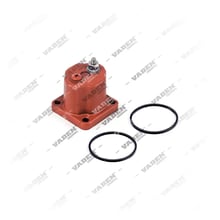
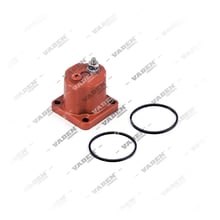
What Is a Solenoid Coil Valve?
A solenoid coil valve is the moving valve component in a heavy commercial vehicle's fuel system that opens or shuts off fuel flow when triggered by an electrical current. The magnetic field generated by the solenoid coil pulls the needle- or piston-type moving element inside the valve, giving instant control over the fuel path. In the field it is also known as a "solenoid valve," "fuel shut-off valve," or "coil valve assembly." This component is a critical control point on diesel injection pumps, engine stop solenoids, and common rail feed lines, cutting off or releasing fuel exactly when required. VADEN ORIGINAL Solenoid Coil Valve products are manufactured to be compatible with Bosch and Zexel type fuel systems used on Mercedes-Benz, MAN, Scania, Volvo, DAF, Iveco, and Renault Trucks heavy vehicles.
How Does a Solenoid Coil Valve Work?
A solenoid coil valve operates on the electromagnetic principle. When current is applied to the coil, the resulting magnetic field pulls the moving core (needle or piston) inside the valve body in one direction; when current is cut, spring force returns the core to its original position. This movement opens or closes the fuel passage. A signal from the engine control unit (ECU) or the ignition switch applies voltage to the coil to determine the valve's operating moment. In fuel shut-off applications, the solenoid stops fuel flow the instant the ignition is switched off, allowing the engine to stall in a controlled way; in injection pumps, the valve precisely governs fuel delivery volume and timing. The valve's sealing surfaces and the clearances of the moving core directly affect the system's response speed and pressure-holding capacity.
- Electromagnetic Triggering: Current applied to the coil creates a magnetic field that pulls the moving core.
- Fuel Path Control: Core movement opens or closes the valve seating surface, managing fuel passage.
- Instant Shut-Off Function: When the ignition is switched off, current is cut and the spring closes the valve, stopping fuel immediately.
- Timing Control: In injection pumps, the valve fine-tunes fuel delivery volume according to the ECU signal.
Solenoid Coil Valve Technical Specifications
Solenoid coil valves are designed with different voltages (typically 12V or 24V), winding resistance, and magnetic pull force depending on the system they serve. The valve body is manufactured from corrosion-resistant steel or brass alloys on surfaces that contact fuel; the needle and seating surfaces are precision-ground to preserve sealing. Fuel pressure resistance varies by valve type, ranging from low-pressure feed lines to high-pressure injection pump inlets. Compatibility criteria include coil resistance, connector socket type, valve body thread size, and mounting orientation. For exact voltage, resistance, and pressure values, the vehicle's and pump's current service manual should always be the reference.
Solenoid Coil Valve Types and Subgroups
- Fuel Shut-Off Solenoid Valve: Fully cuts fuel flow for the engine stop function, engaging when the ignition is switched off.
- Injection Pump Solenoid Valve: Electronically controls fuel delivery volume and injection timing inside the pump.
- Normally Open (NO) Type Valve: Allows fuel passage when no current is applied and closes when current is applied.
- Normally Closed (NC) Type Valve: Blocks fuel passage when no current is applied and opens when current is applied.
- High-Pressure Solenoid Valve: Has a reinforced body designed to maintain sealing on common rail and high-pressure feed lines.
- Low-Pressure Feed Valve: Manages low-pressure flow in lines downstream of the fuel filter.
How to Choose the Right Solenoid Coil Valve
When selecting the correct solenoid coil valve, the vehicle's engine model, fuel system type (mechanical injection pump or common rail), and the valve's operating voltage must be evaluated together. Choosing the wrong coil resistance or connector type can result in the valve failing to operate at all, or in an ECU fault code. The table below summarizes the key criteria to consider during selection.
Solenoid Coil Valve Selection Criteria| Criterion | Why It Matters |
|---|
| Operating Voltage (12V/24V) | Voltage incompatible with the vehicle's electrical system prevents the valve from working |
| Coil Resistance (Ohm) | Must match the ECU's current-sensing threshold, otherwise a fault code is triggered |
| Valve Type (NO/NC) | The type must match the system's fail-safe logic |
| Connector Socket | Must plug directly into the vehicle's wiring harness |
| Pressure Class | Low- and high-pressure lines require different body strength |
| Pump/Engine Compatibility | Mounting dimensions vary by Bosch or Zexel pump series |
Solenoid Coil Valve Maintenance and Key Considerations
- Check Electrical Connections: Make sure the connector and wiring are free of oxidation and firmly seated.
- Measure Coil Resistance: Periodically check coil resistance with a multimeter to catch winding damage early.
- Watch Fuel Cleanliness: Contaminated fuel causes wear on valve seating surfaces and a loss of sealing.
- Follow Mounting Torque: Overtightening can deform the valve body, while a loose fit can cause fuel leaks; the vehicle manufacturer's current service manual is the reference.
- Test Valve Movement: During removal, confirm the needle or piston moves freely, and replace it if it sticks.
Common Faults and Solutions
- Engine Does Not Stall With the Ignition: The fuel shut-off solenoid may be faulty or the coil burned out; measure coil resistance and replace the valve if necessary.
- Engine Won't Start or Starts With Difficulty: The solenoid valve may not be opening fuel flow fully; check the valve needle and seating surface.
- ECU Shows a Fault Code: Coil resistance or the wiring connection may be faulty; verify connector contact and resistance value.
- Fuel Leak Observed: There may be a crack in the valve body or wear on the sealing surface; replace the valve as a complete unit.
- Rough Idle or Power Loss: The valve may not be fully opening and closing due to partial blockage; check fuel cleanliness and test the valve.
Why Choose VADEN ORIGINAL?
- Manufactured to OE Dimensions: Produced to original equipment dimensions and tolerances, ensuring direct vehicle fit with no extra labor required.
- Extensive OEM Cross-Reference: Makes it easy to find the correct part for Bosch and Zexel type fuel systems.
- Durable Coil Winding: Precision-machined sealing surfaces and a robust winding deliver a long service life.
- International Reach: A production infrastructure exporting to more than 100 countries provides consistent quality and continuous parts availability.
Conclusion
The solenoid coil valve is a small but critical component that gives the fuel system electronic control; its failure can cause the engine to not run or to stop unexpectedly. A VADEN ORIGINAL Solenoid Coil Valve selected with the correct voltage, resistance, and valve type delivers reliable, long-lasting performance in the vehicle's fuel system.
Frequently Asked Questions (FAQ)
What does a solenoid coil valve do?
A solenoid coil valve is triggered by an electrical signal to open or close fuel flow within the fuel system. It cuts fuel for the engine stop function, while in injection pumps it controls fuel delivery volume and timing.
What happens when a solenoid coil valve fails?
A faulty solenoid coil valve can cause the engine to not stall with the ignition, to start with difficulty, to lose power, or to trigger an ECU fault code. Coil resistance and valve movement should be checked to pinpoint the source of the fault.
What is the difference between a solenoid coil valve and a repair kit?
A solenoid coil valve is a complete working valve unit including the coil and the moving needle. A repair kit, on the other hand, contains individual sealing parts such as gaskets and O-rings for the valve and is used to overhaul an existing valve.
Which vehicles is a solenoid coil valve compatible with?
VADEN ORIGINAL solenoid coil valves are compatible with Bosch and Zexel type fuel systems used on Mercedes-Benz, MAN, Scania, Volvo, DAF, Iveco, and Renault Trucks heavy vehicles. The vehicle and pump model should be verified with technical support before ordering.
How is solenoid coil valve coil resistance checked?
The valve is removed and a multimeter is connected across the connector pins to measure the ohm value. If the reading falls outside the manufacturer's specified reference resistance range, the coil winding is faulty and the valve should be replaced.