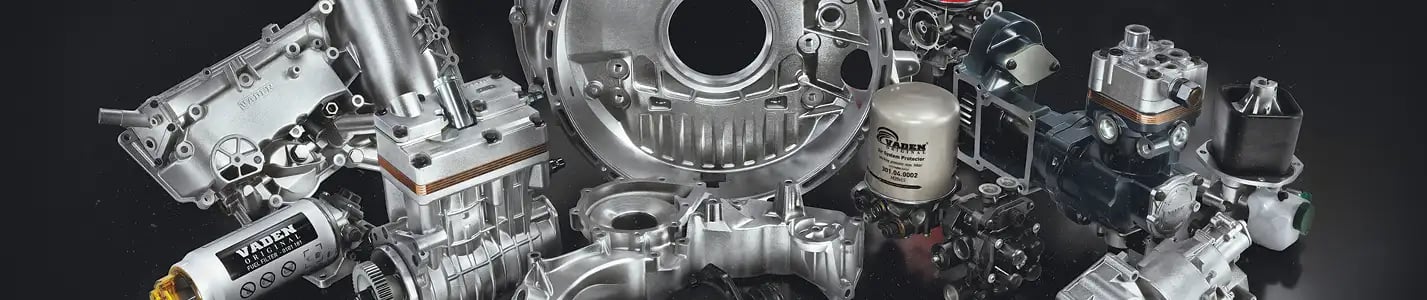
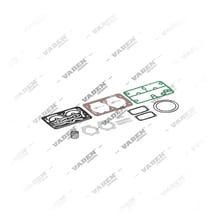
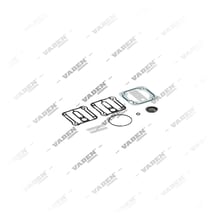
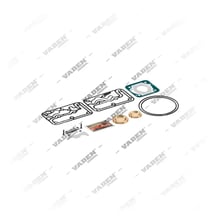
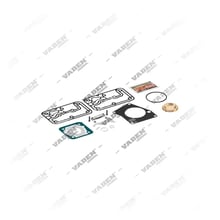
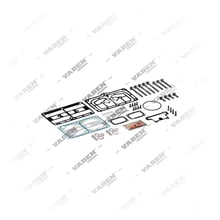
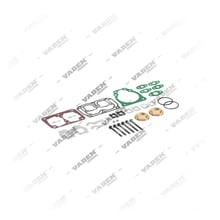
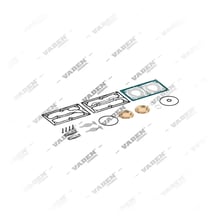
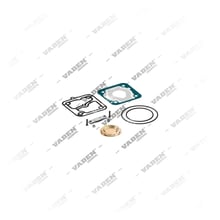
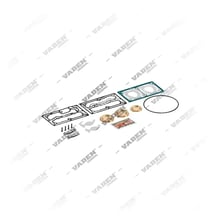
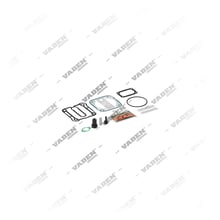
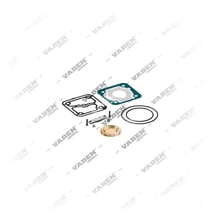
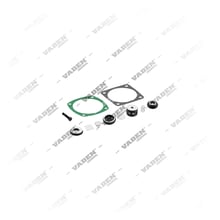
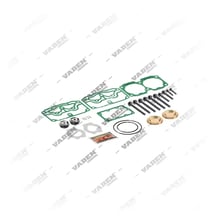
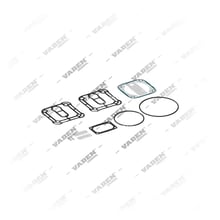
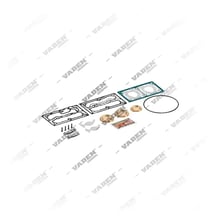
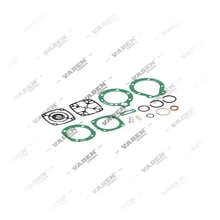
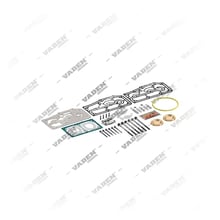
What Is a Compressor Parts Repair Kit?
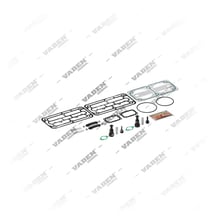
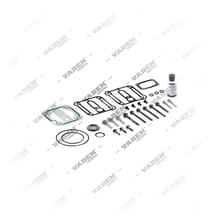
A Compressor Parts Repair Kit is a replacement component set used to renew a heavy commercial vehicle's air brake compressor without replacing the entire unit. Within the Air Brake Compressors main group, under the Compressor Parts subcategory, this category brings together piston and ring sets, gasket kits, valve plate and valve assemblies, and crankshaft seal and bearing kits.
Kits are prepared separately for the single- and twin-cylinder, air- or water-cooled compressors used in trucks, tractor units, buses, trailers and construction machinery. In the field they are also known as a "compressor overhaul kit" or "compressor gasket kit". The aim is to renew worn sealing and compression elements together, bringing the compressor back close to its original efficiency.
How Does a Compressor Parts Repair Kit Work?
The compressor is driven by motion taken from the engine, which drives the piston; air drawn in through the intake valve is compressed and sent from the delivery valve to the air dryer, and from there to the tanks. The surfaces that hold pressure wear over time; the repair kit renews them all at once, restoring compression efficiency.
- Compression efficiency: New rings seat fully against the cylinder wall, stopping air leakage and bringing fill time back to normal.
- Sealing: The new gasket set re-isolates the air, oil and coolant circuits.
- Valve control: New reed valves keep air flowing in one direction only, reducing the heat build-up caused by backflow.
- Oil leakage: The crankshaft seal and O-rings stop oil from passing into the air side.
- Mechanical clearance: Bearings and bushings bring the play that causes knocking back within tolerance.
Compressor Parts Repair Kit Technical Specifications
Kit contents vary by compressor family, but the material logic is shared. Gaskets are made from heat- and oil-resistant elastomer or composite materials; O-rings are made from NBR-type compounds, reed valves from spring steel, and rings from cast iron or steel alloy.
Heavy-vehicle air brake circuits operate in roughly the 8-12.5 bar range, and the governor cut-out pressure is set within this band. Cover, valve plate and connecting rod bolt torques are applied progressively and in a specific sequence. Because these values vary by compressor make and model, the vehicle manufacturer's current service manual is the reference during installation.
Compressor Parts Repair Kit Types and Subgroups
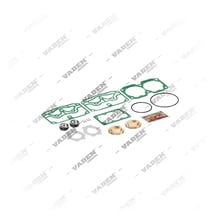
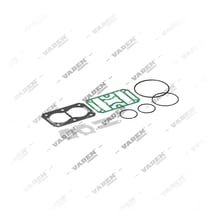
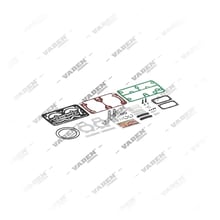
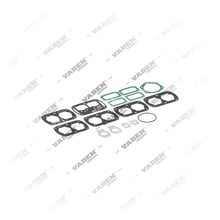
- Complete overhaul kits: Cover the piston, rings, gasket group, valve assembly and seals; suited to high-mileage units showing more than one symptom.
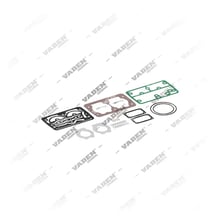
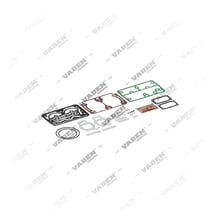
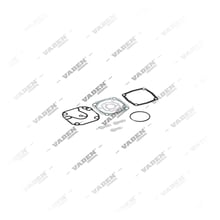
- Gasket and sealing kits: Consist of cover, housing and flange gaskets plus O-rings; used on units leaking oil or water externally.
- Piston and ring kits: Cover the piston, pin and ring set; the main solution for units with rising oil consumption and slowing air output.
- Valve plate and valve kits: Include reed valves, springs and seating gaskets; the first group to check for overheating and extended fill time.
- Crankshaft, bearing and seal kits: Include main bearings, bushings and seals; needed for metallic knocking and axial play.
- Cover and cooling group kits: Cover the cover sealing elements and, on water-cooled models, the cooling circuit gaskets.
How to Choose the Right Compressor Parts Repair Kit
The most reliable approach is to work from the OE number cast or stamped on the compressor housing. Because a different compressor can be fitted to the same model depending on engine option, choosing by make and model alone is a mistake. If the number cannot be read, the criteria below should be weighed together.
Compressor Parts Repair Kit selection and compatibility criteria| Criterion | What to check | Why it matters |
|---|
| OE reference number | Casting or label number on the housing | The most precise criterion for matching contents exactly |
| Number of cylinders | Single- or twin-cylinder housing | Piston, ring and gasket quantities depend on this |
| Cooling type | Air- or water-cooled cover | Water circuit gaskets exist only in water-cooled kits |
| Piston and cylinder bore | Actual bore confirmed by measurement | Wrong bore causes compression loss and overheating |
| Vehicle application | Mercedes-Benz, MAN, Scania, Volvo, DAF, Iveco | Brand-based compressor families correspond to different kit codes |
Compressor Parts Repair Kit Maintenance and Points to Note
The kit's service life depends largely on installation quality. Before disassembly, the air circuit must be drained, coolant and oil lines secured, and the compressor opened on a clean bench. New gaskets should never be fitted without first checking the seating surfaces.
- Clean off old gasket residue: Residue left on the surface stops the new gasket from seating evenly and causes a leak the first time it runs.
- Follow torque values and sequence: Bolts are tightened progressively in a crossing pattern; refer to the service manual for values.
- Renew the intake path together: A dirty filter or worn intake hose wears out new rings quickly.
- Let it idle on first start-up: Run a short idle period so the rings can seat, and repeat the leak check as pressure builds.
Common Faults and Solutions
- Air pressure builds slowly: Worn rings, a leaking delivery valve, or a clogged intake filter. Clean the intake path and, if needed, renew the piston-ring and valve plate kit.
- Oil is coming out of the air dryer: The oil control ring and crankshaft seal are worn. Replace the ring and seal kit and check the cartridge.
- Compressor overheats excessively: Leaking valve reeds or a blocked cooling circuit. Renew the valve plate kit and flush the cooling line.
- Air or water leaks around the cover: The gasket has fatigued or the bolts have loosened. Check the surfaces and replace the gasket set.
- Metallic knocking and vibration: Bearing or main bearing clearance has increased. Repair with the crankshaft and bearing kit; if clearance is beyond limit, evaluate replacing the unit complete.
Why VADEN ORIGINAL?
VADEN is a manufacturer of air brake compressors and compressor parts; repair kits are part of this line. Content is prepared to OE dimensions, and 1229 different references are listed in this category.
- Manufactured to OE dimensions: Dimensions follow the geometry of the original part and require no extra machining during installation.
- Broad OEM matching: Products are cross-listed against OE numbers and can be searched directly from the number on the compressor.
- Kit integrity: Parts that need to be replaced together are packaged in the same box, reducing the risk of a missing gasket.
- Multi-brand coverage: Covers the common compressor families found on Mercedes-Benz, MAN, Scania, Volvo, DAF, Iveco and Renault Trucks applications.
- International distribution: A product group exported to more than 100 countries, ensuring continuity of supply.
Conclusion
A Compressor Parts Repair Kit is the most economical way to make an air brake compressor reliable again without replacing the entire unit. For the right result, the kit must be matched to the OE number, surfaces must be checked, and torques applied per the manual. When symptoms point to a single group, a targeted kit is the right call; on high-mileage units, a complete overhaul kit is more appropriate.
Frequently Asked Questions (FAQ)
What does a Compressor Parts Repair Kit include?
Contents vary by kit type. Complete overhaul kits include the piston, ring set, gasket group, intake and delivery valves, seals and O-rings together. Targeted sets such as a gasket kit, piston kit or valve plate kit include only the parts belonging to that specific group.
Is it better to repair the compressor with a repair kit or replace it with a new one?
If the fault is caused by rings, gaskets, valves or seals, a repair kit is a far more economical solution and brings the compressor back to efficient operation. If there is a cracked housing, deep scoring on the cylinder wall, or crankshaft damage, replacing the unit complete is the better choice in the long run.
How do I find the right repair kit for my vehicle?
The most reliable method is searching by the OE reference number on the compressor housing. If the number cannot be read, the number of cylinders, whether it is air- or water-cooled, the drive type and the cover connection layout should all be checked together. Vehicle make and model alone is not enough for selection.
If the compressor is still pumping oil after the repair kit is installed, what could be the cause?
The most common cause is that wear on the cylinder wall does not let the new rings seat properly. Over-applied sealant narrowing the oil channels, high vacuum from a clogged intake filter, and a saturated air dryer cartridge can produce the same symptom. The cylinder bore and intake path should be checked.
What torque values should be applied when installing a compressor repair kit?
Torque values for the cover, valve plate and connecting rod bolts vary by compressor make, model and production year. Bolts must be tightened progressively in a crossing pattern. The vehicle manufacturer's current service manual should be used as the reference for exact values.
Related technical guide: Compressor Repair and Gasket Kit: Faults, Replacement, Care