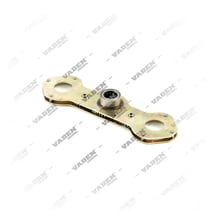
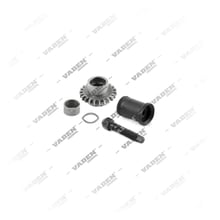
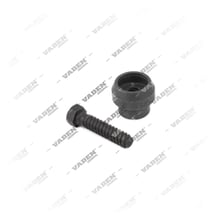
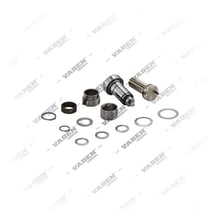
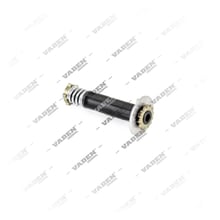
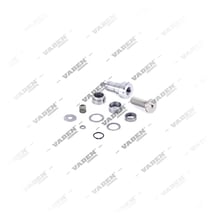
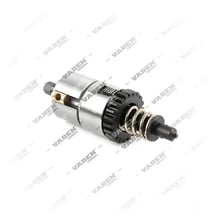
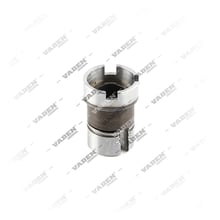
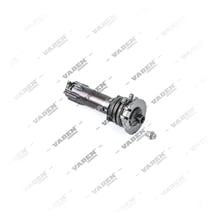
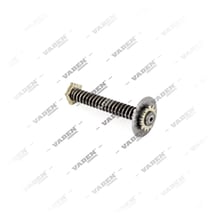
What Is a Caliper Mechanism Repair Kit?
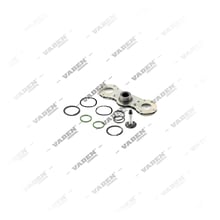
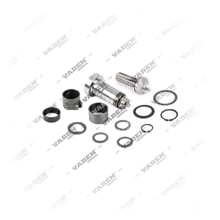
A caliper mechanism repair kit is a component set that renews the internal force-transmission and automatic adjustment assembly in air disc brake calipers on heavy commercial vehicles. The kit covers the lever arm, eccentric bearing, bridge (pressure plate), tappet (thrust piston) assembly, automatic adjuster spindle, and sealing elements. It restores pad clearance, pedal response, and braking force to specification by renewing only the worn internal mechanism, not the entire caliper. Since disc brake calipers are costly, these kits cut fleet maintenance costs.
How Does a Caliper Mechanism Repair Kit Work?
In an air disc brake, chamber force alone can't press the pad against the disc. The caliper mechanism multiplies this force through the lever and eccentric bearing, then transmits it to the pad via the tappets. Wear in a single component changes braking behavior.
- Force multiplication: The lever arm amplifies the push rod's motion through the eccentric bearing.
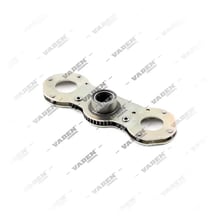
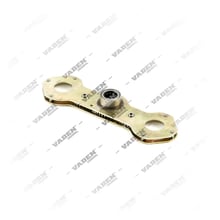
- Force distribution: The bridge spreads the single-point load across the tappets.
- Transfer to the pad: The tappets press the inner pad against the disc; the caliper then slides on its guide pins to bring the outer pad into contact.
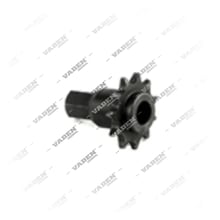
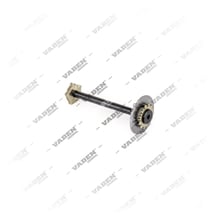
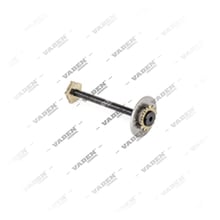
- Automatic clearance adjustment: The adjuster spindle and one-way clutch advance with each application by the amount of wear, keeping clearance constant.
- Return and sealing: Springs return the mechanism to its starting position; boots keep out water, salt, and brake dust.
Caliper Mechanism Repair Kit Technical Specifications
The mechanism's parts operate under high pressure and temperature. The load-bearing lever arm and adjuster spindle are hardened alloy steel; the tappets and bridge carry wear-resistant surface treatments. Sealing elements use elastomers that resist road chemicals and stay cold-flexible. Compatibility depends on caliper type: the caliper family, disc diameter class, single or dual tappet layout, mounting side, and adjuster rotation direction must all match. Torque and clearance values vary by family, so only general ranges are given here; the manufacturer's current service manual is authoritative for exact figures.
Caliper Mechanism Repair Kit Types and Subgroups
- Complete mechanism kits: Include the lever arm, eccentric bearing, bridge, tappets, and sealing elements; used on heavily worn calipers.
- Lever and eccentric bearing kits: Renew the core of the force-multiplication chain; used when pedal response weakens.
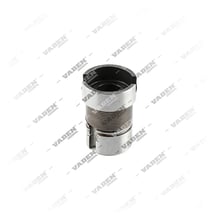
- Tappet (thrust piston) kits: Consist of the tappet body, threaded sleeve, and protective caps; renewed for uneven pad wear.
- Automatic adjuster mechanism kits: Cover the adjuster spindle, one-way clutch, and spring assembly; needed when clearance grows or the brake drags.
- Boot and sealing kits: Include boots, caps, seals, and clips; for calipers with torn protection but a sound mechanism.
- Guide pin and bushing kits: Allow the caliper to slide on the carrier; sticking here commonly causes one-sided pad wear.
How to Choose the Right Caliper Mechanism Repair Kit
The safest approach starts from the type label on the caliper body and the OE reference number. The same model can use different caliper families depending on axle and brake equipment, so make and model alone aren't enough. Before ordering, confirm the caliper's right/left side and tappet count visually.
Caliper Mechanism Repair Kit Selection Criteria| Criterion | What to Check | Why It Matters |
|---|
| OE reference number | The number stamped on the caliper body | The most reliable way to cross-match |
| Caliper family | Wabco or Knorr-Bremse type disc brake series | Lever ratio varies by family |
| Mounting side | Right/left side, position of the adjuster spindle | Wrong side means clearance will not take up |
| Tappet layout | Single/dual tappet, tip type, and thread pitch | Determines even force distribution |
| Vehicle application | Mercedes-Benz, MAN, Scania, Volvo, DAF, Iveco, Renault Trucks, BMC | The same range may carry different brake equipment |
| Kit scope | Complete mechanism, or just the boot or adjuster group | Incomplete scope leads to a second teardown |
Caliper Mechanism Repair Kit Maintenance and Precautions
- Work in a clean environment: Clean the housing before disassembly; keep swarf and brake dust off internal surfaces.
- Base decisions on measured wear: Renew the kit if the lever bearing bore, tappet threads, or bridge surfaces show pitting.
- Use the correct grease: Apply only the approved high-temperature grease to the specified points; excess grease swells the boots.
- Seat the boots fully: Water entering through a poorly seated boot locks the mechanism; fit clips, rings, and caps completely.
- Follow the torque and tightening sequence: The mechanism cover, carrier, and guide pin tighten within a medium-to-high torque range; the manufacturer's current service manual is authoritative for exact values.
- Verify clearance and the axle: After assembly, operate the mechanism by hand to confirm the wheel turns freely; also check the opposite caliper.
Common Faults and Solutions
- Pad clearance growing, pedal travel deepening: The automatic adjuster isn't taking up clearance; renew it with a kit that includes the adjuster spindle assembly.
- Brake dragging, wheel and disc overheating: The adjuster mechanism isn't returning, or the guide pins are seized; replace the pin and bushing kit.
- One-sided or tapered pad wear: There is guide-pin sticking, bridge distortion, or a locked tappet; a complete mechanism kit is required.
- Metallic noise and vibration while braking: There's play in the lever bearing or wear in the eccentric bearing; replace the relevant kit.
- Water, rust, and grease loss inside the caliper: A torn boot has broken the seal; renew the boot kit, and replace the mechanism if corrosion has progressed.
- Low braking force, vehicle pulling to one side: A seized mechanism or wear in the force chain lowers transmission; compare both calipers.
Why VADEN ORIGINAL?
- Manufactured to OE dimensions: Lever ratio, thread pitch, bearing bores, and stroke match original mechanism specifications.
- Broad OEM coverage: Common caliper families used on Mercedes-Benz, MAN, Scania, Volvo, DAF, Iveco, and Renault Trucks vehicles.
- Materials and surface treatment: Hardened alloy steel on load-bearing parts, durable coating on contact surfaces.
- Complete kit contents: Small assembly parts such as springs, clips, rings, and boots come with the kit.
- Exported to more than 100 countries: Field feedback from fleets in varied climates and road conditions feeds back into product development.
Conclusion
A caliper mechanism repair kit economically renews the internal assembly that determines braking force and pad clearance in air disc brake vehicles. Correct selection starts with the OE reference on the caliper; caliper family, mounting side, and tappet layout must be confirmed. Cleanliness, the right grease, and fully seated boots are decisive during assembly; the manufacturer's current service manual is authoritative for exact torque and clearance values.
Frequently Asked Questions (FAQ)
What does a caliper mechanism repair kit include?
Kit scope varies by type. Complete sets include the lever arm, eccentric bearing, bridge, tappet (thrust piston) assembly, automatic adjuster spindle, and sealing elements together. Narrower-scope sets cover only the boot and seal group, or only the automatic adjuster mechanism.
Should I replace the entire caliper, or is the mechanism repair kit enough?
If the caliper body, guide pin bores, and carrier are sound and wear is limited to the internal mechanism, a repair kit is a far more economical solution. If the body has cracks, advanced corrosion, or ovalized bearing bores, replacing the caliper completely is the better choice.
How can I tell the automatic adjuster mechanism has failed?
The clearest sign is pad clearance growing over time and delayed brake response. Conversely, when the mechanism fails to return, the brake drags continuously and the wheel and disc overheat. In both cases, the mechanism needs to be renewed with a repair kit that includes the adjuster spindle assembly.
What torque values should I follow when fitting a caliper mechanism repair kit?
The mechanism cover, carrier, and guide pin connections are fitted at different torques and in a specific tightening sequence depending on the caliper family. In general, work falls within a medium-to-high torque range; the vehicle manufacturer's current service manual is authoritative for exact values.
Do the pads also need replacing after the mechanism is renewed?
If the pads are close to their wear limit, or have worn tapered or one-sided due to the mechanism fault, they should be replaced together. Otherwise, the new mechanism cannot apply even pressure against the irregularly worn pad surface, and the problem recurs quickly.