What is a Brake System Relief Valve Repair Kit?
Although the valve body is generally long-lasting, the rubber and flexible elements inside it harden or wear over time; renewing only the worn internal parts with a repair kit, rather than replacing the entire valve, is therefore both an economical and a common maintenance practice.
What are the functions of a Brake System Relief Valve Repair Kit?
- Renewed sealing: Replacing the diaphragm and O-ring elements ensures the valve seals correctly both under pressure and at rest.
- Preserving quick-release performance: Renewing worn rubber parts guarantees air is vented to atmosphere at the designed rate.
- Spring return function: The spring element in the kit ensures the valve plate returns quickly to its closed position once pressure is removed.
- Housing protection: Renewing internal parts prevents worn rubber debris from entering the line and damaging other valves.
- Cost-effective repair: When the complete valve housing is sound, replacing only the worn elements reduces cost.
What are the symptoms of a failing Brake System Relief Valve Repair Kit?
- Continuous air leak: An uninterrupted hissing sound from the valve's exhaust port even while the system is pressurized indicates diaphragm or O-ring wear.
- Slow brake release: Brakes releasing later than normal after the pedal is released indicates the relief valve is not venting fast enough.
- Irregular exhaust sound: A choppy, muffled, or weak opening/closing sound from the valve indicates hardened internal rubber parts.
- Pressure loss: Circuit pressure dropping faster than expected can indicate a loss of internal valve sealing.
- Visual wear: On disassembly, cracking, hardening, or deformation of the diaphragm, or corrosion of the spring.
- Increased failure in cold weather: Rubber parts that harden at low temperature can make symptoms more pronounced during winter months.
How is a Brake System Relief Valve Repair Kit inspected?
- Function listening: When the brake pedal is applied and released, the exhaust sound from the valve should be clear and complete in a single, distinct release.
- Leak test: With the system pressurized, apply soap solution to the valve body and connection points and watch for bubble formation.
- Disassembled inspection: When the valve is opened, visually inspect the diaphragm, O-ring, and spring elements for cracking, hardening, or deformation.
- Pressure cycle test: Pressurize and release the system repeatedly and observe whether the valve responds consistently.
- Line connection check: Distinguish whether inlet and outlet lines to the valve have a separate leak source.
What should be considered during replacement?
- Correct kit selection: Choose a repair kit that exactly matches the valve's OE part number; internal part dimensions differ between valve models.
- Housing cleaning: After disassembly, clean the internal surface of the valve housing of dirt, old rubber debris, and moisture.
- Correct assembly order: Place the diaphragm, spring, and O-ring elements in the manufacturer's specified order and orientation; reversed installation compromises sealing.
- Tightening torque: Valve housing screws should be tightened to the specified torque; the vehicle's current OE service manual is the authority for the exact value.
- Post-installation test: Pressurize the system and apply the brake pedal several times to verify release function and sealing.
How to choose the right Brake System Relief Valve Repair Kit?
Selection should be based on OE part number, not brand, preferring internal part sets that exactly match the valve's housing model.
Brake System Relief Valve Repair Kit selection criteria| Criterion | Description |
|---|
| OE reference number | Exact match with the original kit number specified by the valve manufacturer |
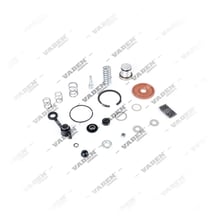
| Kit contents | Complete set of diaphragm, O-ring, spring, and gasket elements |
| Material quality | Synthetic rubber that retains flexibility across a wide temperature range (low/high) |
| Valve housing compatibility | Match with the specific relief valve model in the brake system |
| Packaging/traceability | Batch number and original packaging for traceability |
Maintenance and service life
Because the relief valve's internal parts are exposed to frequent pressurize/release cycles, they experience natural rubber fatigue over time. Moisture and oil residue in the air system can accelerate premature hardening of the diaphragm; regular air dryer maintenance therefore indirectly extends the relief valve's life as well. Checking the valve's exhaust sound and response speed during periodic maintenance allows the repair kit to be replaced in time, preventing unexpected brake release delays.
VADEN Brake System Relief Valve Repair Kit
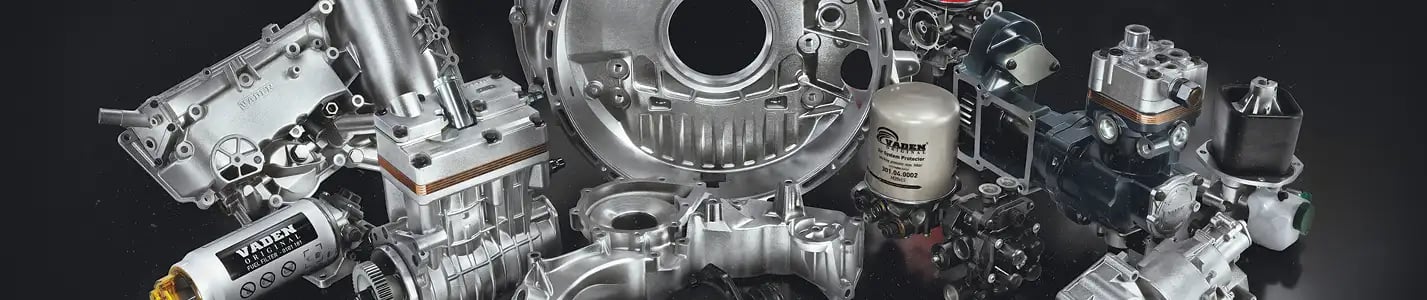
Within its brake system product range, VADEN offers repair kits for common relief valve models at OE dimensional and material standards; diaphragm, O-ring, and spring elements are manufactured to original tolerance values.
Frequently Asked Questions (FAQ)
Should the relief valve be replaced completely, or is the repair kit enough?
If the valve housing is sound and mechanically undamaged, renewing the internal rubber parts with a repair kit is usually sufficient and more economical. If the housing shows cracks or permanent deformation, complete replacement is required.
Should all parts in the repair kit be replaced together?
Yes, the diaphragm, O-ring, and spring elements in the kit should be replaced as a complete set; renewing only one part can unbalance the system and lead to a repeat failure shortly after.
What does a change in the relief valve's sound mean?
A weaker tone, a choppy sound, or a delayed release indicates the internal rubber parts have hardened; checking the repair kit is recommended in this case.
Why do valve failures increase in winter?
At low temperatures, rubber components harden and lose flexibility, which negatively affects both sealing and release speed; a pre-winter inspection is recommended.
What happens if the wrong repair kit is installed?
A dimensional or material mismatch can lead to rapid loss of sealing and damage to the valve housing; a kit that exactly matches the OE part number must always be selected.