What is a radiator hose?
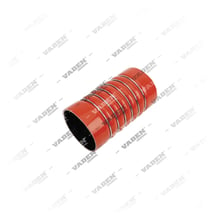
The radiator hose is the flexible connecting part that completes the coolant circuit between the engine block, thermostat housing or water pump, and the radiator. It is usually manufactured with a textile-mesh reinforcement layer sandwiched between layers of EPDM rubber, a structure that provides both pressure resistance and flexibility. On some vehicles the hose is straight, while on others it is molded to match the distance and angle between the engine and radiator; molded hoses are vehicle-specific and cannot be replaced with a model that does not have a direct fit.
What are the functions of the radiator hose?
Despite its simple appearance, the hose performs functions that are critical to the integrity of the cooling system.
- Fluid transfer: carries coolant under pressure between the engine and radiator without leaking.
- Vibration damping: absorbs relative motion between the engine and chassis with its flexible structure, protecting rigid connection parts from breaking.
- Pressure retention: maintains the closed-loop pressure of the cooling system, which raises the coolant's boiling point.
What are the symptoms of a radiator hose failure?
When a crack or visible bulge forms on the hose surface, ballooning is noticed on the hose while the engine is hot, with coolant leakage seen underneath. A loose hose clamp, or a hose end that has hardened and lost its flexibility, shows up as a burnt-coolant smell and a sudden rise on the engine temperature gauge. Particles created by rubber degradation on the inner surface can clog the radiator core channels, which generally reduces cooling efficiency. When a hose bursts completely, a sudden and large coolant loss occurs, an emergency that can cause serious engine damage within minutes.
How is the radiator hose checked?
With the engine cold, the hose is squeezed by hand to test flexibility; a hose that feels hard and glass-like, or excessively soft/spongy, means it is due for replacement. The hose surface is visually inspected for cracks, blistering and discoloration, with the area under the clamp checked in particular for ovalization. A cooling system pressure tester is used to pressurize the system and identify any leaks at the hose or its connection points. A coolant level that drops frequently, even without a visible external leak, can indicate a micro-crack in the hose's internal structure.
What should be considered during replacement?
Before starting hose replacement, the cooling system must be fully cooled; opening the cap on a hot system carries a serious burn risk. The clamp position should be noted when removing the old hose, and when installing the new one, the system should be filled and purged of air gradually per the manufacturer's procedure to avoid air pockets. Clamps should be tightened to the manufacturer's torque value; over-tightening can cut into the hose surface and create a new leak point. After installation, the hose connections should be monitored for leaks while the engine runs up to normal operating temperature.
How to choose a radiator hose?
The hose's inner diameter, length and, where applicable, molded shape must match the vehicle model exactly; a wrong-diameter hose will not provide reliable sealing even when clamped. The hose material's temperature and pressure resistance values must meet the range specified by the engine manufacturer; low-quality rubber compounds harden quickly at high temperature.
Radiator hose - general reference values| Parameter | Typical range |
|---|
| Operating temperature | -40 C to +120 C (the vehicle manufacturer's current service manual is authoritative) |
| System pressure | 1-2 bar (closed loop with cap) |
| Material | Textile-reinforced EPDM rubber or silicone |
| Inspection interval | Once a year or every 40,000-60,000 km, visual and hand-flexibility check |
Maintenance and service life
Changing the coolant according to the manufacturer's interval prevents the depletion of protective additives in the fluid and internal wear of the hose. If there is an oil or fuel leak in the engine bay, it should be checked separately, since contact with the hose can cause the rubber to degrade quickly. A quality hose, under proper maintenance conditions, can provide trouble-free service for around 4-6 years or 150,000-200,000 km, though this period varies with climate conditions and engine temperature.
VADEN Radiator Hose
VADEN offers radiator hoses manufactured to OE dimensions and shape for heavy commercial vehicle cooling systems, using rubber compounds tested for temperature and pressure resistance.
Frequently Asked Questions (FAQ)
What is the difference between the upper and lower radiator hose?
The upper hose carries hot coolant leaving the engine to the radiator, while the lower hose sends the coolant cooled at the radiator back to the engine. The two are made with different diameters, lengths, and sometimes different molded shapes, and cannot be used interchangeably.
When should a radiator hose be replaced?
It should be replaced immediately when a visible crack, bulge, leak, or an abnormal hardness/softness is detected by hand pressure; even without symptoms, manufacturers typically recommend preventive replacement every 4-6 years or at a certain mileage.
Should the coolant also be replaced when the hose is replaced?
Yes, since the fluid in the system drains out while the hose is removed, new coolant should be filled at the manufacturer-approved type and mixture ratio; if the old fluid was dirty or degraded, a full replacement is recommended.
Is tightening the clamp enough if it is loose?
If clamp looseness is the only issue, tightening it can be a temporary fix, but if the hose end has hardened or deformed, sealing cannot be maintained even with a tight clamp, and the hose end or the whole hose must be replaced.
Where should you check first when the engine overheats?
First check the hoses and their connection points for visible leaks, bulging or a burst; then evaluate the coolant level and whether the radiator cap is holding pressure.