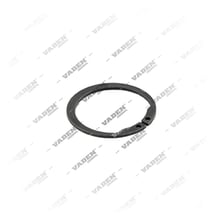
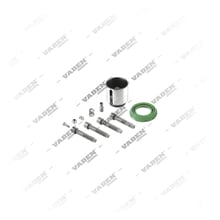
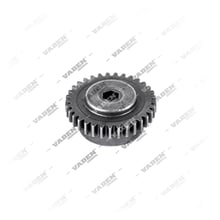
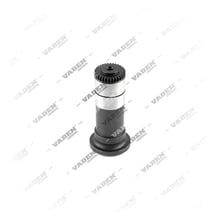
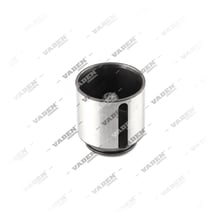
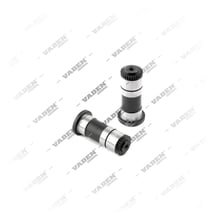
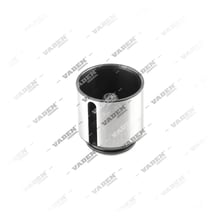
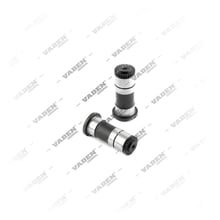
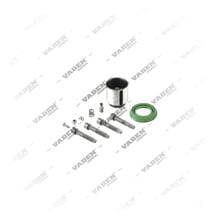
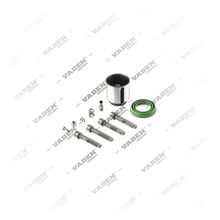
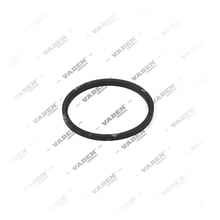
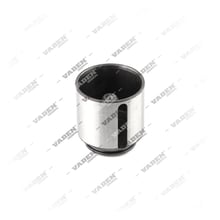
What Is a Caliper Pin Piston?
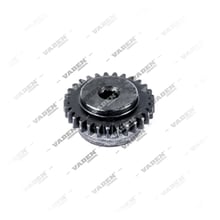
The caliper pin piston is the moving pressure element positioned at the end of the pin (push-rod) assembly inside the disc brake calipers of heavy commercial vehicles, and it is what transfers braking force onto the pad backing plate. Inside the caliper, the mechanism carries the push force generated by the brake chamber through the bridge and adjuster shaft to the pins, and from there to the piston face. In the field, this part is also known as the tappet piston, pin piston, or thrust piston. The reason it sits as a sub-group of the Caliper Pin category is that the piston works as one element of a set together with the pin, bushing, and dust boot.
This part is used in air disc brake calipers on truck, tractor unit, bus, and trailer axles. How true the piston face runs determines whether the pad sits parallel to the disc; even minor wear can turn into uneven pad wear.
How Does a Caliper Pin Piston Work?
When the brake pedal is pressed, compressed air inside the brake chamber moves the push rod; this motion is multiplied through the eccentric bridge and carried to the pin assembly. The piston mounted on the pin transfers the axial force it receives onto the pad backing plate, pressing the pad against the disc. When the brakes are released, the springs pull the mechanism back and the piston moves away from the pad.
- Force transfer: Transmits the axial thrust coming from the pin assembly to the pad backing plate without loss.
- Load distribution: With its wide contact area, it does not concentrate pressure at a single point, ensuring even wear.
- Maintaining adjustment clearance: The automatic adjuster mechanism advances the piston to keep the clearance constant.
- Sealing support: The channel that seats the dust boot forms the first barrier against water and dust ingress.
Caliper Pin Piston Technical Specifications
Caliper pin pistons are generally manufactured from high-strength steel or spheroidal (nodular) graphite cast iron; their surfaces undergo phosphate or zinc-nickel type coatings for corrosion protection. The sizing logic is based on the pin diameter and the pad contact area; seating diameters mostly fall within the 30-60 mm range. These ranges are for guidance only; for exact values, the vehicle manufacturer's current service manual is authoritative.
- Material: High-strength steel or spheroidal graphite cast iron, with a protective coating against corrosion.
- Sizing criteria: Pin seating diameter, piston height, dust boot channel width, and pad contact face.
- Compatibility criteria: Caliper type and axle position; front and rear axles may use different piston sizes.
Caliper Pin Piston Types and Sub-Groups
Caliper pin pistons differ according to the caliper architecture they belong to and their position on the axle. In single-piston calipers, one large central piston supports the pad backing plate, while in twin-piston calipers, two smaller-diameter pistons do so. Piston length is related to pad thickness and stroke range; visual similarity alone is not a sufficient selection criterion.
- Single-piston type: Transfers force from a single central point; common in compact calipers.
- Twin-piston type: Two parallel pistons spread the pressure more widely; preferred on heavy-duty axles.
- Threaded adjuster piston: Screws onto the threaded shaft on the pin and advances by rotating with the adjuster mechanism.
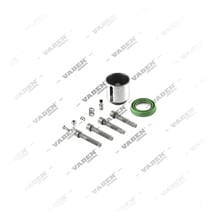
- Bushed piston assembly: Supplied as a single service kit together with the guide bushing and dust boot.
- Piston with boot-and-cover set: Supplied with a dust boot, clamp, and cover; the most frequently requested configuration.
How to Choose the Right Caliper Pin Piston
The most reliable approach is to start from the OE reference number on the removed original part and the type label on the caliper body. The axle position and caliper type should then be confirmed. Because different sizes may be used depending on the production year and axle supplier, brand-and-model information alone is not enough.
Caliper pin piston selection and compatibility criteria| Criterion | What to Check | Why It Matters |
|---|
| OE reference number | Number on the piston or caliper label | The most precise method of cross-matching |
| Caliper type | Type and series marking on the body | Pin geometry varies by caliper family |
| Axle position | Front axle or rear axle caliper | Axles may use different piston heights |
| Diameter and height | Seating diameter and overall length | Wrong length upsets the adjustment clearance |
| Number of pistons | Single- or twin-piston caliper | Force distribution and wear balance |
| Boot and bushing fit | Channel width and clamp size | Without sealing, the inside of the caliper corrodes |
| Brand application | Mercedes-Benz, MAN, Scania, Volvo, DAF, Iveco, Renault Trucks | Caliper supplier varies by brand |
Caliper Pin Piston Maintenance and What to Watch For
The caliper pin piston is less a separate periodic maintenance item than a component checked during pad replacement. While the pads are removed, the piston face, the integrity of the dust boot, and the piston's free movement should all be inspected. For tightening torque and adjustment clearance values, the vehicle manufacturer's current service manual is authoritative.
- Check at every pad change: Examine the piston face for pitting, rust, or cracks.
- Do not neglect the dust boot: A torn boot lets water into the caliper; renew the boot whenever you replace the piston.
- Use the correct grease: Apply only the high-temperature grease specified by the manufacturer; too much will swell the boot.
- Replace as a set: Renew both sides of the same axle together; replacing only one side creates a brake imbalance.
Common Failures and Their Solutions
Problems originating from the caliper pin piston usually show up first in the pad wear pattern and in brake response. Reading the symptom correctly prevents an unnecessary caliper replacement.
- One-sided pad wear: Piston seizure or pin binding; strip the mechanism down and clean the piston and bushing.
- Brake drag and overheating: The piston fails to retract; replace the piston-pin set and the dust boot.
- Weak brake response: Increased free play caused by a worn piston face; renew the piston kit.
- Metallic noise from the caliper: Play or cracking at the piston seating face; inspect the whole mechanism.
- Corrosion on the piston: Water and salt ingress through a torn boot; replace the boot, clamp, and piston together.
Why VADEN ORIGINAL?
VADEN ORIGINAL caliper pin piston products are manufactured while staying true to the original part's sizing and material logic. The product range is cross-matched with OE references to cover the most common disc brake caliper families.
- OE-spec manufacturing: Piston diameter, height, and dust boot channel are machined to tolerances matching the original geometry.
- Broad OEM cross-matching: Cross-referenced with Mercedes-Benz, MAN, Scania, Volvo, DAF, Iveco, and Renault Trucks caliper types.
- Durable material and coating: Surface treatment with enhanced corrosion resistance against high temperatures and road salt.
- International supply: Continuous parts availability through a product range exported to more than 100 countries.
Conclusion
The caliper pin piston is a small but critical component that transfers the force coming from the brake chamber to the pad inside the disc brake caliper, directly determining brake balance. Face wear, seizure, or a torn dust boot come back as one-sided pad wear and increased stopping distance. Basing the right selection on the OE reference, caliper type, and axle position is the safest approach.
Frequently Asked Questions (FAQ)
What does a caliper pin piston do?
The caliper pin piston transfers the push force coming from the brake chamber, via the pin assembly, onto the pad's backing plate. By spreading the force over a wide surface, it ensures the pad sits evenly and parallel against the disc. Together with the automatic adjuster mechanism, it also helps keep the disc-to-pad clearance constant.
How do you tell that a caliper pin piston has failed?
The most obvious signs are one-sided pad wear, the caliper dragging continuously, overheating, and delayed brake response. Rust, pitting, or cracks on the piston face when the pads are removed, or the piston binding, are also signs of failure. A torn dust boot is often the initial cause of these problems.
Should a caliper pin piston be replaced on its own or as a set?
It is recommended to replace the piston as a set together with its dust boot and guide bushing, since these three parts work together to provide sealing. It is also necessary to carry out the replacement on both sides of the same axle at the same time. Replacing only one side can lead to an imbalance in braking force.
How do I choose the correct caliper pin piston?
The most reliable method is to cross-match using the OE reference number on the removed part or on the caliper body. You also need to confirm the caliper type, axle position, number of pistons, and the piston's diameter-and-height dimensions. The same vehicle model may use different sizes depending on the production year.
What grease should be used when fitting a caliper pin piston?
Only the high-temperature grease specified by the caliper manufacturer should be used; copper paste or general-purpose lubricants can damage the boot material. Applying too much grease causes the boot to swell and bulge outward. For application quantity and torque values, the vehicle manufacturer's current service manual is authoritative.