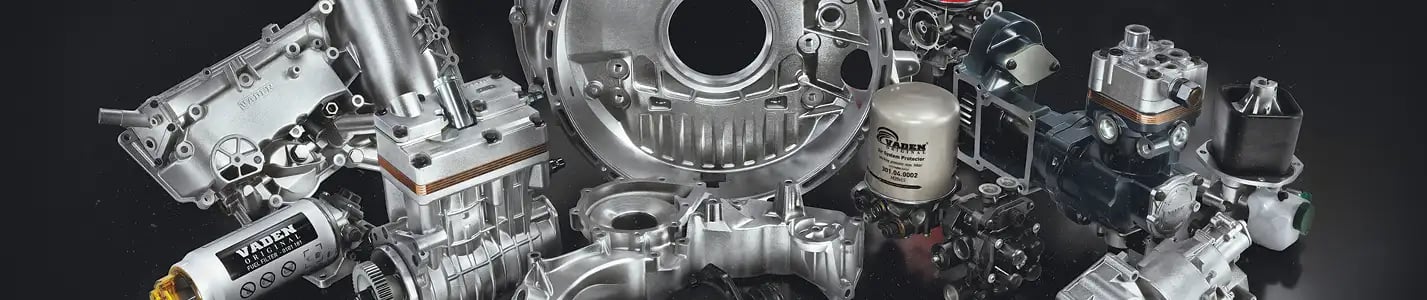
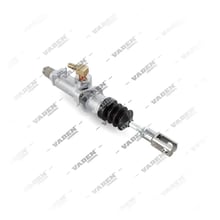
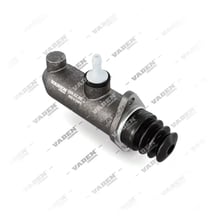
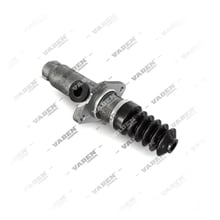
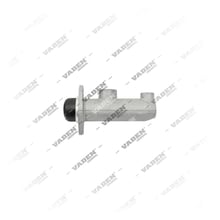
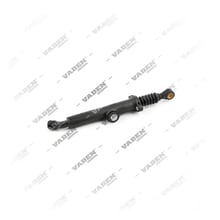
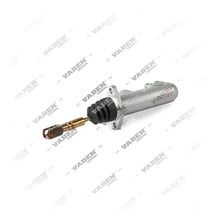
What Is a Clutch Master Cylinder?
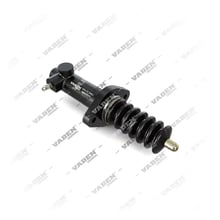
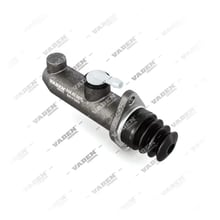
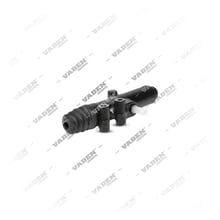
The Master Cylinder is the cylinder unit on heavy commercial vehicles that converts the mechanical force of the clutch pedal into hydraulic pressure and sends it through the line to the slave cylinder. Sitting under the Clutch / Master Cylinder branch, this segment is the complete-product bucket of the category: it lists ready-to-install complete units with the housing, piston, sealing group, spring, push rod and mounting hardware included. In the field this part is also called the clutch top cylinder or clutch upper cylinder. Unlike repair kits, its purpose is not to repair the faulty unit but to replace it as a single complete part.
How Does a Complete Master Cylinder Unit Work, and What Does It Include?
When the pedal is pressed, the push rod drives the piston forward inside the housing; the piston closes off the compensating port and pressurizes the line fluid, sending it on to the slave cylinder. The slave cylinder converts this pressure into mechanical motion at the clutch fork, releasing the pressure plate. When the pedal is released, the spring returns the piston to its start position and the volume difference is topped up from the reservoir. In a complete unit, all of these parts arrive factory-assembled and pressure-tested.
- Cylinder housing: Carries the working pressure; cast aluminum, cast iron or reinforced polymer, with a precision-machined piston bore.
- Piston and sealing group: Primary and secondary seals hold the pressure and stop fluid leaking toward the pedal side.
- Spring and push rod: Transfers pedal force to the piston and returns it once the pedal is released.
- Dust boot and port group: The boot protects the cylinder mouth from moisture and road grime; supply port, outlet fitting and mounting hardware are all included.
Master Cylinder Technical Specifications and Compatibility Criteria
The first decisive dimension when choosing a complete unit is piston bore diameter; in heavy commercial vehicle applications this mostly falls into steps between Ø19 and Ø25 mm. A larger bore moves more fluid for the same pedal stroke but also raises pedal effort, so the bore must match the original exactly. The second critical dimension is effective stroke and overall length: a shorter-stroke unit will not fully disengage the clutch and will cause difficulty during gear changes. The third group is connection geometry: outlet port thread type, supply port diameter, mounting-hole center spacing and pedal pin diameter must all match the original. Fluid class and seal material are interdependent, so different fluid types must never be mixed; the ranges here are for guidance only, and the vehicle manufacturer's current service manual takes precedence.
Master Cylinder Types and Subgroups
- Integral-reservoir units: The fluid reservoir sits on top of the cylinder; level checks are easy and no extra hose connection is needed.
- Remote-reservoir units: Fed by hose from a shared reservoir; suited to layouts kept away from engine heat and to tight mounting areas.
- Flange-mounted types: Secured to the pedal box with a two- or four-bolt flange; gives a more rigid connection under high pedal forces.
- Pin-and-clevis types: The push rod connects to the pedal arm with a pin and clip; tolerates angular misalignment, which is why it is used on suspended cabs.
- Switch- or sensor-equipped types: Carries a clutch position switch or a level warning contact needed for the transmission control unit signal; it cannot be replaced with a unit that lacks this switch.
How to Choose the Right Master Cylinder? Complete Replacement or Repair Kit?
The most reliable starting point for selection is the OE reference number stamped on the housing of the removed unit; if the number cannot be read, cross-matching is done using vehicle make, model series, transmission type and production year. Even within the same model family, Mercedes-Benz, MAN, Scania, Volvo, DAF, Iveco, Renault Trucks and BMC vehicles use different bore and connection variants depending on the pedal-group revision. The choice between a complete unit and a repair kit then comes down to the condition of the housing.
Master Cylinder selection: complete replacement versus repair kit comparison| Condition or criterion | Complete Master Cylinder | Repair Kit |
|---|
| Scoring, pitting or corrosion inside the bore | Recommended; since the housing is renewed, leakage will not recur | Not suitable; a new seal wears quickly on a damaged surface |
| Seal aging only, housing intact | Can be preferred to shorten downtime | Economical and sufficient solution |
| Cracked housing or damaged thread | Mandatory; cannot be resolved by repair | Not suitable |
| Service time and labor | Shortest intervention on a remove-and-replace basis | Requires disassembly, cleaning and reassembly labor |
| Matching method | OE number, piston bore, stroke, port thread, mounting spacing | Seal set matched to the housing model code |
Master Cylinder Installation, Maintenance, and Key Precautions
- Renew the fluid: Contaminated or moisture-laden fluid shortens seal life; fully drain the circuit and refill with fresh fluid of the grade specified by the manufacturer.
- Bleed the system thoroughly: Trapped air makes the pedal feel spongy; bleed at the slave cylinder nipple until the fluid runs clear and bubble-free.
- Set the free-play clearance: A zero-clearance installation keeps the piston holding the compensating port closed, so pressure builds up as the system heats and the clutch stays partially disengaged.
- Follow the torque values: Overtightening cracks the housing, while a loose connection leaks; because values vary with housing material, the service manual takes precedence.
- Do not neglect the pin and boot: A torn boot lets moisture into the cylinder; a worn pedal pin and bushing degrade pedal feel.
Common Faults and Solutions
- Pedal drops to the floor and does not return: Usually caused by an internally leaking seal or a broken spring; if the housing shows wear, the complete unit should be replaced.
- Spongy pedal and difficulty shifting gears: Trapped air in the line or a swollen hose is the typical cause; repeat bleeding, and check the slave cylinder as well if the problem persists.
- Wetness under the pedal: Indicates a failed rear seal and dust boot, meaning the unit is leaking externally; replacement should not be delayed.
- Reservoir level keeps dropping: If there is no visible leak, fluid may be escaping toward the slave cylinder side; check the line fittings and both cylinders.
- Clutch does not fully disengage: Insufficient stroke, an incorrect piston bore, or incorrect rod adjustment can be the cause; the unit's OE reference should be reverified.
Why Choose VADEN ORIGINAL?
- Manufactured to OE dimensions: Piston bore, stroke, port threads and mounting-hole spacing are machined to match the original unit; no extra adaptation is needed on the vehicle.
- Broad OEM matching: Cross-matched against numerous references across Mercedes-Benz, MAN, Scania, Volvo, DAF, Iveco, Renault Trucks and BMC vehicles.
- Ready-to-install delivery: The piston, seal group, spring, push rod and boot arrive pre-assembled, removing part-matching time in the workshop.
- Exported to over 100 countries: A broad distribution network keeps spare-part supply predictable for fleets.
Conclusion
This category is built for workshops and fleets that want to renew the pressure-generating part of the clutch hydraulic circuit in a single step. When the housing surface is sound, a repair kit is an economical option; when there is scoring, corrosion, cracking or dimensional loss, complete replacement is the lasting fix. The shortest path to the right part is to start from the OE reference number, then verify piston bore, stroke, port thread and mounting spacing.
Frequently Asked Questions (FAQ)
What is the difference between a Complete Master Cylinder and a repair kit?
A Complete Master Cylinder is a ready-to-install unit whose housing, piston, seal group, spring and push rod are assembled at the factory. A repair kit, by contrast, contains only the wearing sealing elements and requires reusing the existing housing. If the cylinder bore shows scoring, pitting or corrosion, a repair kit will not provide a lasting fix.
How do I determine the right Master Cylinder for my vehicle?
The most reliable method is matching the OE reference number stamped on the housing of the removed unit. If the number cannot be read, compare vehicle make, model series, production year and transmission type together with piston bore, overall length, outlet port thread size and mounting-hole spacing. Versions with a switch or sensor connection cannot be replaced with a unit that lacks it.
What are the symptoms of a failing Master Cylinder?
The most common symptoms are the pedal dropping to the floor and not returning, a spongy pedal feel, difficulty shifting gears, and the clutch not fully disengaging. Wetness under the pedal or a reservoir level that keeps dropping indicates the unit is leaking internally or externally. In these cases, the hydraulic line, slave cylinder and master cylinder should all be checked together.
Is bleeding required after installing a new Master Cylinder?
Yes, opening the hydraulic circuit always lets air into the system, and the clutch cannot fully disengage until that air is removed. Bleed at the nipple on the slave cylinder until the fluid runs clear and bubble-free. Fully renewing the hydraulic fluid during the same procedure is recommended for the new unit's service life.
What is the most common installation mistake when replacing a Master Cylinder?
The most common mistake is not leaving free-play clearance at the push rod. A zero-clearance installation keeps the piston holding the compensating port closed, so pressure builds up as the system heats and the clutch stays partially disengaged, accelerating friction-plate wear. Because adjustment and torque values vary by vehicle and housing material, the vehicle manufacturer's current service manual takes precedence.