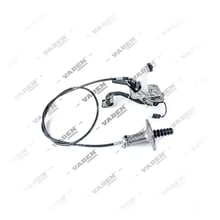
What Is the Complete Hydraulic Clutch Pedal Assembly?
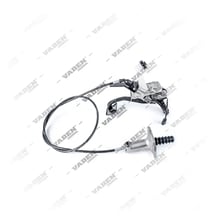
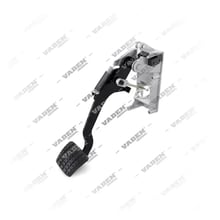
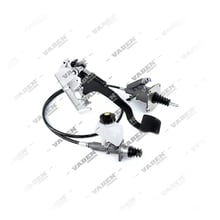
The Complete Hydraulic Clutch Pedal Assembly is a full replacement part group for heavy commercial vehicles that transmits the force applied to the clutch pedal through the hydraulic system to the clutch mechanism; it comprises the pedal arm together with the hydraulic cylinder reservoir, the piston-seal set, and the mounting hardware. In the field it is also known as the "clutch pedal assembly," "clutch pedal unit," or "clutch master cylinder assembly." It sits beneath the driver's area in truck, tractor, and bus cabs and forms the starting point of the clutch hydraulic line. Unlike the repair kit in the sibling category, this group does not supply service parts individually — it offers the pedal assembly as a whole, making it the preferred choice for full replacement when the existing unit is severely worn, its housing has cracked, or it has sustained mechanical damage beyond what a seal alone can fix. Because it is the first link in the clutch system, a failure here directly affects gear shifting and driving safety.
How Does the Hydraulic Clutch Pedal Assembly Work?
When the driver presses the clutch pedal, the piston connected to the pedal arm compresses the hydraulic fluid inside the reservoir, and this pressure is carried through the hydraulic line to the clutch slave cylinder. The slave cylinder converts the pressure it receives into mechanical motion, pushing the clutch pressure plate assembly and interrupting the power transfer between the engine and the transmission. When the pedal is released, the return spring brings the piston back to its starting position, pressure in the system drops, and the clutch re-engages. The complete assembly manages this entire cycle within a single housing.
- Force Transmission: Converts the mechanical force applied to the pedal arm into hydraulic pressure.
- Pressure Generation: The internal piston and seal set builds system pressure by compressing the fluid drawn from the reservoir.
- Hydraulic Line Feed: Delivers the generated pressure to the clutch slave cylinder through hoses and pipes.
- Pedal Return: The internal spring set returns the pedal to its starting position after every stroke.
- Sealing: The piston seals keep the hydraulic fluid contained within the system and prevent air ingress.
Technical Specifications of the Complete Hydraulic Clutch Pedal Assembly
Complete pedal assemblies are manufactured with piston diameters, stroke lengths, and reservoir capacities that vary by vehicle model; these dimensions directly determine the pressure generated by the clutch system and the sensitivity of the pedal. The housing material is typically a pressure-resistant aluminum alloy or reinforced polymer, while the piston and seal set is made from special elastomers designed for long-term contact with hydraulic fluid. Since the mounting points and pedal arm geometry are vehicle-specific, confirming compatibility with the chassis number or OEM reference code is essential. For exact torque, pressure, and dimensional values, the vehicle's current service manual is the primary reference.
Types and Subgroups of the Hydraulic Clutch Pedal Assembly
- Integrated-Reservoir Pedal Assembly: The hydraulic fluid reservoir is manufactured as a single piece with the pedal housing, simplifying installation.
- Separate-Reservoir Pedal Assembly: The reservoir sits at a separate point connected by a hose; chosen based on cab layout.
- Sensor-Equipped Pedal Assembly: Includes a pedal position sensor that sends clutch status information to the engine management system.
- Standard Mechanical Pedal Assembly: A classic design without a sensor, providing direct hydraulic transmission.
- Adjustable Pedal Arm Assembly: Pedal height and stroke distance can be adjusted to suit cab ergonomics.
How to Choose the Right Hydraulic Clutch Pedal Assembly?
To make the correct choice, the vehicle make and model, chassis number, and the OEM code of the existing pedal assembly must be matched exactly. Installing a unit with a different piston diameter or stroke length upsets pedal sensitivity, and the clutch may fail to disengage fully or the pedal may become excessively stiff. On sensor-equipped vehicles, the connector type and pin count must also be verified without fail.
Hydraulic Clutch Pedal Assembly Selection Criteria| Criterion | What to Check |
|---|
| Piston Diameter | Must exactly match the vehicle's original assembly diameter |
| Reservoir Type | Integrated or separate reservoir design must suit the cab connection point |
| Pedal Arm Geometry | Mounting holes and arm angle must fit the vehicle chassis precisely |
| Sensor Compatibility | On sensor-equipped models, connector type must match the engine management system |
| Material Quality | Piston and seal set must be made from elastomer resistant to hydraulic fluid |
Maintenance and Care Tips for the Hydraulic Clutch Pedal Assembly
- Check the Hydraulic Fluid Level: A low reservoir level can let air into the system, making the pedal feel spongy.
- Watch for Signs of Leakage: Moisture or fluid stains beneath the pedal indicate a worn piston seal.
- Bleed the System After Installation: The hydraulic line must always be bled of air following a replacement.
- Tighten the Pedal Arm Connections: A loose connection creates play in pedal travel and inconsistent clutch response.
- Use Genuine Hydraulic Fluid: Using fluid other than the type specified by the manufacturer shortens seal life.
Common Faults and Solutions
- Clutch Pedal Feels Spongy: Air in the system or a low fluid level is the likely cause; top up the reservoir and bleed the system.
- Fluid Leaking Beneath the Pedal: The piston seal may be worn; replace the complete pedal assembly.
- Stiffness During Gear Shifts: Binding in the pedal arm mechanism or spring fatigue may be present; inspect the assembly's internal mechanism.
- Clutch Does Not Fully Disengage: Insufficient hydraulic pressure or a blocked reservoir may be the cause; clean the reservoir and line connections and verify pressure.
- Pedal Sensor Throws a Fault: The connector may have loosened or the sensor may have failed; check the connector on sensor-equipped models.
Why VADEN ORIGINAL?
- Manufactured to OE Dimensions: Piston diameter, stroke, and mounting points match the original assembly measurements exactly.
- Broad OEM Cross-Reference: Manufactured with references suitable for Mercedes-Benz, MAN, Scania, Volvo, DAF, Iveco, and Renault Trucks heavy vehicles.
- Durable Material Selection: The piston and seal set is made from elastomers built to withstand hydraulic fluid over the long term.
- Exported to Over 100 Countries: Produced through a supply network trusted by global fleet operators.
- Delivered as a Complete Assembly: Offers an install-ready, complete unit without the need to source individual parts.
Conclusion
The Complete Hydraulic Clutch Pedal Assembly is the first and most critical link in the clutch system; it delivers a safe and lasting solution in situations that call for replacing the pedal housing, piston, seal set, and mounting hardware together. VADEN ORIGINAL quality complete assemblies, built faithfully to OE dimensions, preserve pedal sensitivity and clutch reliability over the long term.
Frequently Asked Questions (FAQ)
What is the Complete Hydraulic Clutch Pedal Assembly?
The Complete Hydraulic Clutch Pedal Assembly is a full replacement part group that transmits the force applied to the clutch pedal to the clutch slave cylinder through a hydraulic cylinder; it includes the pedal arm, reservoir, piston, and seal set. It is replaced as a whole rather than part by part when the existing assembly sustains mechanical damage.
What is the difference between the complete assembly and the repair kit?
The repair kit contains only wearing service parts such as the piston and seals, and is used when the existing pedal housing is still sound. The complete assembly covers the entire group including the pedal arm and housing; it is the preferred choice for situations such as a cracked housing, severe wear, or a faulty sensor.
What should be done if the clutch pedal feels spongy?
A spongy pedal is usually caused by air in the hydraulic system or a low fluid level. First check the reservoir level, then bleed the system to remove trapped air. If the problem persists, consider replacing the complete assembly, as the piston seal may be worn.
Which vehicles is the Hydraulic Clutch Pedal Assembly compatible with?
VADEN ORIGINAL complete pedal assemblies are manufactured with OEM references suitable for Mercedes-Benz, MAN, Scania, Volvo, DAF, Iveco, and Renault Trucks heavy commercial vehicles. To confirm correct compatibility, checking against the chassis number or the OEM code of the existing assembly is recommended.
Is any extra step required after installing a new pedal assembly?
Yes, the hydraulic line must always be bled after installation to remove air from the system. Otherwise the pedal will feel spongy and the clutch may not disengage fully. The reservoir should also be filled with genuine hydraulic fluid, and the connections should be checked for leaks.