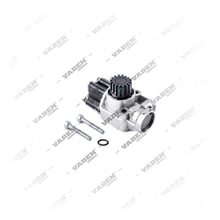
What Is a Retarder Solenoid Valve?
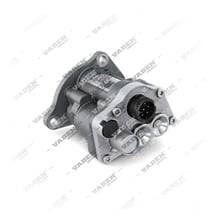
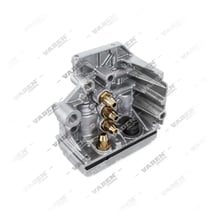
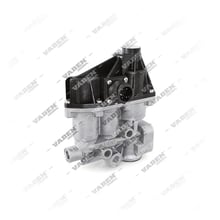
A retarder solenoid valve is the electro-hydraulic control component that directs oil flow, on electrical command, inside the retarder unit built into the transmission housing of heavy-duty commercial vehicles. The retarder built into the transmission is an auxiliary braking system that slows the vehicle down without relying on the mechanical brake linings; the solenoid valve is the key part that decides whether this system engages and at what intensity it works. In the field this part is also known as the "retarder valve," "retarder control valve," or "transmission retarder solenoid." When the driver activates the retarder lever, the electronic control unit sends current to the solenoid valve, which then opens and closes the oil passages inside the transmission to put the retarder rotor into braking mode. This component is sold as a complete valve body together with the coil and piston mechanism; this page covers the complete valve unit, not a repair kit.
How Does a Retarder Solenoid Valve Work?
The operating principle of a retarder solenoid valve relies on an electromagnetic coil that moves the metal piston inside it when energized. The transmission's electronic control unit evaluates vehicle speed, engine rpm, and brake pedal signals to determine the required retarder stage, then applies the corresponding voltage to the solenoid valve. As the piston moves, it opens or closes the inlet and outlet passages carrying transmission oil into the retarder rotor chambers, increasing or reducing the oil resistance between the rotor and stator and thereby adjusting braking torque in stages. Once current is cut, the return spring pushes the valve back to its neutral position and the retarder disengages. The valve's response speed and sealing quality directly affect how smoothly the retarder engages and how linear the braking force is.
Retarder Solenoid Valve Technical Specifications
- Coil Construction: Wound from special heat- and transmission-oil-resistant wire that retains its resistance value under prolonged current load.
- Housing Material: Manufactured from an aluminum or steel-based body designed for a long service life in the high-temperature gear oil environment.
- Sealing Elements: O-ring and gasket sets are produced from a special heat-resistant rubber compound.
- Connector Socket: Fitted with a standard connector type compatible with the vehicle wiring harness and a locking mechanism resistant to vibration.
- Electrical Values: Voltage, resistance, and current ranges vary by transmission family; the manufacturer's current service manual is authoritative for exact values.
Retarder Solenoid Valve Types and Subgroups
- Stage Control Solenoid Valve: A single-position valve that opens and closes a specific retarder braking stage.
- Proportional Solenoid Valve: Adjusts oil flow steplessly in relation to the applied current, delivering smooth and linear braking torque.
- Main Supply Solenoid Valve: The system's overall activation valve, opening the main oil line feeding the retarder circuit.
- Cooler Circuit Solenoid Valve: Manages the oil cooling circuit that carries away the heat generated while the retarder is operating.
- Pressure Relief Solenoid Valve: Releases excess oil whenever system pressure exceeds the specified upper limit.
How to Choose the Right Retarder Solenoid Valve
Choosing the right retarder solenoid valve requires fully verifying the transmission brand, model code, and retarder type. Because connector type or coil resistance can change across different production years within the same transmission family, the code on the old part should be compared against the code on the new one. The table below summarizes the key criteria to consider during selection.
Retarder Solenoid Valve Selection Criteria| Criterion | Why It Matters |
|---|
| Transmission Brand and Model | Valve body dimensions and mounting hole size vary by transmission family |
| Connector Type | Ensures physical and electrical compatibility with the vehicle wiring harness |
| Coil Resistance | Must match the current-voltage range expected by the electronic control unit |
| Valve Position | An incorrectly positioned valve can disable a retarder stage |
| Sealing Material | Requires an O-ring resistant to high-temperature transmission oil |
| OEM Reference Number | Improves cross-check accuracy against original codes from manufacturers such as Wabco, Voith, and ZF |
Retarder Solenoid Valve Maintenance and Key Considerations
- Check Transmission Oil Level and Quality: Dirty or aged oil clogs the fine passages inside the solenoid valve and leads to failure.
- Inspect the Connector and Wiring Connections: Loose or corroded terminals cause signal loss.
- Apply the Correct Torque During Installation: Over-tightening can deform the valve body, while a loose fit causes oil leaks.
- Never Reuse Removed Gaskets: Fitting a new O-ring and gasket set with every valve replacement guarantees a proper seal.
- Read Out Fault Codes Periodically: Retarder-related fault codes stored in the transmission's electronic control unit provide an early warning.
Common Failures and Solutions
- Retarder Does Not Engage: The solenoid coil may be broken or the connector may have a loose contact; measure the wiring resistance and replace the valve if necessary.
- Retarder Stages Operate Erratically: The proportional solenoid's piston may be sticking due to oil contamination; check the oil and the filter.
- Oil Leak from the Transmission: The O-ring on the valve body may be worn; renew the sealing kit.
- Retarder Engages Unexpectedly: The valve piston may be mechanically stuck; remove the valve to inspect it and replace it completely if needed.
- Retarder Fault Lamp Illuminates on the Dashboard: The electronic control unit may have measured solenoid resistance outside the expected range; read out the fault memory and test the corresponding valve.
Why VADEN ORIGINAL?
- OE Dimensions and Tolerances: Coil winding, housing material, and the gasket set are manufactured on a production line targeting original-part performance.
- Broad OEM Coverage: Reference cross-checking is provided for transmission and retarder systems sourced from Wabco, Voith, and ZF.
- Verified Sealing: Pressure and sealing tests applied during production aim to ensure the valve operates without oil leaks.
- International Field Experience: Exported to more than 100 countries, VADEN ORIGINAL products are field-proven across a wide range of climates and operating conditions.
Conclusion
A retarder solenoid valve is a critical component that governs both the engagement and the stage control of the retarder system inside the transmission; if it fails, the auxiliary braking function can be partially or completely disabled. A VADEN ORIGINAL retarder solenoid valve, selected with careful attention to brand, model, and connector compatibility, protects both driving safety and the integrity of the transmission oil.
Frequently Asked Questions (FAQ)
What does a retarder solenoid valve do?
A retarder solenoid valve controls the engagement and stage of the auxiliary brake by directing, on electrical command, the oil flow to the retarder unit inside the transmission. This allows the vehicle to be slowed down safely without wearing the mechanical brake linings.
What symptoms appear when a retarder solenoid valve fails?
The most common symptoms are the retarder not engaging at all, the stages operating erratically, the retarder fault lamp lighting up on the dashboard, and an oil leak from the transmission. If any of these occur, the valve and its wiring connections should be checked.
What is the difference between a retarder solenoid valve and a repair kit?
A retarder solenoid valve is the complete unit, including the valve body, coil, and piston mechanism. A repair kit, by contrast, is a separate product covering individual wearing parts inside the valve, such as the O-ring, gasket, and piston.
Which transmission and retarder systems are VADEN ORIGINAL retarder solenoid valves compatible with?
VADEN ORIGINAL retarder solenoid valves are manufactured to offer broad OEM coverage for transmission and retarder systems from Wabco, Voith, and ZF. Verifying the transmission brand and model before ordering is recommended.
What should be considered when replacing a retarder solenoid valve?
The correct torque value should be applied during installation, the old removed gaskets should not be reused, and the transmission oil level should be checked. Reading out the fault memory after replacement confirms whether any error codes remain.