What is a transmission case cover?
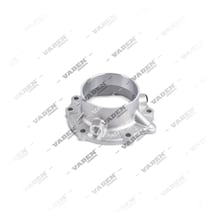
A transmission case cover is a structural part that closes the open face of the gearbox housing, protecting the internal mechanism from dust, moisture and external impact. Its material is usually a cast aluminum alloy; some heavy-duty transmissions use cast iron or sheet-steel covers instead. The cover may include pass-through holes for the shift fork shaft, a bearing for the control shaft, or a speed sensor mounting point, so the cover design varies significantly by transmission model.
What are the functions of the transmission case cover?
Although it looks like a simple part, the cover performs several functions critical to correct transmission operation.
- Sealing: keeps transmission oil inside the housing and keeps outside contamination from entering.
- Mechanical support: provides bearing and positional support for the gear selector shaft or control mechanism passing through it.
- Protection: shields the internal gear set from stone chips, moisture and dust.
What are the symptoms of a transmission case cover failure?
When the cover's gasket surface deteriorates, an oil stain appears under the parked vehicle and the transmission oil level drops over time. When the seal on the shift control shaft passing through the cover wears, a slight oil leak and looseness in the gear lever are felt when shifting. If the cover has a crack or break, severe oil loss occurs along with overheating and a whining noise caused by insufficient transmission lubrication. In advanced cases, the resulting oil shortage can cause permanent damage to the gears and bearings.
How is the transmission case cover checked?
With the vehicle on level ground, the area around and under the cover is cleaned and re-examined a few days later to identify the source of the leak. The cover surface is visually inspected for cracks, warping, or ovalized bolt holes. The shaft seal passing through the cover is assessed for play and leakage by gently moving the shaft by hand. In doubtful cases the cover should be removed and its gasket surface checked for flatness with a straightedge or feeler gauge.
What should be considered during replacement?
Before removing the cover, the transmission oil must be drained and the work area kept clean so dust or debris does not enter the housing. Bolts should be tightened in a crossing pattern to the manufacturer's torque value; over-tightening at a single point can warp the cover. Old gasket residue must be fully removed from both the housing and cover surfaces, and on models using liquid gasket, a manufacturer-approved product should be applied as a thin, even layer. The shaft seal passing through the cover should be replaced at the same time, since access to it is easiest while the cover is off.
How to choose a transmission case cover?
Compatibility should be verified against the transmission model and chassis number; covers can differ in bolt-hole count, shaft pass-through position and sensor mounting points. Covers with low casting quality or imprecise gasket-surface machining can leak within a short time.
Transmission case cover - general reference values| Parameter | Typical range |
|---|
| Bolt tightening torque | 20-45 Nm (the vehicle manufacturer's current service manual is authoritative) |
| Material | Cast aluminum alloy or cast iron |
| Gasket type | Paper/cork gasket or anaerobic liquid gasket |
| Inspection interval | Visual leak check at every oil change |
Maintenance and service life
Changing transmission oil according to the manufacturer's interval and avoiding excessive load extends the life of the cover and gasket. Avoiding direct high-pressure water on the cover gasket line during vehicle washing prevents premature gasket failure. With proper installation and maintenance, the transmission case cover and its gasket can serve trouble-free for the entire service life of the transmission.
VADEN Transmission Case Cover
VADEN offers transmission case covers manufactured to OE dimensions for heavy commercial vehicle transmissions, with attention to gasket and seal compatibility, aiming to ensure reliable oil-tightness in fleet maintenance.
Frequently Asked Questions (FAQ)
Are the transmission case cover and the transmission housing the same part?
No. The housing is the main structure containing the gear sets and shafts; the cover is a separate, removable part that closes an open face of the housing.
Does the transmission need to be removed to replace the cover?
Usually the transmission oil can be drained and the cover replaced by exposing just the cover area, without removing the whole transmission from the vehicle; however, depending on the cover's location, some ancillary parts (driveshaft, sensors) may need to be removed.
Is liquid gasket or a traditional gasket better?
Whichever type the manufacturer specifies should be used; liquid gasket gives good sealing on flat surfaces but can leave a gap if applied at the wrong thickness, while a traditional gasket provides consistent sealing at a standard thickness.
If there is still a leak after replacing the cover, what could be wrong?
The most common causes are bolts not torqued evenly, leftover old gasket residue on the sealing surface, or an unseen warp in the cover itself. The shaft seal passing through the cover may also not have been replaced separately.
Can the vehicle keep being driven with a low transmission oil level?
Short-term operation may be possible, but because insufficient lubrication of the gears and bearings can cause permanent damage, it is recommended not to drive the vehicle long distances until the leak source is found and fixed.