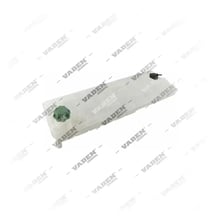
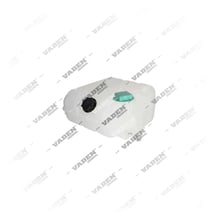
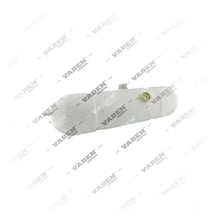
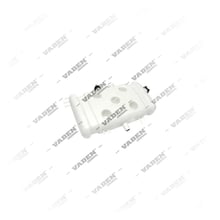
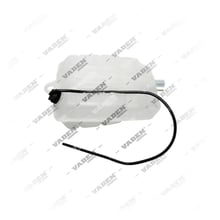
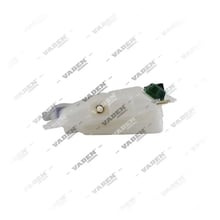
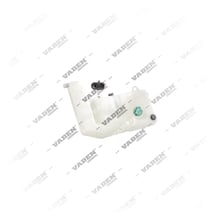
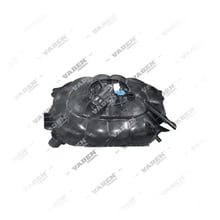
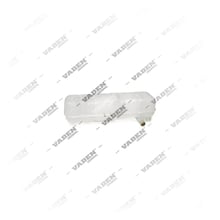
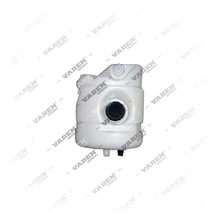
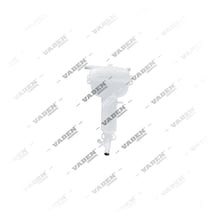
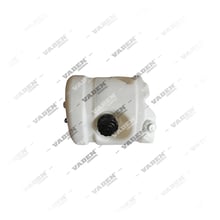
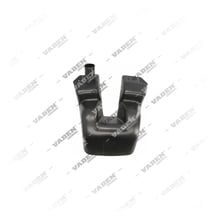
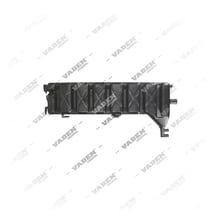
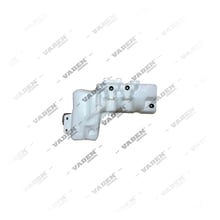
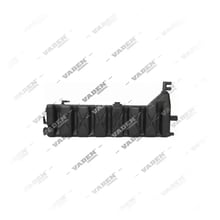
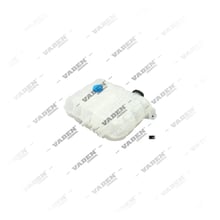
What Is a Radiator Expansion Tank?
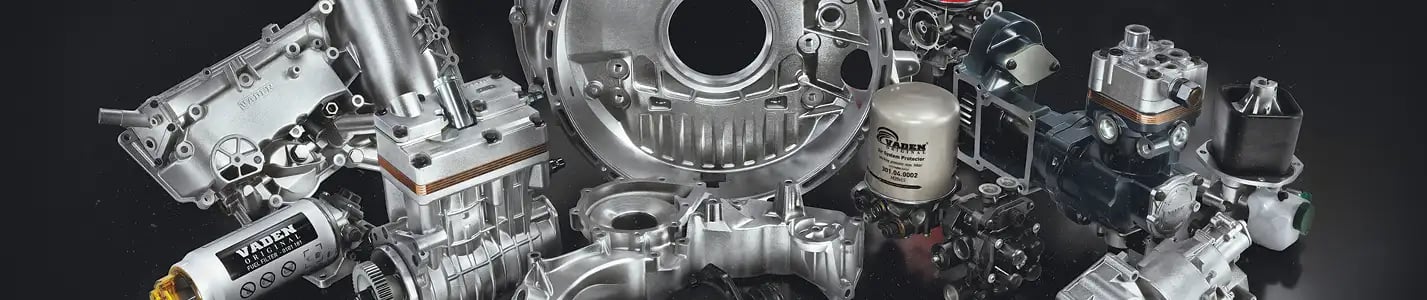
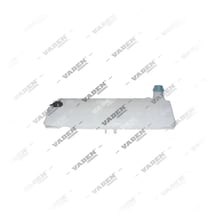
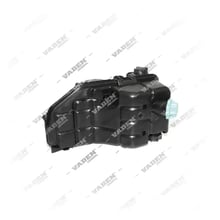
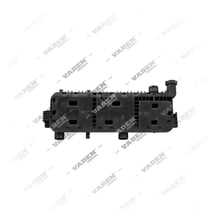
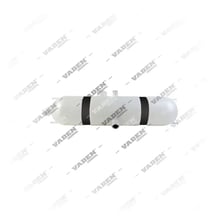
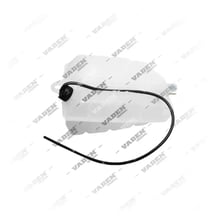
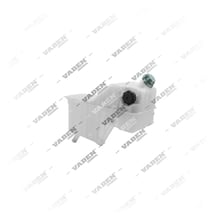
The radiator expansion tank is the reservoir assembly in a heavy commercial vehicle's cooling system that connects into the radiator circuit, absorbs the volume increase of the coolant as it heats up, and collects the air that separates out of the circuit. As the engine warms up the antifreeze mixture expands; this extra volume is absorbed by the air cushion inside the tank, and once the engine cools the fluid is drawn back into the circuit. The tank also forms a static fluid column at the water pump inlet, which prevents cavitation. In the field it is also referred to as the expansion bottle or coolant reservoir.
How Does a Radiator Expansion Tank Work?
The tank connects to the radiator's upper header tank, to the water pump suction line, and in most applications to a thin air-bleed hose at the thermostat housing. Air bubbles that build up in the circuit are carried to the tank through these lines and separate out at the fluid surface. The pressure cap holds system pressure at the upper limit set by the manufacturer, opening once that limit is exceeded to release the excess into the overflow line; this raises the coolant's boiling point.
- Volume compensation: The free air space inside the tank absorbs the excess of the expanding fluid, and the fluid returns to the circuit as it cools.
- Air separation: Bubbles collect in the upper section of the tank and leave the system without mixing into the pump suction.
- Pressure build-up: The cap assembly establishes a controlled operating pressure in the closed circuit, raising the boiling point.
- Safety relief: The cap's valves engage under excess pressure or vacuum, protecting hoses and the radiator core from deformation.
- Level monitoring: The translucent housing, level marks, and, where fitted, a float sensor make it possible to spot fluid loss early.
Radiator Expansion Tank Technical Specifications
Heavy-duty expansion tanks are mostly manufactured from glass-fiber reinforced polyamide or high-density polypropylene based engineering plastics. These materials are chosen to withstand the high temperatures found in the engine bay, the chemical action of ethylene-glycol based antifreeze, and chassis vibration. The housing is molded in multiple sections and joined by welding, and the weld seam is what determines its pressure resistance. Capacity is set according to the circuit's total fluid volume and ranges from a few liters up to more than ten liters in truck and bus applications. Because operating pressure and cap-opening value differ by engine family, the vehicle manufacturer's current service manual remains the authoritative source for the correct figure.
Radiator Expansion Tank Types and Subgroups
- Pressurized closed-circuit tanks: types that carry system pressure directly and work together with a pressure cap; standard on modern trucks, tractor units and buses.
- Non-pressurized overflow reservoirs: atmospheric containers found in older-generation layouts where the radiator cap carries the pressure, collecting only the excess fluid.
- Tanks with level sensors: relay a low-level warning to the dashboard via a float or probe integrated into the housing; connector and pin count vary by make.
- Tanks with cap and seal kits: supplied as a set together with the pressure cap and sealing elements, which shortens service time.
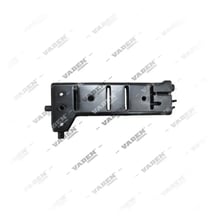
- Tanks with integrated brackets: types where the mounting feet are molded directly into the housing, preventing the tank from shifting under vibration.
How to Choose the Right Radiator Expansion Tank?
The most reliable way to choose is to take the OE reference number molded into the housing of the removed tank as the basis. Within the same vehicle series, as engine power and cooling package change, tank volume, hose port diameters and bracket layout can all differ. Verifying against the chassis number prevents a dimensional mismatch during installation.
Radiator Expansion Tank Selection and Compatibility Criteria| Criterion | Why It Matters | How to Check |
|---|
| OE reference number | Many alternatives exist depending on the engine variant | Read the marking on the housing and verify it against the chassis number |
| Reservoir volume | Insufficient volume cannot absorb the expanding fluid, causing overflow | Choose a capacity that matches the circuit's total fluid volume |
| Hose port diameter and count | Feed, return and air-bleed lines must all connect fully | Compare port diameters with the removed part |
| Cap type and opening pressure | The wrong value causes boiling or hose swelling | Compare the cap rating with the range given in the service manual |
| Level sensor and connector | Without a sensor the dashboard warning is disabled | Check the sensor socket, pin count and connector type |
| Bracket and hole pattern | A mismatched bracket causes housing cracks under vibration | Measure the hole spacing and mounting orientation |
Radiator Expansion Tank Maintenance and What to Watch For
When checked regularly, the expansion tank is a strong early-warning source for the engine. Coolant level should always be read with the engine cold and the vehicle on level ground, and kept between the minimum and maximum marks. Opening the cap on a hot engine causes pressurized fluid to spray out and can cause serious burns. Because the filling and bleeding procedure varies by vehicle, the vehicle manufacturer's current service manual remains the authoritative source.
- Use the correct coolant: maintain the approved antifreeze type and mixing ratio; mixing fluids of different technologies causes precipitation and corrosion.
- Renew the cap together with the tank: the cap's gasket and spring fatigue over time; fitting an old cap onto a new tank is a common cause of pressure loss.
- Check hoses and clamps: hardened or swollen hoses and loose clamps create leaks at the tank neck and place extra stress on the housing.
- Bleed the air fully: air trapped in the circuit causes inaccurate temperature readings, reduced heater performance and localized overheating.
Common Failures and Solutions
- Level dropping with no visible leak: could be a hairline crack in the housing or a micro-leak at the weld seam. Run a pressure test on the system and wipe the cold housing with a dry cloth to locate the damp area.
- Sudden temperature rise and boiling: the pressure cap may not be holding its opening value, or air may still be trapped in the circuit. Test the cap and repeat the bleeding procedure.
- Hoses collapsing after cooling: the vacuum valve in the cap is not opening; renew the cap.
- Continuous fluid overflow from the tank: could be overfilling, combustion gas leaking past the cylinder head gasket, or a blocked core. Correct the level and run a combustion-gas leak test.
- Oily film or foaming in the tank: indicates that engine oil or combustion gas has entered the circuit; a detailed diagnosis should be carried out before the vehicle is run again.
Why VADEN ORIGINAL?
- Built to OE dimensions: housing volume, hose port diameters, sensor socket and bracket hole pattern are engineered to match original part dimensions.
- Broad OEM matching: applications for Mercedes-Benz, MAN, Scania, Volvo, DAF, Iveco, Renault Trucks, BMC and Ford are cross-matched by OE reference.
- Durable material: the engineering-plastic housing, resistant to high temperature and antifreeze chemistry, delivers long service life under vibration.
- Export network spanning more than 100 countries: the product group is accessible through a wide dealer and service network.
Conclusion
Although it looks simple, the radiator expansion tank is a critical component that manages the cooling circuit's pressure, air balance and fluid reserve all at once. A tank that has cracked or no longer holds pressure can quickly turn into overheating and costly engine repairs. Level checks should be part of routine maintenance, the cap should be renewed together with the tank, and the product should be matched to the correct OE reference. VADEN ORIGINAL radiator expansion tank options are offered to OE dimensions.
Frequently Asked Questions (FAQ)
What does a radiator expansion tank do?
It absorbs the volume increase of the coolant as the engine heats up and returns that fluid to the circuit as the engine cools. It also separates the air bubbles that form in the circuit and, through the pressure cap, applies controlled operating pressure to the system, which raises the coolant's boiling point.
What happens when the expansion tank cracks?
It can no longer hold system pressure, coolant level keeps dropping, and air enters the circuit. This can quickly lead to engine overheating, cylinder head gasket damage and more serious engine failures; a cracked tank should be replaced rather than repaired.
How full should the expansion tank be filled?
Coolant should be kept between the minimum and maximum marks on the housing with the engine cold and the vehicle on level ground. Overfilling leaves no room for the fluid to expand when hot, which causes overflow. For the exact fill quantity, the vehicle manufacturer's current service manual is the authoritative source.
Should the expansion tank cap be replaced too?
Yes, because the cap's gasket and pressure spring fatigue over time, it is recommended to replace the cap whenever the tank is renewed. Fitting the old cap onto a new tank is one of the most common causes of pressure loss and recurring overheating complaints.
Which vehicles do VADEN ORIGINAL expansion tanks fit?
The product group covers Mercedes-Benz, MAN, Scania, Volvo, DAF, Iveco, Renault Trucks, BMC and Ford heavy commercial vehicle applications. To identify the correct product, it is recommended to use the OE reference number on the removed tank together with the chassis number as the basis.
Related technical guide: Truck Radiator & Expansion Tank: Faults, Replacement & Care