What is an exhaust manifold seal ring?
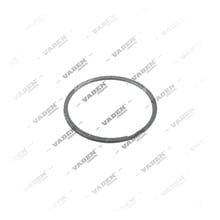
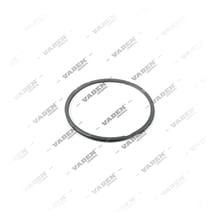
An exhaust manifold seal ring is a gasket made from cast iron or steel alloy that seats at the end of the exhaust manifold pipe and provides sealing at the connection flange or ball joint. On some engine types it is produced as a flat ring, on others as a ball-seat form; the ball-seat form allows the exhaust system to flex with engine movement. Material selection matters as much for oxidation resistance as for high-temperature strength, since the ring is continuously exposed to the chemical effect of exhaust gas.
What are the functions of an exhaust manifold seal ring?
The ring's main function is to prevent pressurized exhaust gas from escaping and to form a stable sealing surface at the manifold-to-pipe joint.
- Sealing: Prevents high-temperature, high-pressure exhaust gas from escaping at the joint.
- Movement tolerance: Absorbs small axial movements caused by engine vibration and thermal expansion.
- Noise reduction: Prevents the characteristic exhaust leak sound that occurs when the seal deteriorates.
- Contributes to emission control: Preventing gas leakage supports accurate exhaust gas recirculation and sensor readings.
- Heat insulation: Limits heat transfer at the joint surface, protecting neighboring components.
What are the symptoms of an exhaust manifold seal ring failure?
When the ring wears out or breaks, a characteristic ticking or hissing sound is heard from the exhaust system, and engine performance and emission values are negatively affected.
- Hissing sound: A leak sound at the joint, especially noticeable at idle and under acceleration.
- Exhaust smell: A noticeable exhaust gas smell in the cabin or engine bay.
- Sensor faults: Fault codes resulting from the exhaust leak disturbing lambda or EGR sensor readings.
- Visible trace: Soot buildup or discoloration at the joint.
- Performance loss: A mild change in power and fuel consumption caused by disrupted exhaust back pressure.
How is an exhaust manifold seal ring inspected?
Inspection is carried out through a visual check combined with a listening test while the engine is running.
- Visual check: Look for cracks, breakage or excessive wear on the ring surface.
- Joint clearance: Compare the axial and radial clearance between the manifold and the pipe against the manufacturer's tolerance.
- Listening test: Check for leak sound around the joint while the engine is at idle.
- Smoke test: If needed, locate the leak point with an exhaust smoke test device.
- Joint surface measurement: Check the manifold flange for flatness to rule out deformation.
What should be considered when replacing it?
Cleanliness of the joint surfaces and the correct assembly order are critical when replacing the seal ring.
- Surface cleanliness: Old ring residue and soot buildup must be fully removed.
- Correct orientation: The ring must be installed in the direction specified by the manufacturer.
- Tightening torque: Connection nuts should be tightened gradually and evenly; the vehicle's current OE service manual is the reference for the exact torque value.
- Replace in pairs: Seal rings on both sides of the manifold should be replaced together.
How is the right exhaust manifold seal ring selected?
Selecting the correct ring requires evaluating the engine code, manifold joint type and ring form together.
Exhaust manifold seal ring selection criteria| Criterion | Description |
|---|
| Joint form | Select the appropriate ring based on flat-ring or ball-seat type |
| Material | High-temperature-resistant cast iron or alloy steel is preferred |
| Engine code | Must match the code on the vehicle's engine type plate |
| OE reference | Should be cross-checked against the original equipment number |
| Set content | Some sets also include additional elements such as connection nuts or spring washers |
Maintenance and service life
Because it is continuously exposed to the engine's temperature cycles, an exhaust manifold seal ring undergoes material fatigue over time. A visual check during periodic maintenance allows replacement to be planned before wear begins. Overheating, loose connection nuts and incorrect installation are the main factors that shorten the ring's service life. Vehicles subjected to frequent heating-cooling cycles, such as urban delivery routes with frequent stop-start, tend to show ring fatigue earlier, so a shorter inspection interval is advisable for that type of use. Worn vibration dampers (rubber hangers) elsewhere on the exhaust system can also increase the dynamic load on the ring, indirectly contributing to premature failure, so exhaust system maintenance should be assessed as a whole.
VADEN Exhaust Manifold Seal Ring
VADEN offers exhaust manifold seal rings that match OE dimensions for heavy commercial vehicle engines. Made from high-temperature-resistant material, the parts are matched to the connection form specific to each engine code and supplied to service workshops cross-referenced with the original part number.
Frequently Asked Questions (FAQ)
What does an exhaust manifold seal ring do
It seals the movable joint between the exhaust manifold and the connecting pipe and prevents high-temperature gas from escaping.
What symptoms appear when the ring fails
A hissing or ticking sound at the joint, an exhaust smell, and on some engines fault codes from sensor readings being disturbed.
Should the exhaust manifold seal ring be replaced on one side only
Replacing the rings on both sides of the manifold together is recommended; single-sided replacement can cause uneven wear.
What is the most common installation mistake
The most common mistakes are not fully removing old ring residue and soot, and tightening the connection nuts in the wrong sequence.
How do you choose the correct seal ring
Select a ring matching the OE reference number based on the engine code and the manifold joint form (flat ring or ball seat).