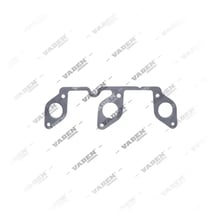
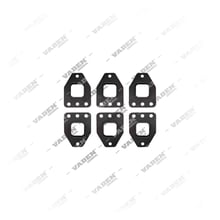
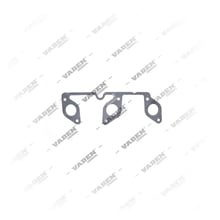
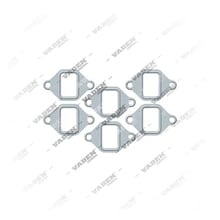
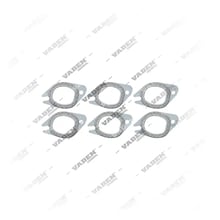
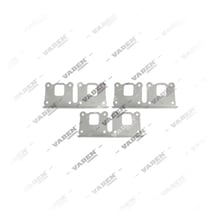
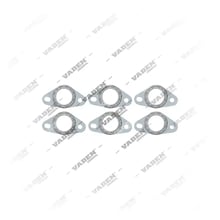
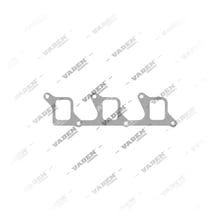
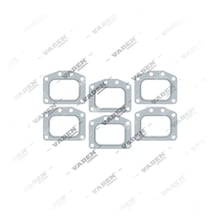
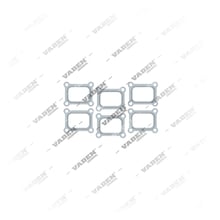
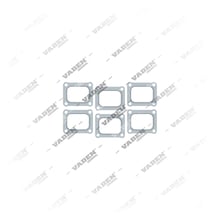
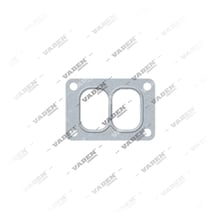
What Is an Exhaust Manifold Gasket?
An exhaust manifold gasket is a high-temperature sealing component that creates an airtight connection between the cylinder head and the exhaust manifold on heavy-duty commercial vehicle engines, also known in the field as a manifold gasket or exhaust elbow gasket. On truck, tractor unit, bus and heavy equipment engines, exhaust gas leaves the cylinder at high temperature and enters the manifold as pulsating pressure waves; the gasket keeps that flow from escaping through the mating surface.
How Does an Exhaust Manifold Gasket Work?
The gasket is compressed between two metal surfaces by the axial clamping force of the manifold bolts, filling surface irregularities to form a gas-tight barrier. That barrier faces both extreme heat and repeated pressure swings with every firing pulse. Seal life depends on the gasket's ability to spring back; one that has taken a permanent set starts leaking after the first heat cycle.
- Sealing: Fills the microscopic gaps between the head and manifold flange, preventing exhaust gas from escaping.
- Absorbing thermal movement: Leaves clearance between two parts that expand at different rates, delaying flange cracking.
- Holding pressure: On turbocharged engines, ensures exhaust energy reaches the turbine wheel intact.
- Protecting the surfaces: Reduces wear and corrosion from direct metal-to-metal contact.
Exhaust Manifold Gasket Technical Specifications
Material structure, body thickness and port geometry are the deciding factors when selecting a gasket. The most common designs are composite gaskets with a graphite-based filler between steel layers, and fully metal multi-layer steel gaskets. Thickness varies by engine family; a gasket thicker or thinner than the original changes the flange seating plane and can cause a leak. For exact dimensions and torque values, the vehicle manufacturer's current service manual is authoritative.
- Temperature resistance: The material must withstand continuous exhaust heat and load-spike peaks without permanent deformation.
- Port geometry: Passage diameter and center spacing must match the head ports; the gasket must not restrict flow.
- Bolt hole pattern: Hole count, diameter and spacing must match the manifold's stud layout exactly.
- Surface coating: A graphite or elastomer coating fills surface roughness and reduces the risk of sticking on removal.
Exhaust Manifold Gasket Types and Subcategories
Products in this category fall into different body types depending on the engine family and manifold design. Choosing the right group matters both for ease of installation and for service life.
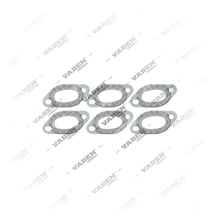
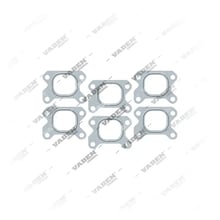
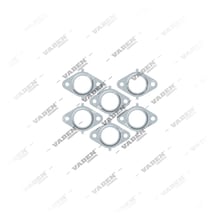
- Single-port gaskets: A separate body for each exhaust port; when one port leaks, only that piece needs replacing.
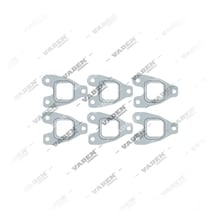
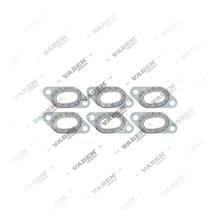
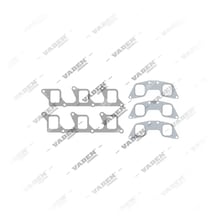
- Multi-port gaskets: Combine two or more ports in a single body, simplifying alignment on one-piece manifolds.
- Multi-layer steel gaskets: Thin steel laminations offering the best spring-back under high clamping force and heat.
- Graphite-metal composite gaskets: A metal core with a graphite filler, more forgiving on flanges that are not perfectly flat.
- Turbo flange and elbow gaskets: Used between the manifold and the turbo inlet or exhaust elbow, generally thicker-bodied.
How to Choose the Right Exhaust Manifold Gasket
The most reliable method is working from the OE reference number on the removed gasket or manifold. The same truck model can use different manifolds depending on the engine option, so the engine code, model year and emissions level must always be verified.
Exhaust Manifold Gasket Selection and Compatibility Criteria| Criterion | Why It Matters | How to Verify |
|---|
| OE reference number | The most reliable indicator of compatibility | Old gasket body or spare parts catalog |
| Engine code | The same model can carry different engines with different manifolds | Engine data plate and vehicle registration |
| Port count and body type | Determines whether single- or multi-port is needed | Compare the old gasket against the flange |
| Port diameter and center spacing | Wrong dimensions restrict flow and burn the gasket edge | Measure with calipers, overlay against the old part |
| Body thickness | Changes the flange seating plane and bolt tension | Measure at the gasket's uncompressed edge |
Exhaust Manifold Gasket Maintenance and Key Considerations
An exhaust manifold gasket is not a scheduled maintenance item -- it is a single-use component renewed every time the manifold is removed. Reinstalling a used gasket almost always leaks. Installation quality affects gasket life just as much as material quality does.
- Prepare the flange surfaces: Remove all gasket residue, soot and corrosion, and check flatness with a straightedge and feeler gauge. A warped flange cannot hold a lasting seal until it has been machined true.
- Follow the tightening sequence and torque: Tighten bolts progressively from the center outward; torque values vary by engine, so the service manual is authoritative.
- Inspect the studs: Studs fatigued or stretched through heat cycling should be replaced.
- Watch the installation orientation: Some gaskets have a marked side that must face the gas flow; installing them backwards shortens their life.
Common Failures and Solutions
Exhaust manifold gasket failures usually announce themselves through audible and visible symptoms. Catching them early prevents lasting damage to the flange and head.
- Hissing on cold start: Points to localized burn-through at the gasket edge or insufficient torque; remove the manifold, inspect the surface and renew the gasket.
- Soot and scorch marks around the flange: Shows where the leak is; clean the area, check flatness and replace the gasket.
- Drop in turbo boost and loss of power: A leak between manifold and turbo bleeds off exhaust energy before it reaches the turbine; check the flange gasket and hardware.
- Exhaust smell in the cab: Leaking gas migrates from the engine bay into the cabin -- a safety warning never to ignore.
Why Choose VADEN ORIGINAL?
VADEN ORIGINAL exhaust manifold gasket products are manufactured on the dimensional and material logic of the original part, for dependable installation and repeatable sealing on an engine that stays in service for years.
- Built to OE dimensions: Port diameter, center spacing, hole pattern and body thickness are set to match the original part.
- Broad OEM coverage: Cross-referenced options for Mercedes-Benz, MAN, Scania, Volvo, DAF, Iveco, Renault Trucks, BMC and Ford engines.
- Materials rated for high heat: Asbestos-free composite and multi-layer steel constructions retain their spring-back through repeated thermal cycling.
- Exported to over 100 countries: Field feedback from a wide range of climates and road conditions feeds back into production.
Conclusion
The exhaust manifold gasket is a low-cost part with an outsized effect on engine performance. One selected against the correct reference and installed with proper torque on a clean, flat flange delivers years of trouble-free sealing. Wrong dimensions, a reused gasket, or an unaddressed flange warp lead to power loss and permanent surface damage. Verifying the OE number before ordering and following the service manual's torque values are the two most decisive steps in this category.
Frequently Asked Questions (FAQ)
What does an exhaust manifold gasket do?
It seals the connection between the cylinder head and the exhaust manifold, preventing exhaust gas from escaping. It also absorbs the different thermal expansion rates of the two parts, protecting the flange surfaces. On turbocharged engines, it ensures exhaust energy reaches the turbine intact.
How can you tell an exhaust manifold gasket has failed?
The most typical sign is a hissing or blowing sound that's most noticeable when the engine is cold. Soot and scorch marks around the flange, an exhaust smell in the cab, and a drop in turbo boost with loss of power are also common signs. When these symptoms appear, the manifold should be removed and the surface inspected.
Can a removed exhaust manifold gasket be reused?
No. Once a gasket has been compressed, it loses most of its ability to spring back. A reinstalled gasket will typically leak after the first heat-up and cool-down cycle, so the gasket must be renewed every time the manifold is removed.
Should I use sealant when installing an exhaust manifold gasket?
No, these gaskets are designed for dry installation. Silicone-based gasket sealants break down at high exhaust temperatures and open up a leak path. Instead, make sure the flange surfaces are clean and flat, and apply a high-temperature anti-seize compound to the studs.
How do I choose the right exhaust manifold gasket?
The most reliable approach is matching against the OE reference number on the old gasket or manifold. You should also check the engine code, emissions level, port count, port diameter and body thickness. For tightening torque and sequence, the vehicle manufacturer's current service manual is authoritative.
Related technical guide: Engine Gasket Set: Failure, Replacement and Maintenance Guide