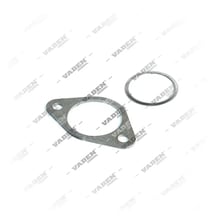
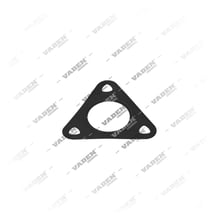
What Is an EGR Valve Gasket?
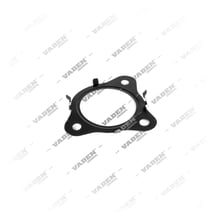
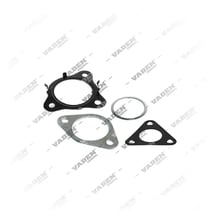
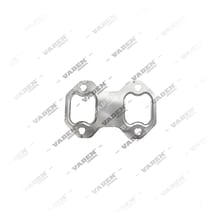
An EGR valve gasket is a heat-resistant sealing component that provides an airtight, gas-tight seal at the surfaces where the exhaust gas recirculation (EGR) valve mounts to the engine block, intake manifold, or exhaust line. In heavy-duty commercial vehicles, the EGR valve routes a controlled portion of exhaust gas back into the intake system to lower combustion temperature; this recirculated gas flow runs extremely hot and carries soot, so the gasket's sealing integrity is critical for both emissions performance and engine efficiency. In the field this part is sometimes also called an "EGR gasket," "EGR valve seal," or "exhaust gas recirculation valve gasket." Even the smallest loss of sealing at the mounting point prevents the engine control unit (ECU) from correctly calculating the air-fuel mixture and affects the whole system. VADEN ORIGINAL EGR valve gaskets are manufactured to original dimensions for engines used in Mercedes-Benz, MAN, Scania, Volvo, DAF, Iveco, and Renault Trucks.
Functions of the EGR Valve Gasket
The primary role of the EGR valve gasket is to form a complete seal between the valve body and the surface it mounts to, preventing hot exhaust gas from escaping in an uncontrolled way. The gasket keeps its flexibility against high-temperature swings and vibration, sustaining the seal throughout the engine's operating conditions.
- Gas Sealing: Prevents exhaust gas from escaping at the mounting surface or into the engine compartment.
- Heat Insulation: Limits damage to surrounding components from the high-temperature gas flow.
- Pressure Integrity: Allows the ECU to correctly calculate the gas flow rate in the EGR circuit.
- Vibration Damping: Maintains contact pressure between mounting surfaces despite engine vibration.
- Emission Compliance: A leak-free EGR circuit helps keep nitrogen oxide (NOx) emissions within target levels.
EGR Valve Gasket Technical Specifications
EGR valve gaskets are manufactured from metal gasket, multi-layer steel (MLS), or graphite-reinforced materials depending on the mounting point; each type is chosen according to the temperature and pressure conditions it will face. The surface the valve mounts to (intake manifold side, exhaust side, or cooler connection) and the engine model are the deciding factors in selecting the correct gasket.
EGR Valve Gasket Selection and Application Criteria| Criterion | Description |
|---|
| Material Structure | Metal gasket, multi-layer steel (MLS), or graphite-reinforced sealing material |
| Temperature Resistance | Exhaust side is sized for the high-temperature range, intake side for the moderate-temperature range |
| Mounting Point | Intake manifold side, exhaust line side, or EGR cooler connection |
| Engine Compatibility | Mercedes-Benz, MAN, Scania, Volvo, DAF, Iveco, Renault Trucks heavy-duty engines |
| Installation Note | The vehicle manufacturer's current service manual governs tightening torque and sequence |
Types and Subgroups of EGR Valve Gasket
- Valve Body Mounting Gasket: The main sealing element that secures the EGR valve to the intake manifold.
- EGR Cooler Connection Gasket: Separately seals both the gas and coolant lines between the valve and the EGR cooler.
- Exhaust-Side Flange Gasket: Used where the valve connects to the exhaust manifold, the area exposed to the highest temperature.
- Multi-Layer Steel (MLS) Gasket: Delivers long-lasting sealing that withstands high pressure and repeated heating-cooling cycles.
- Graphite-Reinforced Gasket: Flexes to maintain sealing even on uneven surfaces, accommodating installation tolerances.
How to Choose the Right EGR Valve Gasket
To choose the correct gasket, the vehicle's engine code and the EGR valve's mounting configuration must first be clearly identified; even within the same engine family, different EGR valve variants can require different gasket dimensions. Compare the thickness, bolt pattern, and material structure of the removed old gasket with the new part, and if there is any mismatch, request verification from VADEN technical support using the OEM reference number. Intake-side and exhaust-side gaskets cannot be used interchangeably; mixing them up leads to premature failure.
EGR Valve Gasket Maintenance and Points to Note
- Clean the Surfaces: Before installation, fully remove old gasket residue and soot from the mounting surfaces.
- Check for Flatness: Verify that the valve body and manifold surface show no warping or pitting.
- Tighten to the Correct Torque: Tighten the bolts gradually, in the sequence and torque value specified by the vehicle manufacturer.
- Renew at Every Removal: Whenever the EGR valve is removed and refitted, always replace the gasket rather than reusing it.
- Monitor the Cooler Connection: Periodically check the gasket on the cooler side for signs of fluid leakage.
Common Faults and Solutions
- Burnt Exhaust Smell in the Engine Compartment: Usually caused by a gas leak at the mounting surface; inspect and replace the gasket and mounting surface.
- Fault Code and EGR Warning Light: A loss of sealing disrupts the EGR flow rate; renew the gasket and verify surface flatness.
- Drop in Coolant Level: Caused by a leak at the EGR cooler connection gasket; replace the cooler gasket.
- Unstable Idle: A leaking gasket causes an incorrect air-fuel mixture; restore the seal and test the EGR circuit.
- Sooty Engine Surfaces: Escaping exhaust gas causes soot buildup on surrounding parts; replace the gasket and clean the area.
Why VADEN ORIGINAL?
VADEN ORIGINAL EGR valve gaskets are manufactured to original equipment dimensions and material quality, delivering reliable sealing under high-temperature and vibration conditions. Thanks to extensive OEM reference matching, correct compatibility is easily achieved for Mercedes-Benz, MAN, Scania, Volvo, DAF, Iveco, and Renault Trucks heavy-duty engines. With a production infrastructure that exports to more than 100 countries, VADEN delivers consistent quality and dependable supply continuity.
Conclusion
The EGR valve gasket is a seemingly small but directly influential sealing component for engine emission control and operating stability. An EGR valve gasket selected in the correct material and dimensions, installed with the correct torque, prevents gas leaks, reduces the occurrence of fault codes, and supports the engine's long-term reliability. The VADEN ORIGINAL product range offers an OEM-quality solution with broad vehicle compatibility for this critical part.
Frequently Asked Questions (FAQ)
What does an EGR valve gasket do?
The EGR valve gasket seals the surface where the EGR valve mounts to the engine block or manifold. This keeps hot exhaust gas from escaping uncontrolled and lets the EGR circuit function as designed.
What happens if the EGR valve gasket leaks?
A loss of sealing disrupts the EGR gas flow rate, triggering fault codes and warning lights, unstable idle, and a burnt smell with soot buildup in the engine compartment. The gasket should be replaced without delay once this is noticed.
Should the EGR valve gasket be replaced every time it is removed?
Yes. The sealing material compresses and loses its shape each time the EGR valve is removed and refitted, so the gasket should never be reused and must always be replaced with a new one.
Is the EGR cooler gasket the same as the valve body gasket?
No, they are different parts. The valve body gasket mounts the valve to the manifold, while the EGR cooler gasket separately seals both the gas and coolant lines; they cannot be used interchangeably.
Which vehicles are VADEN ORIGINAL EGR valve gaskets compatible with?
VADEN ORIGINAL EGR valve gaskets are compatible with EGR valves used on Mercedes-Benz, MAN, Scania, Volvo, DAF, Iveco, and Renault Trucks heavy-duty engines. Verification with technical support using the engine code is recommended before ordering.