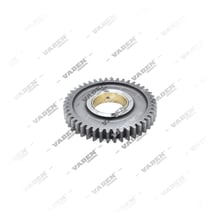
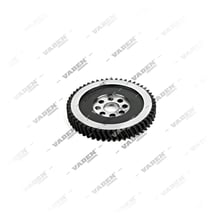
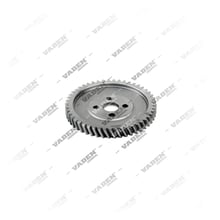
What Is a Camshaft Gear?
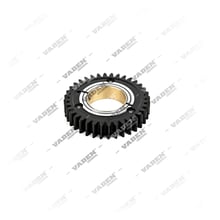
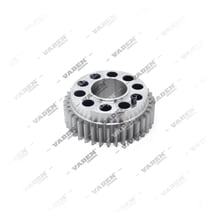
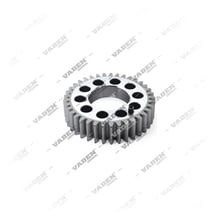
The camshaft gear is the gear component in heavy-duty commercial vehicle engines that transmits the rotational motion of the crankshaft to the camshaft and determines the engine's valve timing. In the field it is also referred to as the "cam gear" or "camshaft timing gear." As one of the central parts of the timing drive (whether a gear train or a chain-and-sprocket system), the camshaft gear meshes directly with the crankshaft gear inside the engine block or timing cover, or through one or more idler gears. Its function is to ensure that the camshaft completes exactly one full rotation for every two rotations of the crankshaft, guaranteeing that the valves open and close at precisely the right moment. It is widely used in gear-driven or chain-driven timing systems on Mercedes-Benz, MAN, Scania, Volvo, DAF, Iveco and Renault Trucks heavy-duty engines. VADEN ORIGINAL camshaft gears are manufactured to OE dimensions and preserve the precision of engine timing over the long term.
How Does a Camshaft Gear Work?
While the engine is running, the gear on the crankshaft turns the camshaft gear either directly or through idler gears. The tooth-count ratio between the gears ensures the camshaft rotates at half the crankshaft's speed; this ratio forms the basis of the engine's valve timing. The timing marks (a dot or notch) on the camshaft gear are used during engine assembly to align the crankshaft and camshaft in the correct position relative to one another. The contact surfaces between the gears are continuously lubricated by engine oil, which minimizes wear and noise. A misaligned or worn camshaft gear throws off valve timing and directly affects engine performance.
Camshaft Gear Technical Specifications
Camshaft gears are typically manufactured from forged or sintered steel; in some applications, composite or polymer-coated tooth surfaces are used to reduce noise. Tooth profile, tooth count and module vary by engine model, so the engine code and timing-drive type must always be verified when selecting a gear. General ranges should be used for torque and installation tolerances rather than exact figures — for precise values, always refer to the vehicle's current service manual.
- Material: Forged or sintered steel, with polymer-coated tooth surfaces in some applications.
- Bore and Connection Design: The center bore diameter, keyway or spline configuration must match the original part exactly.
- Timing Mark Position: Marked on the gear teeth as a reference point for correct installation.
- Surface Hardness and Heat Treatment: Directly determines the gear's fatigue resistance and service life.
Camshaft Gear Types and Subcategories
- Camshaft Gear Meshing Directly with the Crankshaft Gear: Used in compact timing layouts that take motion straight from the crankshaft gear without an idler gear.
- Camshaft Gear Driven Through an Idler Gear: Found in multi-gear timing sets that take motion from the crankshaft through one or more idler gears.
- Camshaft Gear with Timing Marks: Versions featuring dot or notch marks that ensure correct alignment during assembly.
- Types Combined with the Injection Pump Drive Gear: Used in combined timing sets that also transmit camshaft motion to the fuel injection pump.
- Fixed-Shaft and Flanged Camshaft Gears: Variants where the gear is secured to the shaft by a key, spline or flange connection, depending on engine design.
How to Choose the Right Camshaft Gear
Choosing the correct camshaft gear starts with clearly identifying the engine code, the timing-drive type and the gear's position (crankshaft side or camshaft side). The table below summarizes the key criteria to consider during selection.
Camshaft Gear Selection Criteria| Criterion | Why It Matters |
|---|
| Engine Code and Model | Tooth count, module and bore design vary by engine code |
| Timing Drive Type | Gear-train, chain-driven or belt-driven systems require different gear geometry |
| Gear Position | Crankshaft side, camshaft side or idler position determines the installation type |
| Timing Mark | The mark's position and orientation is the reference point for correct installation |
| Material and Surface Quality | Heat treatment and hardness level affect fatigue resistance and noise level |
| Connection Design | Key, spline or flange connection must match the original shafts exactly |
Camshaft Gear Maintenance and Points to Watch
- Verify Timing Marks During Installation: Align the crankshaft and camshaft gear marks at the position specified by the manufacturer; incorrect alignment can lead to valve-to-piston contact.
- Check the Lubrication System: Make sure gear contact surfaces receive adequate engine oil; dry or contaminated oil causes premature wear.
- Inspect Tooth Surfaces for Wear: Replace the gear if pitting, burring or excessive backlash is found on the tooth surfaces during removal.
- Evaluate Connected Idler Gears Together: When replacing the camshaft gear, also check the idler gears and bearings — replacing a single part can lead to uneven wear.
- Follow the Correct Installation Torque: Tighten the retaining bolts to the torque value specified in the vehicle's service manual.
Common Camshaft Gear Failures and Solutions
- Metallic Noise from the Timing Area: Worn tooth surfaces or increased backlash; inspect the gear train and related idler gears and replace as needed.
- Disrupted Engine Timing, Rough Running: Misaligned or shifted timing mark; reassemble the engine according to the timing marks.
- Rough Idle or Power Loss After Starting: Air-fuel mixture disruption caused by shifted valve timing; check the gear and the chain/belt tension.
- Visible Burring or Broken Teeth on the Gear: Material fatigue from insufficient lubrication or long-term wear; replace the gear with a new, original-quality part.
- Oil Leak from the Timing Cover: Worn cover gasket or seal; renew the gasket and seals together with the gear replacement.
Why Choose a VADEN ORIGINAL Camshaft Gear?
- Manufactured to OE Dimensions: Tooth profile, bore design and timing marks match original-part tolerances exactly.
- Extensive OEM Cross-Reference: Offers a wide application range for Mercedes-Benz, MAN, Scania, Volvo, DAF, Iveco and Renault Trucks engines.
- Durable Material and Heat Treatment: High fatigue-resistant steel and the correct hardness level deliver a long service life.
- Consistent Quality Control: Every batch is tested for dimensional accuracy and surface quality before shipment.
- Exported to Over 100 Countries: A broad service network and deep stock availability make the part easy to source.
Conclusion
The camshaft gear is a critical timing-drive component that determines the accuracy of engine timing and, in turn, smooth engine operation. Choosing a camshaft gear built to OE dimensions for the correct engine code, and carefully following the timing marks during installation, significantly reduces the risk of wear and failure. The VADEN ORIGINAL camshaft gear range offers a reliable, long-lasting solution for the timing systems of heavy-duty commercial vehicle fleets.
Frequently Asked Questions (FAQ)
What does a camshaft gear do?
The camshaft gear transmits the crankshaft's rotational motion to the camshaft, ensuring the valves open and close at the correct time. The accuracy of engine timing depends directly on this gear.
What happens when a camshaft gear fails?
A worn or misaligned camshaft gear causes engine timing to shift. This can result in rough idling, power loss, metallic noise from the timing area, and in severe cases, valve-to-piston contact.
What should be considered when replacing a camshaft gear?
During installation, the timing marks on the crankshaft and camshaft gear must be aligned at the position specified by the manufacturer, and the retaining bolts must be tightened to the torque value given in the service manual. The idler gears and lubrication system should also be checked at the same time.
Which vehicles are VADEN ORIGINAL camshaft gears compatible with?
VADEN ORIGINAL camshaft gears are manufactured for a wide application range covering Mercedes-Benz, MAN, Scania, Volvo, DAF, Iveco and Renault Trucks heavy-duty commercial vehicle engines. The engine code should be verified for exact compatibility.
Why does a camshaft gear make noise?
Noise is usually caused by wear on the tooth surfaces, increased backlash, or insufficient lubrication. If the tooth surfaces are pitted or burred, the gear should be replaced with an original-quality part.