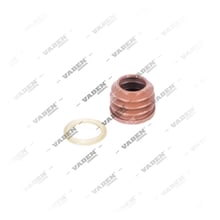
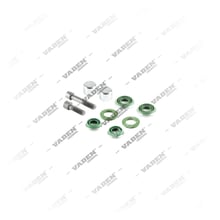
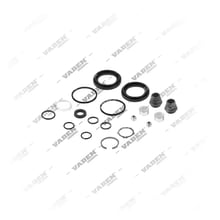
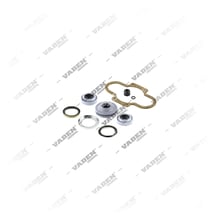
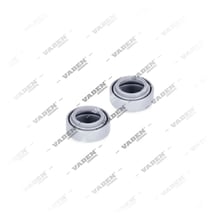
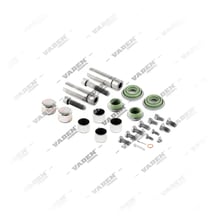
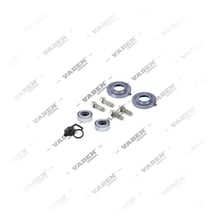
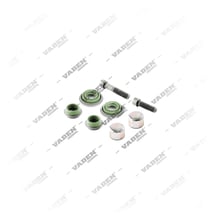
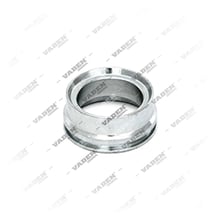
What Is a Caliper Guide Pin Dust Boot?
A caliper guide pin dust boot is the flexible, bellows-shaped sealing element that protects a disc brake caliper's slide pins from water, mud, road salt, and brake pad dust. On heavy commercial vehicles, floating calipers travel axially along these pins with every brake application; smooth movement depends on the pin staying clean and greased. The boot bridges the gap between pin and bore, keeping grease in and contaminants out. In the field it is also called the guide pin boot, slide pin boot, or caliper slide rubber; it is a wear item normally renewed together with the pin or the caliper repair kit.
What Does a Caliper Guide Pin Dust Boot Do?
The dust boot's job is not just keeping dirt out — it preserves the sliding freedom that lets the caliper center itself. When it tears, water and salt entering the bore break down the grease, start corrosion, and the pin soon seizes, locking the caliper. The outcome is one-sided pad wear, disc strain, and uneven braking.
- Sealing: lips at both ends seat against the caliper body and the pin, isolating the bore from the outside environment.
- Grease retention: keeps the high-temperature grease in the bore where it belongs; lost grease means dry friction.
- Volume compensation: its folds absorb the volume change created as the pin moves in and out.
- Free sliding: lets the caliper re-center itself as the pads wear, preventing pad drag.
Caliper Guide Pin Dust Boot Technical Specifications
Caliper guide pin dust boots are made from elastomers able to withstand the heat, ozone, and chemical exposure of the brake area; common materials include EPDM, silicone-based compounds, and high-temperature nitrile derivatives. Depending on the application, continuous operating temperature is generally rated from about minus 40 to plus 150 degrees Celsius. Three dimensions govern fitment: pin diameter, the boot's outer diameter where it seats in the bore, and free length. Because profiles vary by caliper supplier even within the same brand, the manufacturer's current service manual remains the reference for final dimensions and grease type.
- Material: EPDM, silicone, or high-temperature nitrile; resistant to ozone, salt, and brake dust.
- Profile: single-fold short boots and multi-fold long boots; fold count is set by the pin's stroke.
- Attachment style: press-fit lipped type, banded type, or metal-reinforced type with an integrated cap.
Caliper Guide Pin Dust Boot Types and Subcategories
A caliper typically carries two pins: a short-stroke guide pin and a longer slide pin. Since the two mostly take different boots, ordering them as a matched set reduces installation errors.
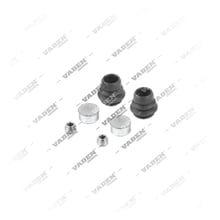
- Short pin boot: used on guide pins with limited axial travel; low fold count and compact.
- Long pin boot: used on the main, high-stroke slide pin; its multi-fold construction accommodates the longer travel.
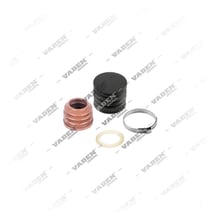
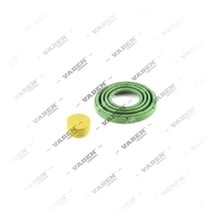
- Capped boot: molded as a single piece with the dust cap at the pin tip, removing the need to fit a separate cap.
- Metal-reinforced boot: its steel band construction keeps it from popping out of the bore under heavy vibration.
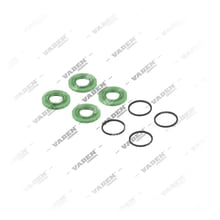
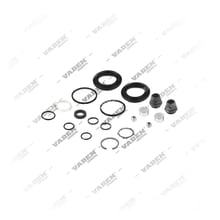
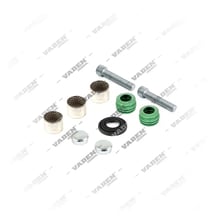
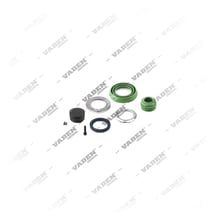
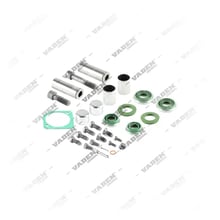
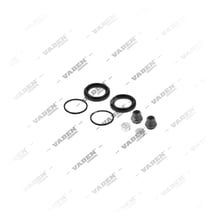
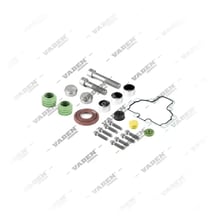
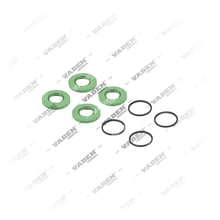
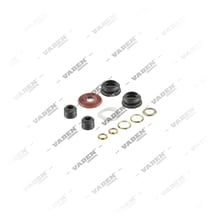
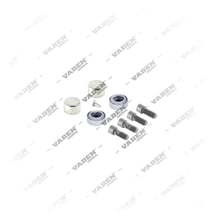
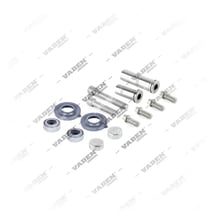
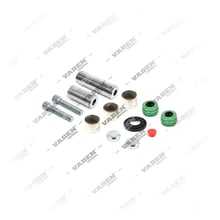
- Greased repair kit: bundles the boot, dust cap, bushing, and high-temperature grease together.
How to Choose the Right Caliper Guide Pin Dust Boot
The most reliable route is to work from the casting number together with the vehicle's OE brake part reference. Because front and rear axles on the same tractor unit can carry different caliper families, assuming one size fits all is a common mistake. Comparing against the removed old boot is misleading too, since heat-aged elastomer no longer holds its size.
Caliper guide pin dust boot selection and compatibility criteria| Criterion | What to check | Why it matters |
|---|
| Caliper family | Casting and type number on the caliper body | The same vehicle may run calipers from different suppliers |
| Pin type | Short guide pin or long slide pin | Stroke length and fold count differ |
| Pin diameter | Diameter of the area the boot seats on | A small deviation breaks the lip seal |
| Seating diameter and length | Outer diameter entering the bore and free length | Too short and it stretches; too long and it folds |
| Attachment style | Lipped, banded, or metal-reinforced | An incompatible type pops out of place |
| Kit content | Single boot or greased repair kit | The boot alone is not enough without the correct grease |
Caliper Guide Pin Dust Boot Maintenance and Installation
The dust boot is a natural part of every periodic pad check. At every pad change, check the caliper's sliding freedom by hand, remove the pin, clean the bore, and inspect the boot visually. A cracked, hardened, or swollen boot must be renewed every time; skipping this can escalate the cost to a full caliper replacement.
- Clean the bore: remove old grease and rust with a suitable cleaner; an abrasive brush will score the surface.
- Use the correct grease: apply only a high-temperature grease approved for caliper pins and compatible with the elastomer.
- Do not over-grease: if the bore is packed full, the pressure created as the pin enters can force the boot out of place.
- Check the lips: confirm both lips seat fully in their grooves; a partially seated lip lets water in.
- Tighten to the specified torque: torque values vary by caliper family; the vehicle manufacturer's current service manual is the reference.
Common Failures and Solutions
- Torn or cracked boot: caused by aging or installation stress; replace the boot and dust cap together and re-grease the bore.
- Pin seized in the bore: corrosion from water and salt ingress; remove the pin, clean the bore, and if needed renew the pin and bushing along with the boot.
- One-sided pad wear: the caliper has lost its sliding freedom; check the pin assembly and boots, and assess the pad set.
- Boot popping out of the bore: wrong size or excess grease; fit a correctly referenced boot and bring the grease quantity back within the manufacturer's range.
- Swollen, softened boot: contact with an incompatible grease or oil; clean the bore and renew the boot with an elastomer-compatible grease.
Why VADEN ORIGINAL?
- Built to OE dimensions: pin diameter, seating diameter, and free length are manufactured against the original part's geometry.
- Broad OEM matching: cross-referenced options for common caliper families on Mercedes-Benz, MAN, Scania, Volvo, DAF, Iveco, and Renault Trucks.
- Materials suited to the brake environment: elastomer compounds resistant to heat, ozone, salt, and brake dust.
- Exported to over 100 countries: a range refined by field feedback from fleets across different climates and road conditions.
Conclusion
The caliper guide pin dust boot is one of the smallest yet most decisive wear parts on a brake caliper. A sound boot keeps the pin greased and free to move; once it fails, the problem quickly grows into a seized pin and uneven braking. For this reason, boot replacement should be a standard part of planned pad maintenance. A correctly referenced VADEN ORIGINAL caliper guide pin dust boot is a low-cost way to protect braking performance.
Frequently Asked Questions (FAQ)
What does a caliper guide pin dust boot do?
It seals the caliper's slide pin against water, mud, road salt, and pad dust, and keeps the high-temperature grease in the bore where it belongs. This preserves the axial sliding freedom the caliper needs to re-center itself as the pads wear. Once the boot fails, the pin quickly seizes in its bore.
When should a caliper guide pin dust boot be replaced?
At every pad change, the pin should be removed and the boot inspected visually; a cracked, hardened, swollen, or torn boot must always be renewed. Replacing the boot together with the pin assembly or the caliper repair kit is standard practice. Even a boot that still looks sound is safer to renew on a caliper that has seen significant heat.
Can a vehicle be driven with a torn pin boot?
It is not recommended. Water and salt entering through a torn boot break down the grease, start corrosion, and cause the pin to seize in its bore. The result is one-sided pad wear, disc strain, and uneven braking across axles, which directly affects stopping distance.
Which grease should be used when fitting a pin boot?
Only a high-temperature grease approved for caliper pins and compatible with the elastomer should be used. Incompatible mineral-based greases swell and soften the boot, quickly destroying the seal. Quantity matters too — too much grease can force the boot out of its bore under the pressure created as the pin is inserted.
How do I find the correct dust boot?
The most reliable approach is to work from the type or casting number on the caliper body together with the vehicle's OE brake part reference. Then confirm that pin diameter, the outer diameter seating in the caliper bore, and free length match the original part. Since the short and long pins use different boots, ordering both as a set reduces installation errors.