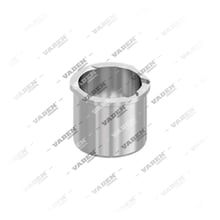
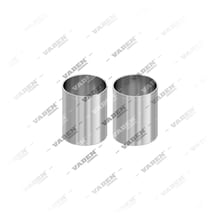
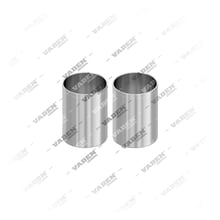
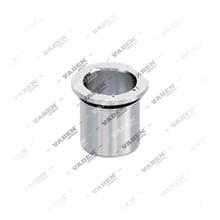
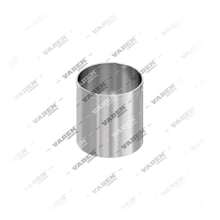
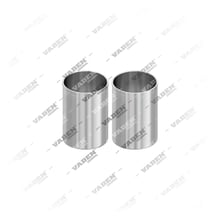
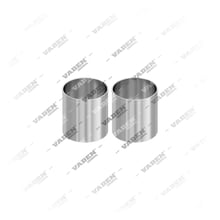
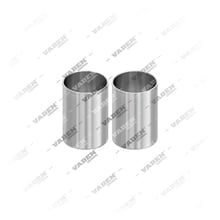
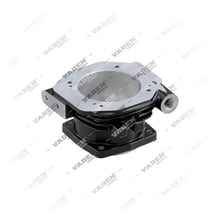
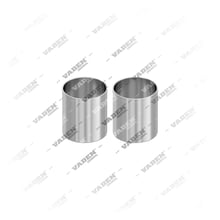
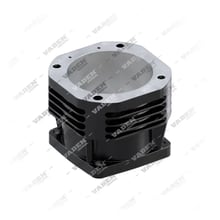
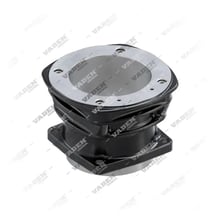
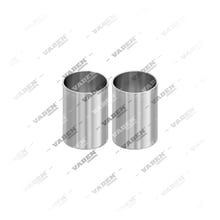
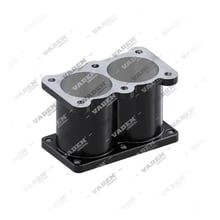
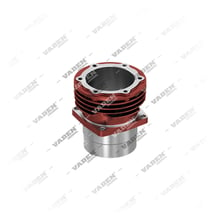
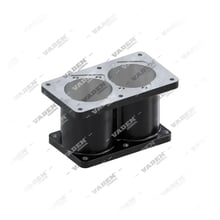
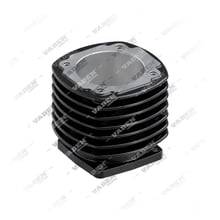
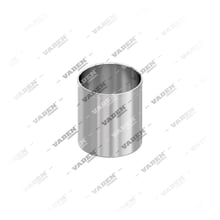
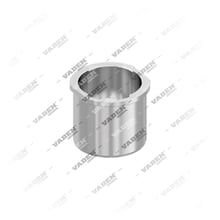
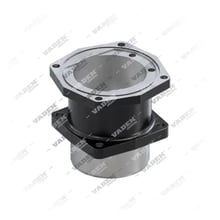
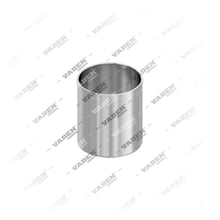
What Is a Compressor Parts Cylinder Liner?
The Compressor Parts Cylinder Liner is a wear component fitted into the housing of the air brake compressor, forming the cylindrical inner surface the piston travels within. It belongs to the Compressor Parts subgroup within Air Brake Compressors and is a core component that makes overhauling possible instead of replacing the whole compressor. In the field it is called a cylinder liner, compressor liner, cylinder sleeve, or simply a liner. On single- and twin-cylinder pneumatic brake compressors used in trucks, tractors, buses, trailers, and heavy machinery, the compression chamber's dimensional integrity depends directly on this part's condition. Because the liner carries the surface the piston and its rings ride against, it is machined from a harder material than the housing, so wear is concentrated in a replaceable part rather than the expensive housing.
How Does a Compressor Parts Cylinder Liner Work?
The cylinder liner is not a moving part; it guides the piston and provides a sealed compression volume. On every revolution the piston travels back and forth inside the liner, raising the intake air to the pressure the brake circuit needs.
- Defines the compression volume: The liner's bore diameter together with the piston stroke sets the compressor's swept volume and air output.
- Provides the sealing surface: The piston rings bear against the liner surface, keeping pressurised air from leaking to the crankcase side.
- Carries heat to the housing: Compression heat passes through the liner wall to the housing and on to the cooling circuit.
- Holds the oil film: The honing marks on the surface retain a thin oil film; ring sealing and low friction both depend on this film.
- Concentrates wear in a single part: When the surface deteriorates, the housing does not need to be scrapped — only the liner is renewed.
Technical Specifications of the Compressor Parts Cylinder Liner
Liners are typically machined from high-carbon grey cast iron or alloy steel, with the bore ground and honed. On heavy commercial vehicle brake compressors, bore diameter generally ranges from around 60 mm to 100 mm depending on the application. Surface roughness is matched to the ring type: too smooth a finish will not hold oil, while too coarse a finish wears the rings quickly. These figures are indicative only — for exact dimensions and tolerances, the vehicle manufacturer's current service manual is the authoritative source.
The deciding compatibility criteria are bore diameter, outer diameter, overall length, top-flange shape, and how the liner fits into the housing. Even within the same compressor family, liner length can vary by production year, so selection should always be verified against the OE part number.
Types and Subgroups of the Compressor Parts Cylinder Liner
- Dry liner: Its outer surface seats directly against the housing and has no contact with coolant. Common on air-cooled compressors and installed by press-fit.
- Wet liner: Its outer surface is exposed to coolant and is sealed against the housing with O-rings. Found on water-cooled compressors, where it removes heat more quickly.
- Standard-size liner: Manufactured to the OE bore diameter and used with a standard piston-and-ring set; the preferred choice for most overhauls.
- Oversize liner: A variant with an enlarged outer diameter for compressors whose housing bore has been re-machined; used only on housings whose oversize has been recorded.
- Kit sets: The liner, piston, pin, rings, and gaskets are supplied together; because the parts are matched to the same tolerance, the risk of assembly error is reduced.
How to Choose the Right Compressor Parts Cylinder Liner
The starting point for selection is the OE part number stamped on the compressor housing. If the number cannot be read, weigh the vehicle make, model, engine variant, and the compressor's cylinder count together. On Mercedes-Benz, MAN, Scania, Volvo, DAF, Iveco, and Renault Trucks vehicles, different compressor types can appear even within the same model series.
Selection and compatibility criteria for the Compressor Parts Cylinder Liner| Criterion | Why it matters | How to verify |
|---|
| OE part number | The most reliable indicator of compatibility | Read it off the reference marked on the housing and the old liner |
| Bore diameter | Determines the piston and ring size | Measure with a dial bore gauge in three planes |
| Outer diameter and fit | Ensures a tight, centred seat in the bore | Measure with a micrometer and compare against the bore dimension |
| Overall length and flange | Determines head-gasket sealing and dead volume | Measure side by side against the old part |
| Liner type | Dry and wet types are not interchangeable | Check the housing for a water jacket and O-ring groove |
| Kit contents | A missing gasket stalls the assembly | Compare gaskets, O-rings, and rings against the parts list |
Maintenance and Points to Note for the Compressor Parts Cylinder Liner
- Clean the bore: Residue and old gasket material left in the bore cause the liner to seat at an angle and lead to ring blow-by.
- Press it in straight: Fit the liner square to the housing with the correct tool, not a hammer; impact will make the liner go oval.
- Measure protrusion height: How far the liner stands proud of the housing determines head-gasket sealing and must fall within the manual's specified range.
- Fit the rings correctly: Stagger the ring end gaps relative to one another and use a ring compressor during assembly.
- Lubricate on assembly: Coat the liner bore and piston with clean oil; dry running leaves permanent scoring.
- Apply torque in stages: Tighten the head bolts in a criss-cross sequence; for the torque figure, the vehicle manufacturer's current service manual is the authoritative source.
Common Faults and Solutions
- Slow air pressure build-up: The liner surface has worn and ring blow-by has begun. Measure the bore; renew a liner beyond limit together with the piston and rings.
- Oil accumulating in the air tank and dryer: A scored or oval liner carries oil into the compression chamber. Replace the oil-control ring and liner together.
- Air or water leaking from the cylinder head: Liner protrusion is too low, or the gasket was tightened incorrectly. Measure the protrusion, fit a new gasket set, and repeat the torque sequence.
- Metallic knocking and irregular noise: The liner has worked loose in its bore, or piston-to-liner clearance has grown too large. After measuring, replace the parts as a matched set if needed.
- A shiny, mark-free patch on the surface: The honing crosshatch has worn away and the surface can no longer hold an oil film. Replacing the liner is more reliable than re-honing it.
Why VADEN ORIGINAL?
- Manufactured to OE dimensions: Bore, outer diameter, length, and flange geometry are machined to original-part tolerances.
- Broad OEM cross-referencing: Options cross-matched to a wide range of OE references used across Wabco- and Knorr-Bremse-type compressor architectures.
- Controlled surface finishing: Grinding and honing parameters are set to match the ring type, giving predictable break-in behaviour.
- Kit integrity: The liner, piston, rings, and gaskets are supplied to the same tolerance, reducing the risk of assembly error.
- Exported to more than 100 countries: A product range field-proven across different climates and load profiles, refined through real-world feedback.
Conclusion
The Compressor Parts Cylinder Liner is an overhaul component that directly determines the air brake compressor's compression efficiency and, in turn, the system's air pressure. Choosing the correct type, bore diameter, and fitting method offers a far more economical solution than replacing the entire compressor. Basing the choice on the OE reference, measuring the removed liner, and following the correct protrusion height and torque sequence during assembly are what determine how long the overhaul lasts. For torque, pressure, and tolerance values, the vehicle manufacturer's current service manual is the authoritative source.
Frequently Asked Questions (FAQ)
What does a compressor cylinder liner do?
The Compressor Parts Cylinder Liner forms the sealed compression chamber in which the piston moves inside the air brake compressor. It carries the surface the piston rings bear against and conducts compression heat to the housing. Because wear is concentrated in this replaceable part rather than in the expensive housing, overhauling the compressor becomes an economical option.
How do I know the cylinder liner needs to be replaced?
Slow pressure build-up, oil accumulating in the air tank and dryer, metallic knocking, and a shiny, mark-free patch on the liner surface are the typical warning signs. For a definitive decision, the compressor should be removed and the bore measured in three planes with a dial bore gauge, checking for ovality and taper. If the readings exceed the manufacturer's wear limit, the liner must be replaced.
What is the difference between a dry liner and a wet liner?
A dry liner's outer surface seats directly against the compressor housing and has no contact with coolant; it is generally installed by press-fit in air-cooled applications. A wet liner's outer surface, on the other hand, is exposed to coolant and is sealed to the housing with O-rings. The two types cannot be substituted for one another — the design of the housing bore determines which one is required.
Should I replace the liner alone, or together with the piston and rings?
When the liner is renewed, the old piston and rings cannot bed in properly to the new surface, which leads to premature leakage and oil consumption. For this reason, it is recommended to replace the liner, piston, pin, and ring set together as a kit matched to the same tolerance. On wet-liner applications, the O-rings and gasket set must also be renewed.
What is the most common mistake when fitting a cylinder liner?
The most common mistakes are pressing the liner in with a hammer or at an angle, and failing to fully clean the housing bore — both of these make the liner go oval and cause ring blow-by. Failing to measure liner protrusion height is another frequent cause of air and water leaks at the cylinder head. For torque figures and protrusion tolerance, the vehicle manufacturer's current service manual is the authoritative source.