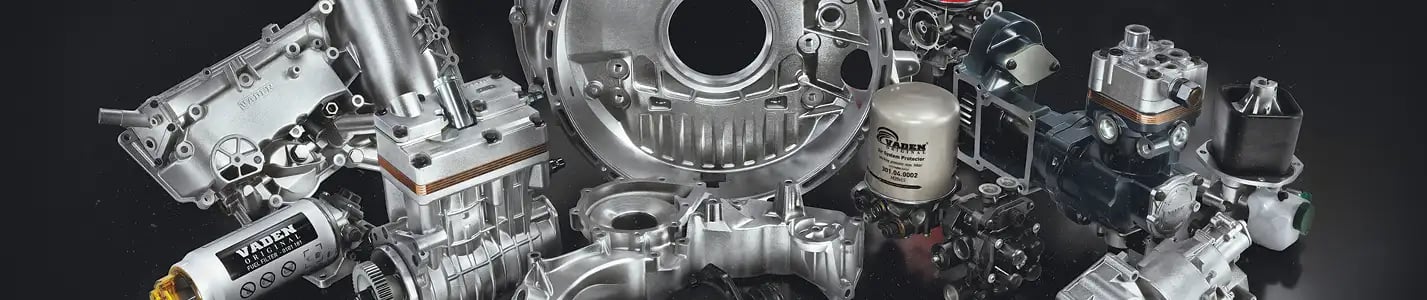
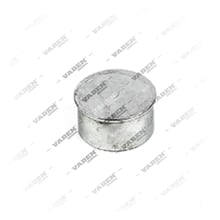
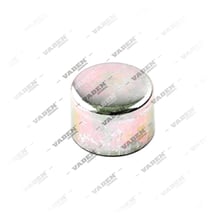
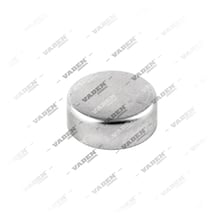
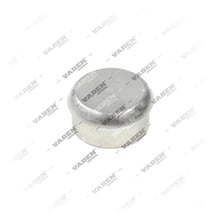
What Is a Caliper Guide Pin Cap?
A caliper guide pin cap is the protective plug and cover that seals the guide pin (slide pin) bore of a disc brake caliper against the outside. On heavy commercial vehicles, the caliper body is mounted to the carrier bracket through these pin bores; once a bore is left open, water, road salt, mud and brake dust reach the pin's grease chamber directly. The cap seals the bore opening so grease stays inside and contaminants stay outside. In the field it is also known as a guide pin plug, pin bore cap or caliper slide pin cover.
The cap generates no braking force on its own, but by protecting the pin's free movement it directly affects pad wear balance and caliper release. A single missing or cracked cap can quickly lead to pin seizure and one-sided pad wear.
How Does a Caliper Guide Pin Cap Work?
The caliper guide pin cap performs no mechanical function; its role is to act as a barrier. During braking, the caliper body slides axially along the guide pins and presses the pad against the disc in parallel. This sliding motion stays low-friction only as long as the grease inside the bore stays clean.
- Sealing: It seats into the bore opening by press-fit or by thread, keeping out water and pressure-washer spray.
- Grease retention: High-temperature grease stays in place, keeping the pin's sliding resistance constant.
- Pressure equalization: As the caliper heats up, air inside the bore expands; the cap and boot assembly absorb this volume change.
- Thermal resistance: It holds its shape against braking heat, without melting or bonding to the bore.
- Service access: It can be removed to access the pin for inspection and regreasing.
Technical Specifications of the Caliper Guide Pin Cap
Caliper guide pin caps are typically made from engineering-grade plastic, EPDM or silicone elastomer resistant to high heat and brake dust; some applications use a metal-reinforced or fully metal plug instead. Material choice depends on the continuous and peak temperatures in the caliper area. The sealing surface is sized to create radial preload in the bore, so the cap does not dislodge under vibration and road shocks.
Three criteria determine compatibility: bore diameter, seating depth and retention style. Even a few millimeters of diameter difference between two caps that look identical can keep the part from holding. A general torque range can be given for threaded types, but the exact value must come from the vehicle and caliper manufacturer's current service manual.
Types and Subgroups of Caliper Guide Pin Caps
- Press-fit plastic plug: The most common type, pressed into the bore; the retaining lip should not be forced during removal.
- Threaded metal plug: Used in bores with machined threads; offers more secure retention in high-vibration applications.
- Elastomer bellows cap: Combined with a bellows/boot that follows the pin's axial movement; it handles sealing and volume compensation together.
- Cap and gasket kit: Supplied together with the O-ring or flat gasket that seats beneath it.
- Caps included in guide pin repair kits: Kits supplying the pin, bushing, boot and cap together; the most consistent solution for a complete overhaul.
- Blanking plug and service plug: Used to close off unused bores or adjustment holes.
How to Choose the Right Caliper Guide Pin Cap
The right choice starts with caliper make and type. Knorr-Bremse and Wabco architectures are the most common among heavy-duty disc brake calipers; even within the same vehicle model, different caliper series may be fitted depending on axle position and production year. First read the type marking on the caliper body, then verify the bore dimension.
Caliper Guide Pin Cap Selection and Compatibility Criteria| Criterion | What to Check | Result of a Wrong Choice |
|---|
| Caliper type | Type stamp on the body and OE part number | A cap that does not seat or sits loose |
| Bore diameter | Measuring the bore opening diameter with calipers | Forced installation, deformation of the bore opening |
| Retention style | Press-fit, snap-lip or threaded design | Dislodging under vibration, loss of the cap |
| Material class | Engineering plastic, EPDM, silicone or metal | Hardening, cracking and leaking under heat |
| Gasket requirement | Separate O-ring or integrated sealing lip | Water ingress into the bore and grease degradation |
| Kit scope | Single cap or a complete guide pin repair kit | The job left unfinished due to a missing part |
| Axle position | Front or rear axle caliper application | Ordering a part in the wrong dimension |
Maintenance and Points to Watch for Caliper Guide Pin Caps
Caps should be inspected during pad replacement and periodic brake service. The check is simple: verify the cap is in place, look for cracking or hardening, and check for grease leaking from the bore. Renewing the cap and gasket kit whenever the caliper is opened is a common service practice.
- Clean the bore: Remove all traces of old grease, rust and brake dust from the bore opening before installation.
- Use the correct grease: Use only high-temperature grease approved for caliper application; mineral-oil-based products swell the elastomer.
- Fit without forcing: Seat press-fit plugs with a suitable tool or a soft tap, not a hammer.
- Respect the torque value: Overtightening threaded plugs damages the thread; the exact value must come from the manufacturer's current service manual.
- Replace as a set: Renewing all caps on a caliper together, rather than one at a time, preserves wear balance.
Common Faults and Solutions
- Cap missing from its bore: Caused by an incorrect dimension or a fatigued retaining lip; fit a correctly sized cap and inspect the bore opening.
- Grease leaking from the bore: Caused by a hardened cap or a degraded gasket; renew the cap and gasket kit, then clean the bore and regrease it.
- Pin seized, caliper not releasing: Caused by water and dirt entering after the cap was lost; remove the pin, clean the bore, and renew it completely with a guide pin repair kit if needed.
- One-sided pad wear: Caused by the caliper failing to slide axially; check the pin, bushing, boot and cap together and replace whatever is worn.
- Cracking and discoloration of the cap: Caused by excessive heat or an unsuitable material class; find the root cause of the overheating and fit a cap in the correct material.
Why VADEN ORIGINAL?
VADEN ORIGINAL caliper guide pin caps are manufactured based on the dimensions and material properties of the original part; bore diameter and retention geometry are verified against the OE reference.
- Manufactured to OE dimensions: Caps are sized to match the caliper's bore geometry, with tolerances checked.
- Wide OEM matching: Cross-reference support covers the Knorr-Bremse and Wabco type applications common in heavy-duty vehicles.
- Heat-resistant material: Elastomer and engineering plastic grades suited to brake-area temperature cycles are used.
- Kit-based supply: Cap, gasket and guide pin repair kit options let the service job be completed with a single order.
- Exports to more than 100 countries: The range stays broad to match the vehicle fleets and caliper variants found in different markets.
Conclusion
The caliper guide pin cap is a low-cost brake component with an outsized effect. As long as it keeps the pin bore clean and greased, the caliper stays free to slide and the pads wear evenly. A lost or hardened cap quickly turns into a seized pin. Checking the caps at every pad and disc service, and fitting a part of the correct dimension, is the safest approach in this category.
Frequently Asked Questions (FAQ)
What does a caliper guide pin cap do?
A caliper guide pin cap seals the opening of the guide pin (slide pin) bore on a disc brake caliper, keeping out water, mud, road salt and brake dust. It also keeps the high-temperature grease inside the bore in place. This lets the caliper slide freely along its guide pins so the pads wear evenly.
What happens if the caliper guide pin cap is missing?
With the bore left open, water and abrasive dirt get in and the grease degrades in a short time. As a result the pin seizes, the caliper cannot release, and one-sided pad wear begins. Once a missing cap is noticed, the guide pin assembly should also be cleaned and inspected.
Should the caliper guide pin cap be renewed during a pad change?
Renewing the cap and gasket kit whenever the caliper is opened is a common service practice. A cap that has hardened through heat cycling may not cause an issue the moment it goes back on, but it can start leaking the first time it is washed. Replacing the caps as a set preserves wear balance.
How do I identify the correct caliper guide pin cap?
The most reliable method is to match the part using the type marking on the caliper body and the OE part number. You also need to verify the bore diameter, seating depth and whether the retention style is press-fit or threaded. Visual similarity alone is not a sufficient criterion.
What torque should a threaded caliper guide pin plug be tightened to?
Overtightening a threaded plug damages the thread, while leaving it too loose lets it come out under vibration. The exact torque value to apply varies by caliper type and vehicle model. For this reason, the value in the vehicle and caliper's current service manual should always be used.