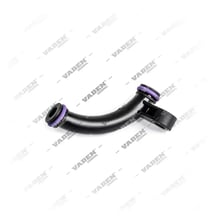
What is an Engine Control Valve Pipe?
This pipe is a generally pre-formed, fixed-geometry connection element that carries fluid between the engine control valve and its supply source (oil pump, water pump, or fuel line). It is manufactured bent at specific angles to fit the tight spaces and vibration conditions in the engine bay, eliminating the need for additional bending during installation. On some models, the pipe has double-wall construction or vibration-damping clip attachment points, which helps prevent fatigue fracture.
What are the functions of an Engine Control Valve Pipe?
The pipe is a simple but critical connection element that provides the fluid transfer required for correct control valve operation.
- Fluid transfer: Carries oil, water, or fuel uninterrupted to the valve body or from the valve outlet.
- Pressure carrying: Its construction, resistant to system operating pressure, ensures lossless fluid transfer.
- Sealing: Maintains sealing at fitting connection points together with gaskets or o-rings.
- Vibration tolerance: Its geometry, resistant to engine vibration, delays fatigue fracture at connection points.
- Routing compliance: Directs fluid along a predetermined route without interfering with other components in the engine bay.
What are the symptoms of Engine Control Valve Pipe failure?
When the pipe fails, different symptoms appear depending on the fluid it carries. A crack or perforation in an oil-line pipe shows up as oil buildup on the engine block and an unexpected drop in oil level. A failure in a coolant-line pipe results in a drop in coolant level, a rise in engine temperature, and colored fluid buildup on the ground. Leakage in a fuel-line pipe is noticed through a fuel smell in the engine bay and increased fuel consumption. If the valve's control pressure becomes irregular due to a loosened fitting connection or wear on the pipe, the performance of the associated system (e.g. exhaust brake or turbo geometry) can change unexpectedly.
How is the Engine Control Valve Pipe checked?
For inspection, after the engine is stopped and cooled, the pipe line is visually monitored for cracks, swelling, wear, or leakage traces at the fitting connection. Thin wear areas formed by vibration-induced friction on the pipe should be checked especially at clip and support points. With the system under pressure (engine at idle), fitting connection points can be checked for leaks visually or with a soap-bubble test. On suspicious pipes, a pressure test should be performed to verify the pipe can carry the specified operating pressure without issue.
What should be considered during replacement?
Before replacement, pressure in the relevant system should be relieved and the fluid (oil, water, or fuel) drained appropriately. When installing the new pipe, the original routing and bends should be preserved; different routing can cause contact with other components or premature wear. Fitting connections must be tightened to the torque value specified by the manufacturer; overtightening can deform the gasket seat, while under-tightening causes leakage. After installation, the system should be run and connection points checked again for leaks.
Engine Control Valve Pipe technical reference values| Parameter | General range | Note |
|---|
| Fitting connection torque | 15 - 25 Nm | Refer to the vehicle's current OE service manual |
| Operating pressure | 2 - 10 bar | Varies by fluid carried and system |
| Pipe diameter tolerance | ±0.1 mm | Compare against original dimension |
| Inspection interval | At every periodic service | Visual leak check recommended |
How to choose an Engine Control Valve Pipe?
The first criterion in selection is exact fit to the engine model and valve type; pipe geometry, bends, and fitting type can vary between engine families. The material's chemical resistance to the fluid carried (oil, water, or fuel) and suitability for operating temperature should be considered. The pipe wall thickness must be manufactured to safely handle the system's maximum operating pressure. Parts matching the OE reference number with traceable quality documentation should be preferred over competing aftermarket brands.
Maintenance and service life
Pipe service life depends on engine vibration and the soundness of fastening at mounting points; loose clips or support points lead to premature pipe fatigue. At every periodic service, the pipe line should be visually checked for leaks and wear, and clips and supports reviewed for tightness. Under proper maintenance conditions, the pipe can generally run trouble-free up to the engine's general overhaul interval, i.e. in the 200,000 - 300,000 km range.
VADEN Engine Control Valve Pipe
VADEN applies a manufacturing standard exactly matching OE geometry and operating pressure for control valve pipes it produces for heavy-duty commercial vehicle engines. The product range covers pipes with bends specific to different engine families, offering workshops a reliable connection solution.
Frequently Asked Questions (FAQ)
What does an engine control valve pipe do?
It carries oil, water, or fuel uninterrupted to the control valve or from the valve outlet, providing the fluid transfer required for correct valve operation.
What happens if the pipe fails?
Depending on the fluid carried, oil, coolant, or fuel leakage occurs; if the valve's control pressure becomes irregular, the performance of the related system (turbo geometry, exhaust brake, etc.) may be affected.
How is wear on the pipe checked?
Vibration-induced friction wear is visually inspected especially at clip and support points; a pressure test should be performed in suspicious cases.
Why is fitting torque important during replacement?
Overtightening can deform the gasket seat, while under-tightening causes leakage; the torque value specified by the manufacturer must be followed.
How often should the pipe be checked?
Visual inspection for leaks and wear is recommended at every periodic service.