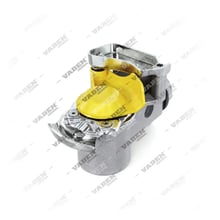
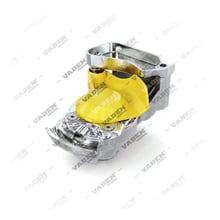
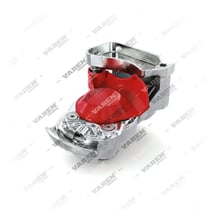
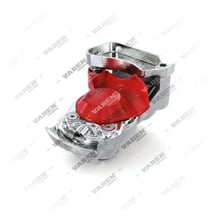
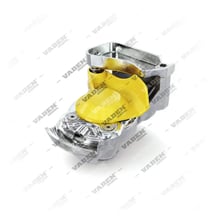
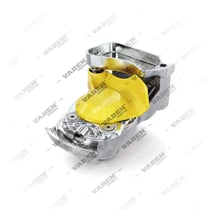
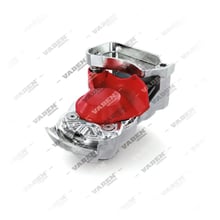
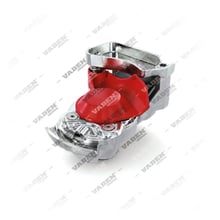
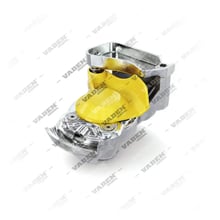
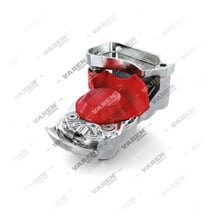
What is a Brake System Air Line Coupling?
The coupling is the physical interface of the tractor-trailer combination's air brake system; connection quality directly affects brake response time and line sealing, making both material quality and correct installation critical.
What are the functions of a Brake System Air Line Coupling?
- Quick connection: Allows tractor and trailer air lines to be manually coupled and uncoupled quickly during hitching.
- Sealing: The internal rubber seal prevents pressurized air from escaping at the connection point.
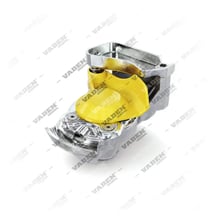
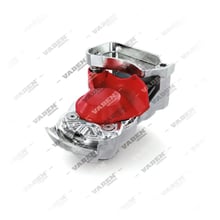
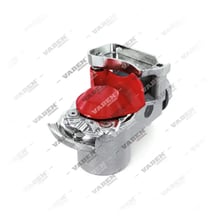
- Mis-connection prevention: Color coding (red = supply, yellow = service) and differing hook profiles prevent service and supply lines from being mixed up.
- Automatic disconnect safety: If the trailer unexpectedly separates, the couplings breaking apart causes the lines to disconnect, air to vent instantly, and the emergency brake to engage.
- Pressure transmission: Provides uninterrupted pressure transfer from tractor to trailer, enabling the two-vehicle brake system to operate in sync.
What are the symptoms of a failing Brake System Air Line Coupling?
- Air leak at the connection point: A continuous hissing sound while the coupling is engaged indicates a worn internal seal.
- Difficult engagement/disengagement: A worn or deformed hook profile causes difficulty during connection and prevents full seating.
- Loose connection: If the coupling separates on its own with vehicle movement, the spring/lock mechanism has weakened.
- Visible wear/corrosion: Cracks in the body, cracking or hardening of the sealing face, or rust formation.
- Drop in trailer pressure gauge reading: Delayed pressure recovery on the trailer side due to a persistent leak at the connection.
- Unclear color coding: Faded paint or markings create a risk of connecting the wrong line.
How is a Brake System Air Line Coupling inspected?
- Connection test: When the coupling is engaged by hand, a firm locking feel should be felt with no looseness.
- Leak listening: With the system pressurized, listen for a hissing sound at the connection point; apply a soap solution test if in doubt.
- Seal face inspection: Visually check that the internal rubber seal has no cracks, hardening, or deformation.
- Hook and spring mechanism: Verify the coupling hook is not worn and the spring holds the coupling firmly.
- Color/marking check: Confirm service and supply couplings are the correct color and in the correct position.
What should be considered during replacement?
- Correct type selection: Select the correct coupling model for the service (yellow) and supply (red) lines; the lines must never be mixed up.
- Line connection sealing: When mounting the coupling onto the air hose, the fitting and seal must be seated with correct tightness.
- Tightening torque: The hose fitting connection should be tightened to the manufacturer's specified torque; the vehicle's current OE service manual is the authority for the exact value.
- Function test: After installation, couple the tractor and trailer and perform a leak check and full-lock test.
- Replace as a matched pair: If one side is worn, check the mating coupling as well; a mismatched worn pair can cause leakage to recur.
How to choose the right Brake System Air Line Coupling?
Selection should be based on OE part number, not brand, matching the line type and connection standard specified by the vehicle/trailer manufacturer.
Brake System Air Line Coupling selection criteria| Criterion | Description |
|---|
| OE reference number | Exact match with the original part number specified by the vehicle/trailer manufacturer |
| Line type | Color code and profile matching the service (yellow) or supply (red) line |
| Connection standard | Compatibility with hose fitting size and thread standard |
| Material | Cast/forged steel or aluminum body, corrosion resistance |
| Seal quality | Rubber compound that retains flexibility at low and high temperatures |
Maintenance and service life
Because the coupling is a mechanical component subject to frequent engage/disengage cycles, its internal seal wears over time. Dust, sand, and road salt adhering to the sealing face is the most common cause of sealing failure; cleaning the coupling face before connecting extends its life. Fitting couplings onto the vehicle's dummy coupler bracket when not in use prevents contamination of the internal seal and damage from UV/weather exposure. A coupling found to be leaking or loose during periodic inspection should be replaced without delay, since it can affect emergency brake safety at the moment of trailer separation.
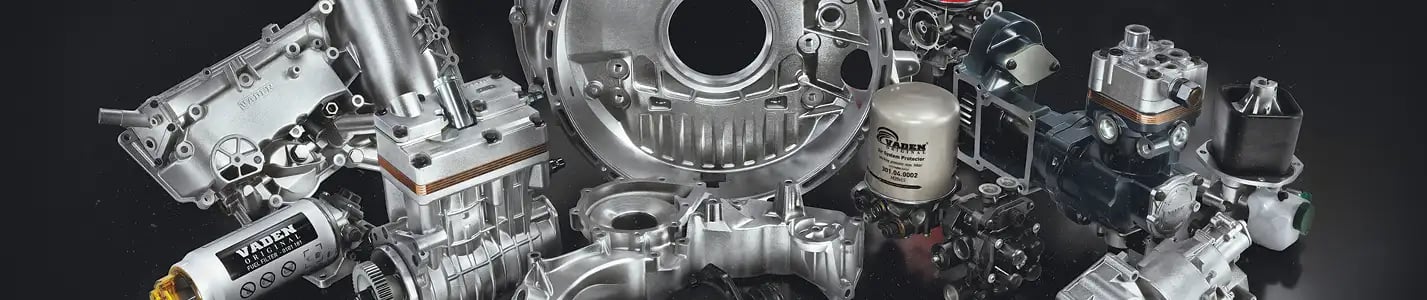
VADEN Brake System Air Line Coupling
Within its brake system connection equipment range, VADEN offers couplings for service and supply lines built to OE dimensional and color standards, manufactured with original tolerance values for sealing and coupling safety.
Frequently Asked Questions (FAQ)
What is the difference between the red and yellow coupling?
The red coupling belongs to the supply (feed) line, and the yellow coupling to the service (brake control) line. This color coding is standardized to prevent incorrect connection; the lines must never be mixed up.
Is a slight air leak at the coupling connection normal?
No. A correctly installed, sound coupling should have no continuous air leak at the connection point. If a hissing sound is heard, the seal or coupling mechanism should be inspected.
Is special equipment needed to replace a coupling?
Basic hand tools are generally sufficient; however, the vehicle's current OE service procedure should be followed for correct torque on the hose fitting and a post-installation leak test.
Should couplings be replaced on both vehicles at the same time?
Not necessarily, but if one side is worn, checking the mating coupling on the other vehicle is recommended; a mismatched worn pair can lead to leakage recurring.
How should unused couplings be protected?
They should be secured on the vehicle's dummy coupler bracket to protect them from dust, moisture, and UV exposure, preventing premature hardening of the internal seal.