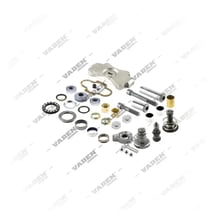
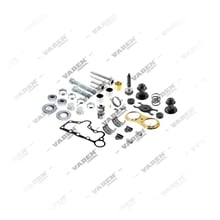
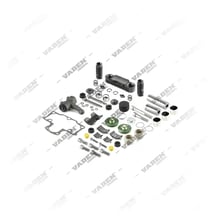
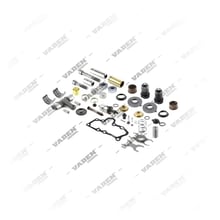
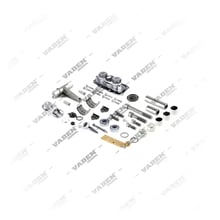
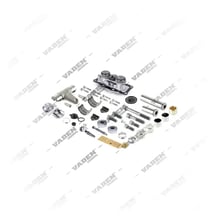
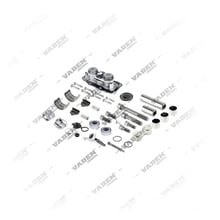
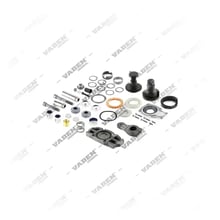
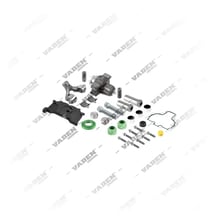
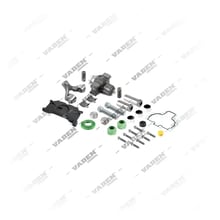
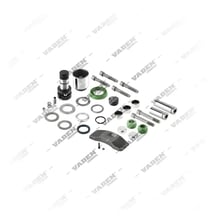
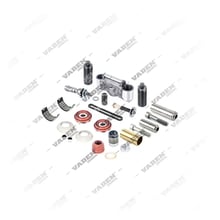
What Are Complete Caliper Repair Kits?
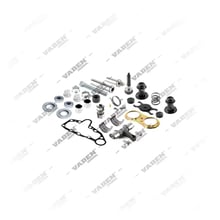
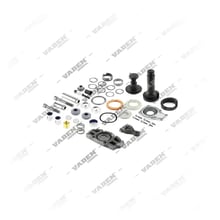
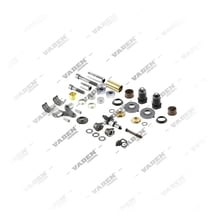
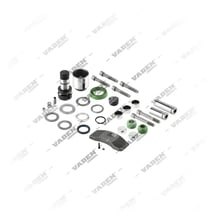
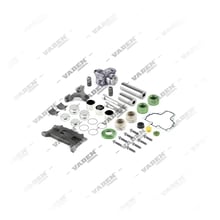
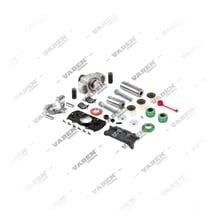
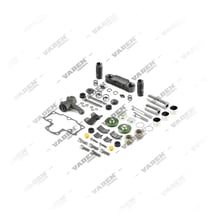
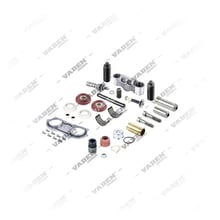
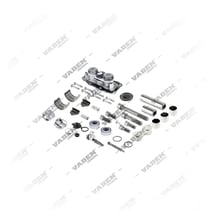
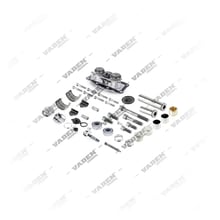
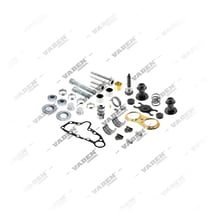
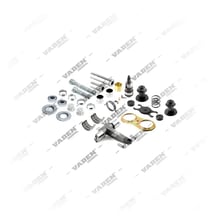
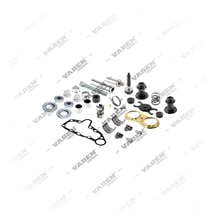
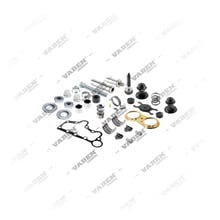
Complete Caliper Repair Kits bring together, in one set, every wear-prone service part of the pneumatic disc brake caliper used on heavy commercial vehicles. This is the most comprehensive kit line in the Brake Caliper group, built for cases where the caliper needs a full overhaul rather than just a new boot, pin-and-bushing set, or mechanism kit. It comes in different content combinations for single- and twin-piston Knorr-Bremse and Wabco type calipers fitted to trucks, tractor units, buses and trailers, letting you renew the moving parts and sealing while the body is still sound and avoid the cost of a full caliper replacement.
What Do Complete Caliper Repair Kits Do?
The disc brake caliper multiplies the pneumatic force from the brake chamber through the lever and eccentric assembly, then transfers it to the pad via the bridge and thrust piston group. Over time the guide pin bushings go oval, boots crack, and the adjuster mechanism binds from moisture and brake dust. A complete kit renews all of this in one visit, restoring free movement, automatic clearance adjustment and sealing — preventing one-sided pad wear and brake imbalance across the axle.
- Free sliding action: Renewed pins and bushings let both pads bear evenly on the disc.
- Automatic clearance adjustment: Keeps disc clearance constant as the pad wears, stopping pedal travel from growing.
- Force transfer: The bridge and thrust pistons carry chamber force to the pad without loss.
- Sealing: Boots and caps keep water, road salt and brake dust out of the mechanism.
- Corrosion protection: The kit's high-temperature grease delays rust-related pin seizure.
Complete Caliper Repair Kits Technical Specifications
Material choice determines service life. Boots and seals use elastomers resistant to brake heat, road salt and ozone; pins, thrust elements and the adjuster spindle are coated hardened steel; bushings are low-friction composite or bronze. Pin diameter, boot seating diameter and thread pitch vary by caliper series, so the kit must match the manufacturer code stamped on the body. For torque and clearance values, follow the vehicle manufacturer's current service manual.
- Metal group: Coated hardened-steel pins, thrust elements and adjuster spindle; low-friction bushings.
- Elastomer group: High-temperature, chemical-resistant boots, caps and sealing rings.
- Compatibility criteria: Manufacturer code, piston count, left- or right-hand side, disc diameter, pad type.
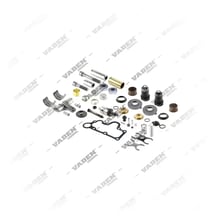
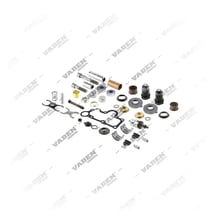
- Kit contents: Mechanism, pins and bushings, boots, caps, seals, fasteners and grease.
Complete Caliper Repair Kits: Types and Subgroups
- Complete overhaul kit: Every service part; for high-mileage or neglected calipers.
- Mechanism-focused kit: Adjuster mechanism, bridge and thrust piston group; for calipers where clearance adjustment has stopped working.
- Pin-and-bushing kit: For sticking calipers or one-sided pad wear; pins, bushings, boots and caps.
- Sealing-focused kit: Renews the protective group where boots are torn or water has entered.
- Single-piston kits: For lighter axles and medium-duty use.
- Twin-piston kits: For tractor units, buses and heavy trailer axles needing higher brake force.
How to Choose the Right Complete Caliper Repair Kit
Selection starts with the caliper itself, not the vehicle's make. The same tractor model can carry different caliper series depending on the axle supplier, so base your choice on the manufacturer code on the body and the OE reference number, then confirm piston count, side, disc diameter and pad type.
Complete Caliper Repair Kits — selection and compatibility criteria| Criterion | Where to verify it | Why it matters |
|---|
| Caliper manufacturer code | Cast or label code on the body | Primary reference for kit contents |
| OE reference number | Removed original part, service records | Most reliable way to cross-match |
| Number of pistons | Removed thrust assembly | Sets bridge, thrust and boot count |
| Left- or right-hand side | Mounting position on the axle | Adjuster and boot placement depend on side |
| Disc diameter and pad type | Disc size and pad code | Linked to clearance range and thrust stroke |
| Vehicle and axle application | Chassis number, axle label | Mercedes-Benz, MAN, Scania, Volvo, DAF, Iveco and Renault Trucks vehicles can carry different calipers within the same series |
Installing and Maintaining Complete Caliper Repair Kits
- Remove and clean the caliper: Old grease, rust and brake dust left behind will bring the same fault back quickly.
- Inspect the body and pin bores: Ovalisation, cracks or deep corrosion in the pin bores mean the caliper body itself must be replaced.
- Use the grease correctly: Apply only the kit's high-temperature grease, only at the specified points; excess grease tears the boots.
- Seat the boots fully: A half-seated boot takes on water at the first wash and locks the mechanism.
- Verify the pad clearance: After installation, confirm the mechanism works and the caliper slides freely by hand.
- Apply torque with a calibrated tool: Values vary by caliper series; follow the vehicle manufacturer's current service manual.
Common Faults and Their Solutions
- One-sided pad wear: From stuck pins and bushings or a torn boot; renew the pin, bushing and boot group.
- Increased pedal travel: Delayed brake response, longer stroke. Renew the adjuster mechanism and check pad clearance.
- Caliper overheating: Excess heat on the disc and wheel, and a burning smell. Clean sliding surfaces and replace pins and bushings.
- Water and rust in the mechanism: From a torn boot or missing cap; renew the entire sealing group.
- Noise and vibration under braking: Signals play in the bridge, thrust pistons or pressure elements; renew the force-transfer group.
- Vehicle pulling to one side under braking: Usually means one caliper has lost its free movement; check both sides together.
Why VADEN ORIGINAL?
- OE dimensions: Pin diameters, boot channels and thread pitches match original dimensions, so no forcing is needed on installation.
- Broad OEM cross-referencing: A catalog cross-matched with OE references for the most common caliper series.
- Kit completeness: Everything needed for the overhaul is in one package, so missing parts don't extend downtime.
- Material consistency: Consistent quality batch to batch, in both the elastomer and metal groups.
- Field experience: Exports to more than 100 countries feed real-world feedback from a wide range of climates and road conditions back into the product.
- Technical support: Confirm the right kit with our technical team using the caliper code and OE number.
Conclusion
Complete Caliper Repair Kits are the most economical way to restore braking performance without replacing the entire caliper. The key to a reliable result is matching the kit to the caliper's manufacturer code and OE reference, honestly assessing the body and pin bores during removal, and carrying out installation to the torque and clearance values in the service manual.
Frequently Asked Questions (FAQ)
What's included in a Complete Caliper Repair Kit?
Complete kits bring together the caliper's wear-prone service parts in a single package. Contents typically include guide pins and bushings, boots, protective caps, automatic adjuster mechanism components, the bridge and thrust piston group, sealing rings and high-temperature grease. Exact contents vary by caliper series, so the product's parts list should be checked before ordering.
Is it better to overhaul the caliper with a repair kit or replace the whole caliper?
If the caliper body, pin bores and mechanism bearings are sound, a complete repair kit is a far more economical and perfectly adequate solution. If the body shows cracks, deep corrosion, or the pin bores have gone oval, a kit will not give a lasting result and the entire caliper should be replaced. The decision should be based on a visual and dimensional inspection after the caliper is removed.
How do I choose the right complete caliper repair kit?
Selection starts with the caliper itself, not the vehicle's make and model. Base it on the manufacturer code stamped on the caliper body and the OE reference number of the removed part, then confirm piston count, left- or right-hand side, disc diameter and pad type. Because the same vehicle model can use a different caliper series depending on the axle supplier, model information alone is not enough.
When should a caliper repair kit be replaced?
One-sided pad wear, increasing pedal travel, an overheating caliper, torn boots, or water and rust inside the mechanism are all signs it's time. In addition, the caliper's free sliding action and the operation of the automatic adjuster mechanism should be checked at every pad change, with an overhaul planned if any binding is found.
What torque and clearance values should be used during installation?
Torque values for the pins, caps and carrier bolts, along with pad clearance, vary by caliper series and axle application. For this reason, the vehicle manufacturer's current service manual should be used instead of generic catalog values, and tightening should be carried out with a calibrated torque wrench. Incorrect torque can cause the pins to seize or the connection to loosen.