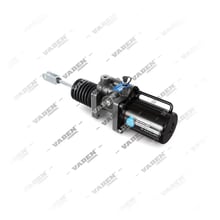
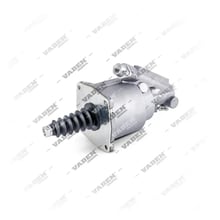
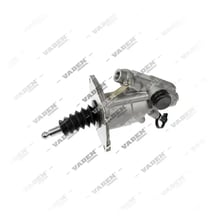
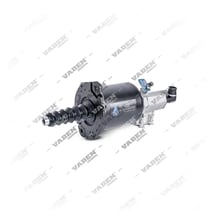
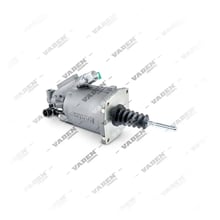
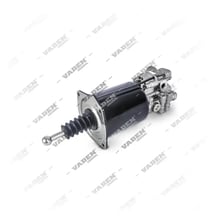
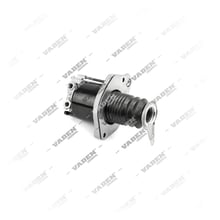
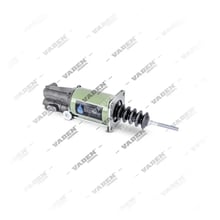
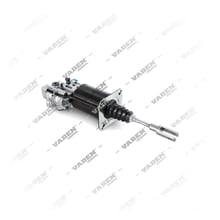
What Is a Slave Cylinder?
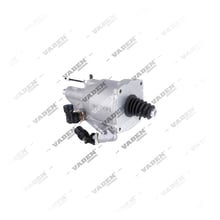
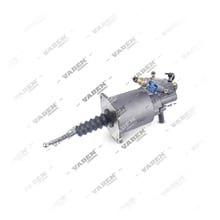
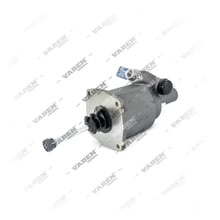
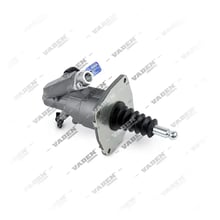
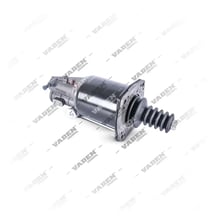
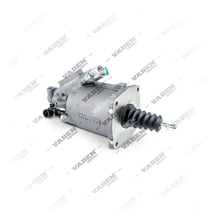
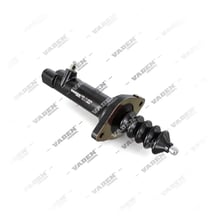
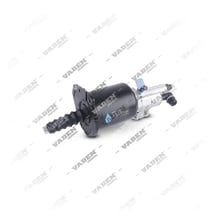
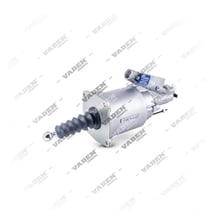
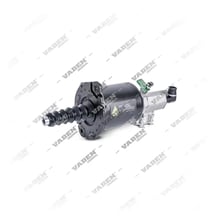
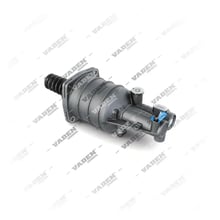
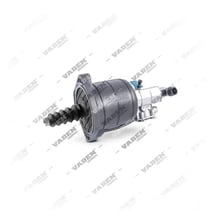
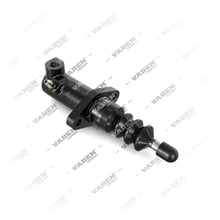
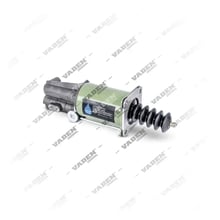
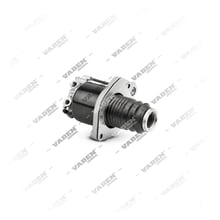
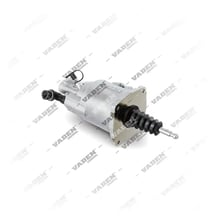
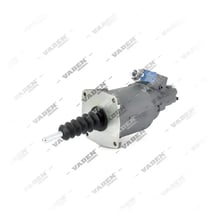
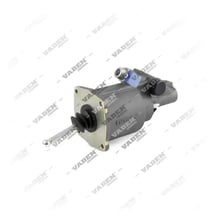
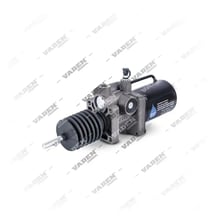
The slave cylinder is the cylinder unit in a heavy commercial vehicle's hydraulic clutch circuit that converts pressure from the master cylinder into mechanical push force. This category covers not individual repair parts but complete slave cylinder units ready to bolt on: body, piston, seals, push rod, dust boot, and bleed nipple arrive as a single, factory-assembled and tested unit. In the field it is also called a clutch slave cylinder or slave cylinder. Repair kits refurbish the existing unit; the units here finish the job in a single service visit.
How Does a Slave Cylinder Work?
When the pedal is pressed, the master cylinder pressurizes the fluid, which travels through the pipe and hose line to the slave cylinder. The piston inside the body moves forward and pushes the push rod, which moves the clutch fork to disengage the clutch. In the complete unit, piston axis, seal lips, and rod angle are aligned at the factory.
- Pressure transfer: Pressure must be transmitted without loss; air left in the line disrupts this.
- Force conversion: Piston surface area converts pressure into push force; the larger the diameter, the greater the force.
- Stroke control: Stroke length matches the fork travel needed for full disengagement.
- Sealing: The piston seal prevents fluid leaks and air entering the line.
- Return: The pressure plate's preload returns the piston, preventing constant disc contact.
Slave Cylinder Technical Specifications and Compatibility Criteria
In complete units, the body is typically die-cast aluminum or cast iron, and the piston is machined steel or coated aluminum. Seals are elastomers resistant to clutch hydraulic fluid; the wrong fluid class swells them quickly. The critical dimensions are piston diameter, stroke length, mounting hole spacing and face angle, the push rod's free length and adjustment range, rod-end geometry (ball, fork, or articulated), and the orientation of the pressure inlet and bleed nipple. Values vary by manufacturer and gearbox type, so the vehicle manufacturer's current service manual is the authoritative source.
Slave Cylinder Types and Subgroups
- External-mount standard units: Bolted outside the gearbox housing; the rod pushes the fork directly, the group easiest to access.
- Bracket-mounted (console) units: Come with the carrier bracket already fitted, alignment done at the factory.
- Units with adjustable rods: Rod length is set with a lock nut; fork clearance is brought to spec.
- Units with fixed rods: Rod length is fixed at the factory; used with automatic clearance compensation.
- Units with dust boots: A rubber boot protects the piston exit from dust, mud, and water; preferred on construction sites.
- Large-diameter, high-capacity units: A wide piston face disengages stiff pressure plates on heavy tractor units.
How to Choose the Right Slave Cylinder?
The first decision here is whether to replace the faulty unit completely or refurbish it with a repair kit. If the bore's inner surface is scored, corroded, or gone oval, a repair kit will not produce a lasting fix.
Decision criteria between a complete slave cylinder and a repair kit| Finding | Recommended solution | Reason |
|---|
| Leak from the seal only, bore surface unscored | Repair kit | Renewing the seal makes the unit usable again |
| Scoring, corrosion, or oval wear inside the bore | Complete slave cylinder | A new seal will leak again against a damaged surface |
| Piston seized, rod not returning | Complete slave cylinder | Seizing comes with body deformation |
| Cracked mounting ear or stripped threads | Complete slave cylinder | Body damage is outside the scope of a repair kit |
| Downtime is critical for the fleet | Complete slave cylinder | A one-step replacement removes rebuild time |
- Start with the OE number: The OE reference of the removed unit is the most reliable route; Mercedes-Benz, MAN, Scania, Volvo, DAF, Iveco, Renault Trucks, BMC, and Ford may use different units by gearbox type.
- Verify the piston diameter: Even a small diameter difference changes pedal feel and disengagement travel.
- Compare rod length and end type: Free length, adjustment range, and end geometry must match the fork.
- Check the nipple and inlet orientation: Pressure inlet and bleed nipple position is critical for proper bleeding.
- Measure the mounting holes: If spacing, diameter, or face angle do not match, do not force the unit into place.
Installation and Maintenance Precautions for Slave Cylinders
- Bleed the line completely: Leaving bleeding half-finished is the most common mistake; residual air makes a sound unit look faulty.
- Use the correct fluid: Clutch hydraulic fluid must match the class the manufacturer specifies; mixing classes shortens seal life.
- Adjust fork clearance: Free play must be set to spec; zero clearance keeps the disc under constant load.
- Tighten the bolts progressively: Tighten crosswise to spec torque; overtightening can crack an aluminum body.
- Protect the boot: A torn boot lets dust and water reach the piston; make sure it seats correctly during installation.
- Inspect the line and master cylinder too: Skipping the hose, pipe, and master cylinder lets the weak link bring the symptom back.
Common Slave Cylinder Faults and Solutions
- Pedal feels soft, goes to the floor: Internal leakage or trapped air; bleed the line, and replace the unit if it does not improve.
- Clutch does not disengage fully, gears are hard to select: Insufficient stroke, a worn bore, or wrong rod adjustment; adjust clearance, replace if worn.
- Leak around the boot: The piston seal has failed; if the bore is scored, replace the unit completely.
- Hydraulic fluid level keeps dropping: A leak at the slave cylinder, line connections, or master cylinder; renew the leaking component.
- Pedal does not return: Piston seizure, contaminated fluid, or corrosion; flush the system and replace the seized unit.
- Metallic noise and vibration: Wear between rod end and fork, or a loose mounting; check connections and torque.
Why VADEN ORIGINAL?
- Manufactured to OE dimensions: Hole spacing, piston diameter, stroke length, and rod geometry follow the original unit.
- Broad OEM coverage: Options match a wide range of OE references common across the heavy commercial fleet.
- Tested, ready-to-fit units: Units are assembled and leak-tested before shipping.
- Durable sealing package: Elastomer suited to clutch hydraulic fluid preserves seal life under heat and vibration.
- Exported to more than 100 countries: Field feedback from different climates and roads feeds into product development.
- Stock depth: Availability across frequently requested applications shortens downtime.
Conclusion
The slave cylinder is the final link in the clutch control chain; its condition directly affects gear shifting, clutch life, and driving safety. The complete units here deliver a one-step fix for body wear, piston seizure, or mounting-ear damage that a repair kit cannot resolve. When choosing a replacement, compare the OE reference, piston diameter, and rod length; after installation, bleed the line and verify values against the vehicle manufacturer's current service manual.
Frequently Asked Questions (FAQ)
What does a slave cylinder do?
The slave cylinder converts the hydraulic pressure coming from the clutch master cylinder into mechanical push force, moving the clutch fork to disengage the clutch. Because of this, the smoothness of gear shifts and pedal feel depend directly on the condition of the slave cylinder.
Should I buy a complete slave cylinder or is a repair kit enough?
If the fault is limited to the sealing components and the bore's inner surface is unscored, a repair kit can be an economical fix. If the bore shows scoring, corrosion, oval wear, piston seizure, or a cracked mounting ear, a complete slave cylinder unit must be fitted; in these cases a new seal will leak again within a short time.
How do I find the right complete slave cylinder for my vehicle?
The most reliable method is matching the OE reference number stamped on the removed unit. In addition, compare the piston diameter, the push rod's free length and end type, the mounting hole spacing, and the orientation of the pressure inlet and bleed nipple against the original unit.
Why does the pedal still feel soft after replacing the slave cylinder?
The most common cause is incomplete bleeding of the hydraulic line; residual air can make even a sound unit seem faulty. If the pedal still does not improve after repeated bleeding, check the hose, pipe connections, and master cylinder for leaks as well.
What torque and adjustment values should be used when installing a slave cylinder?
Mounting bolt torque and fork free play vary by vehicle and gearbox type, so no single general value can be given. Bolts should be tightened progressively in a criss-cross pattern, and adjustment and torque values should always be verified against the vehicle manufacturer's current service manual.