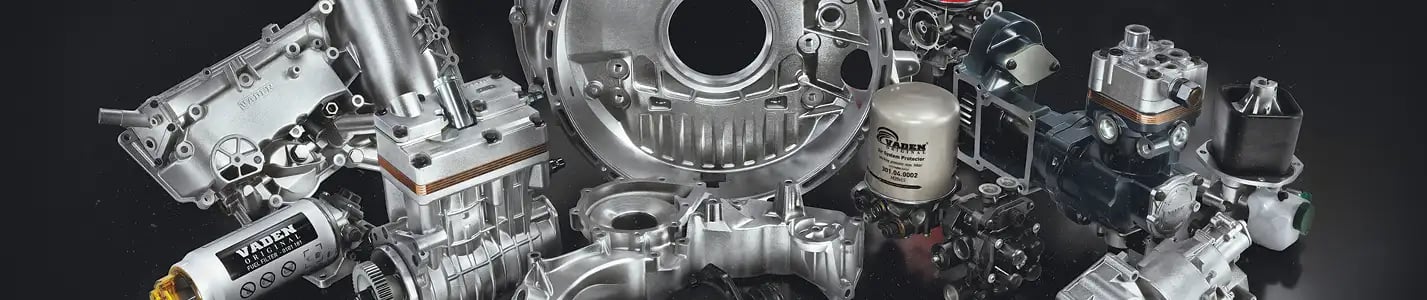
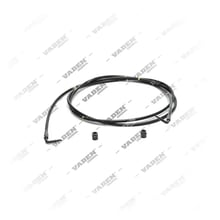
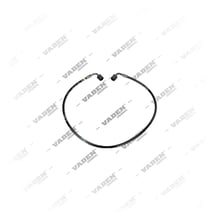
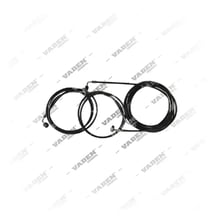
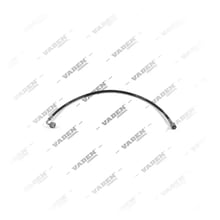
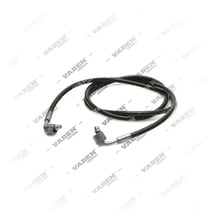
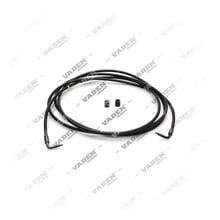
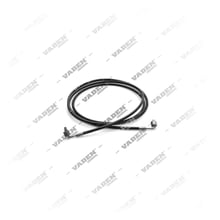
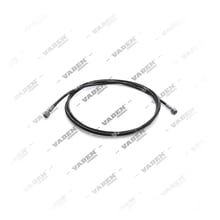
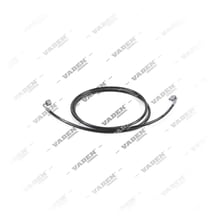
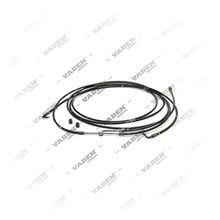
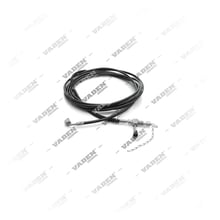
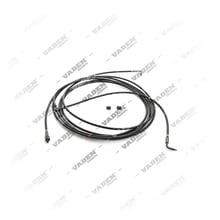
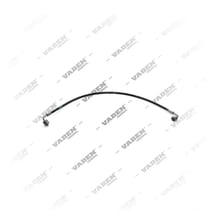
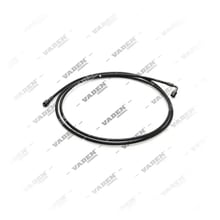
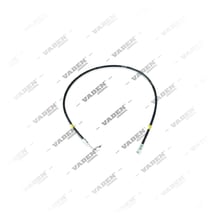
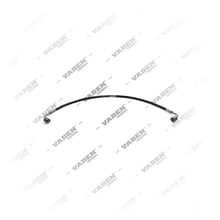
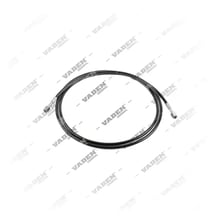
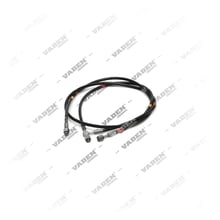
What Is a Cab Lifting Hose?
A Cab Lifting Hose is the flexible connector carrying pressurized hydraulic oil through the circuit that tilts a heavy commercial vehicle's cab forward for service access. On trucks, tractor units and buses, the engine and gearbox sit under the cab, reachable only once tilted; the hoses link the hand pump to the lifting cylinder that makes this happen. In the field these are also called cab tilt hoses or cab pump hoses. This category, under the Cab and Cab Lifting chain, covers only the tilting circuit's hoses, not brake, fuel or cooling hoses.
The circuit runs on low flow but high pressure. The pressure pulses at every pump stroke fatigue the inner liner and wire reinforcement over time, making the hose one of the most frequently renewed parts in the system. While the cab is tilted up, most of the load sits on the circuit itself, so hose integrity ties directly to workshop safety.
How Does a Cab Lifting Hose Work?
The cab lifting circuit is a closed hydraulic system, and the hose forms the supply and return path for its oil. It consists of a hand pump with its own reservoir, a lifting cylinder, locking valves and a hose set. As the pump lever is worked, oil is fed to the cylinder and the cab tilts forward; when lowering, a valve opens and oil returns to the reservoir under the cab's own weight.
- Pressure delivery: Oil leaving the pump reaches the cylinder through this hose; bore and reinforcement are sized for the pressure.
- Return line: As the cab lowers, oil from the cylinder routes back to the reservoir through the return hose.
- Movement tolerance: The distance and angle between pump and cylinder change as the cab tilts; the hose flexes to absorb it.
- Safety: While the cab is airborne, the oil column carries the load; when working underneath, always lock the mechanical safety prop.
Cab Lifting Hose Technical Specifications
Cab lifting hoses are built in three layers: an oil-resistant synthetic rubber inner tube, single- or double-wire braid reinforcement, and an ozone-resistant outer cover. Because the circuit runs low flow at high pressure, nominal bore stays in the small-diameter class. Working pressure, burst pressure and safety factor vary by product family; for exact figures, follow the vehicle manufacturer's current service manual.
Length and end geometry matter as much as the material. A hose is sized so it will not stretch taut with the cab fully tilted, or rub the chassis when closed. Union, cone and push-fit ends seal through a metal-to-metal seat; assembling below the minimum bend radius shortens service life.
Cab Lifting Hose Types and Subgroups
This category brings together the hose types and connecting components serving different points in the tilting circuit. Choosing the right one starts with knowing which leg it works on.
- Pressure-line hoses: Between the hand pump outlet and the lifting cylinder; the most heavily loaded leg.
- Return-line hoses: Carry oil from the cylinder back to the reservoir; pressure load is lower, but bore must not restrict flow.
- Short connecting hoses: Used between cylinders in twin-cylinder layouts; a higher risk of sharp bending.
- Hose sets and connecting components: Kits that speed up a full replacement, plus unions, adapters and sealing elements; straight or angled ends depending on port position.
How to Choose the Right Cab Lifting Hose
The most reliable route is to work from the OE reference number printed on the hose being removed. If it is no longer legible, match by make, model, cab type and pump type; since cab heights use different lengths, confirming against the chassis number is recommended.
Cab Lifting Hose selection and compatibility checklist| Criterion | Why it matters and how to verify it |
|---|
| OE reference number | The most precise match; read it off the sleeve on the old hose. |
| Position in the circuit | Pressure and return hoses use different reinforcement classes; the wrong leg fails early. |
| Nominal bore | Too small causes pressure loss and a sluggish lift; too large causes port mismatch. |
| End-to-end length | Must not stretch when tilted or rub when closed; measure from the removed part. |
| End type and thread size | Union or push-fit, straight or angled, set by the port; a mismatched thread leaks. |
| Vehicle and cab type | On Mercedes-Benz, MAN, Scania, Volvo, DAF, Iveco and BMC, length varies with cab type. |
Cab Lifting Hose Maintenance and Key Points
The cab lifting hose is often overlooked during routine maintenance, yet every tilt cycle adds fresh fatigue. A visual check is the most effective preventive step and takes seconds each time the cab tilts.
- Inspect visually: Check the hose for cracks, bulging, outer-cover abrasion and rust on the end sleeves.
- Respect the bend radius: Never route the hose through a sharp angle, or twist the body while tightening the nut.
- Watch tightening torque: Overtightening crushes the cone seat, a loose joint leaks; follow the service manual.
- Bleed the circuit: After replacement, run the pump through several full strokes and check the oil level.
Common Failures and Solutions
A significant share of complaints in this circuit trace back to the hoses and their connecting components. Reading the symptom correctly avoids an unnecessary pump or cylinder swap.
- Cab won't lift, or stalls halfway: Air in the circuit, low oil level or a pinched hose; check the level and bleed the circuit.
- Cab lifts slowly: A swollen inner liner or wrong bore restricts flow; fit a hose of the original nominal bore.
- Oil leaking at a connection: A crushed cone seat or mismatched thread; inspect the end face and retighten to spec.
- Bulging on the hose body: The inner liner has torn and oil has migrated under the reinforcement; replace without delay.
- Cab drifts down on its own: The leak may be at the end fittings or locking valve; watch the connections under pressure.
Why VADEN ORIGINAL?
VADEN ORIGINAL cab lifting hoses are made to OE dimensions, using the original part's length, bore and end sizes as the reference — no rerouting the hose run or adding an adapter at installation. References covering different makes and cab types sit in a single catalog.
- Broad OEM coverage: References matched for Mercedes-Benz, MAN, Scania, Volvo, DAF, Iveco, Renault Trucks, BMC and Ford.
- Deep product range: Well over a hundred references in this category alone, pressure, return and short connecting hoses supplied together.
- Exported to well over a hundred countries: A heavy commercial vehicle parts line reaching a wide sales and service network.
Conclusion
The Cab Lifting Hose is a small but critical part of the cab tilting system; its condition determines both service access and the safety of anyone working under a tilted cab. Start from the OE reference and confirm position, length, bore and end type together, and the right part follows. Regular visual inspection and correct installation prevent most hose-related failures. For exact torque and pressure values, the vehicle manufacturer's service manual remains the reference.
Frequently Asked Questions (FAQ)
What does a cab lifting hose do?
A cab lifting hose carries pressurized hydraulic oil between the hand pump and the lifting cylinder in the cab tilting system. It delivers oil from the pump to the cylinder to tilt the cab forward, and lets the oil return to the reservoir when the cab is lowered. Because the angle and distance between pump and cylinder change as the cab tilts, a flexible hose is used instead of rigid tubing.
How can you tell a cab lifting hose has failed?
The clearest signs are oil leaking at the connections, bulging along the hose body, and cracking in the outer cover. A cab that lifts slowly, stalls halfway or drifts down on its own can also point to the hose. A hose showing bulging on its body is close to bursting and should be replaced without delay.
How do I choose the right cab lifting hose?
The most reliable method is matching against the OE reference number printed on the hose being removed. If the number is no longer legible, work from make, model, cab type and pump type, and confirm end-to-end length, bore, end type, angle and thread size together. Because the same model series can use different lengths depending on cab height, checking against the chassis number is recommended.
Which vehicles use a cab lifting hose?
It is used on any heavy commercial vehicle with a tilting cab. It is common on Mercedes-Benz, MAN, Scania, Volvo, DAF, Iveco, Renault Trucks, BMC and Ford trucks and tractor units, as well as bus applications. Compatibility should always be confirmed through the OE reference number and cab type.
What should be done after replacing the hose?
After replacement, work the pump through several full strokes to bleed air from the circuit and check the oil level in the pump reservoir. Tilt the cab fully up and back down once and watch the connections for any leaks. Follow the vehicle manufacturer's current service manual for tightening torque, and always lock the mechanical safety prop before working under the cab.
Related technical guide: Cab Tilt Pump: Faults, Replacement & Maintenance Guide