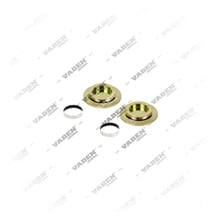
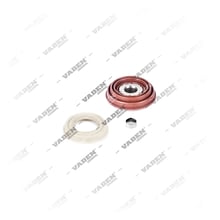
What are the functions of the caliper tappet repair kit?
The parts in the repair kit ensure the tappet mechanism operates correctly and stays sealed.
- Sealing: The seal and o-ring between the tappet and body prevent dirt and moisture from entering the mechanism.
- Linear motion: Helps the tappet convert the rotational motion it receives from the adjuster mechanism into smooth linear movement.
- Protection: The dust boot protects the tappet surface from external factors and wear.
- Positional stability: Circlips and bushings keep the tappet moving without shifting off its axis.
What are the symptoms of a faulty caliper tappet?
Wear in the tappet mechanism directly affects brake response and pad life.
- Stiff or delayed brake response: If the dust boot is damaged, dirt entering the tappet makes movement harder.
- Uneven pad wear: When the tappet does not move smoothly, the pad cannot apply even pressure to the disc.
- Visible dust boot damage: A torn or cracked boot indicates the tappet has lost its protection.
- Squealing or metallic noise: A dry tappet surface can cause friction noise.
- Caliper not retracting: A worn tappet mechanism can prevent the pad from fully releasing from the disc when the brake is released.
How is the caliper tappet inspected?
Inspection should be carried out step by step with the caliper removed.
- Visual inspection: Check the dust boot for tears and the tappet surface for scoring or corrosion.
- Movement test: Move the tappet by hand or with the adjuster tool to check for stiffness or binding.
- Return check: Observe whether the tappet returns to its correct position under spring action when released.
- Seal integrity: Inspect the seal area for signs of moisture or dirt ingress.
- Function test: After the caliper is installed, test the brake application and release response.
What should be considered when replacing it?
Installing the tappet repair kit requires precision because it directly affects brake response.
- Cleanliness: Clean the tappet and inner body surface without scratching, and fully remove old seal residue.
- Correct sequence: Install the seal, o-ring, circlip and dust boot in the manufacturer's specified order.
- Suitable grease: Apply a manufacturer-approved rubber-safe grease to the tappet surface in a thin layer.
- Boot integrity: The new dust boot must not be cut or twisted during installation.
- Function test: After installation, operate the adjuster mechanism to confirm the tappet moves freely.
- Adjuster mechanism check: Also verify that the adjuster mechanism working alongside the tappet is not worn and its gears do not skip.
How to choose the right caliper tappet repair kit?
Choosing the correct kit requires clearly identifying the caliper family and tappet dimensions. The table below summarizes the main criteria.
Caliper tappet repair kit selection criteria| Criterion | Description |
|---|
| Caliper family | Full compatibility with the original caliper mechanism |
| Tappet dimensions | Match with diameter and stroke length |
| Kit contents | Seal, o-ring, dust boot, circlip/bushing if required |
| Material | Synthetic rubber seals resistant to heat and oil |
| Packaging integrity | Boot stored undeformed in original packaging |
Maintenance and service life
The service life of the tappet mechanism depends on the condition of the dust boot and regular greasing. The dust boot should be visually checked at every pad change, and the slightest tear should be addressed early. Inspection frequency should be increased for vehicles operating in dusty, muddy or salted road conditions; catching boot damage early can prevent the need for a complete tappet replacement. Periodically function-testing the adjuster mechanism helps confirm the tappet is positioning correctly in step with pad wear. On brakes exposed to excessive heat, such as frequent use on long downhill routes, more frequent inspection of the tappet and boot area is recommended.
VADEN caliper tappet repair kit
VADEN offers repair kits consisting of original-dimension seals, o-rings and dust boots for the tappet mechanisms used in heavy commercial vehicle brake calipers, providing a faster and more economical repair option compared to replacing the complete tappet. The rubber components in the kit are produced from a synthetic compound resistant to the high temperatures and oil/grease exposure generated during braking, and the dust boot is molded to retain its flexibility over a long service life. Because frequent braking on urban transit and distribution vehicles shortens dust boot life, keeping this repair kit in fleet maintenance stock is recommended. VADEN subjects every repair kit to dimensional inspection and material testing before dispatch.
Frequently Asked Questions (FAQ)
When is a caliper tappet repair kit sufficient?
If there is no deep scoring or excessive corrosion on the tappet surface, stiffness and leakage complaints can usually be resolved by replacing the seal and dust boot. Complete tappet replacement is required if the surface is damaged.
Should a torn dust boot be replaced immediately?
Yes, a torn boot lets dirt and moisture enter, causing the tappet to wear rapidly. Replacement is recommended as soon as it is noticed.
Does installing the tappet repair kit require special grease?
Yes, a rubber-safe, high-temperature grease must be used. Standard lubricating greases can damage the seal and boot material.
If the caliper does not retract, is the tappet definitely the cause?
Usually yes, but binding in the adjuster mechanism or the slide pins can produce a similar symptom. For an accurate diagnosis, the whole caliper mechanism should be checked together.
How is the repair kit tested after installation?
After the caliper is installed, apply and release the brake pedal a few times and confirm the tappet moves without stiffness or binding and the pad releases freely.