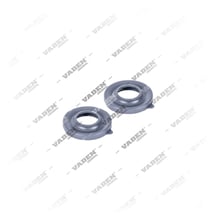
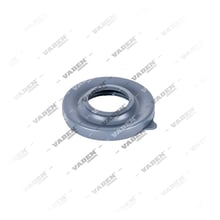
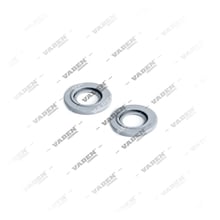
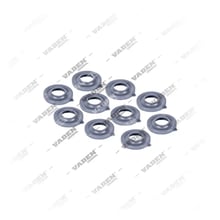
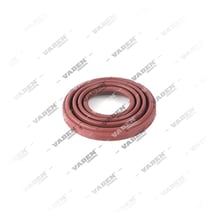
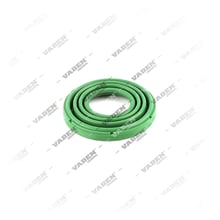
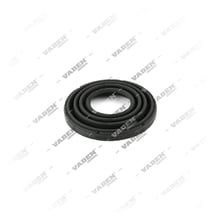
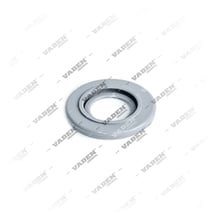
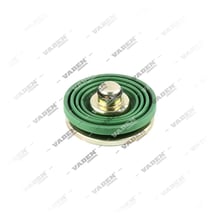
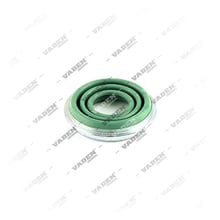
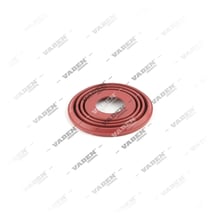
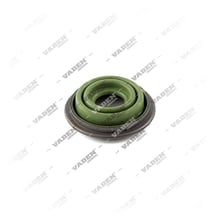
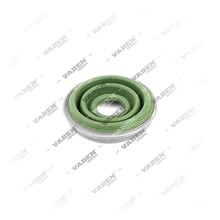
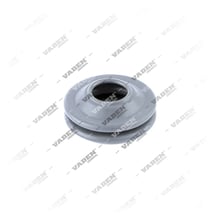
What is a Brake Caliper Pushrod Dust Boot?
The pushrod mechanism is a component that moves linearly with high precision during brake application; the dust boot protects this moving surface from dirt, moisture, road salt, and abrasive particles, keeping the mechanism operating smoothly.
What are the functions of a Brake Caliper Pushrod Dust Boot?
- Moving surface protection: Protects the sliding surface of the pushrod body from dust, mud, and abrasive particles.
- Moisture and salt barrier: Prevents road salt and moisture from reaching the pushrod mechanism and internal bearing surfaces, preventing corrosion.
- Lubrication retention: Prevents the grease layer in the mechanism from contacting and degrading due to external factors.
- Flexible movement accommodation: The accordion structure accommodates the pushrod's back-and-forth travel as pad wear allowance changes.
- Extending mechanism life: Maintains sealing, preventing premature wear of the pushrod and caliper mechanism.
What are the symptoms of a failing Brake Caliper Pushrod Dust Boot?
- Visible tear or hole: A crack, tear, or puncture in the boot material indicates the internal mechanism is exposed.
- Hardening and cracking: Over time, heat and UV exposure make the rubber material hard and brittle.
- Rust/dirt in the pushrod mechanism: If the boot is damaged, moisture marks, rust stains, or contaminated grease can be seen on the internal surface.
- Uneven pad wear: A contaminated pushrod mechanism cannot move smoothly, leading to uneven pad wear.
- Delayed brake response: Increased friction in the mechanism can cause slight lag or stiffness in pedal response.
- Loosening at the mounting point: If the boot slips out of its seating groove on the caliper or pushrod body, sealing is lost entirely.
How is a Brake Caliper Pushrod Dust Boot inspected?
- Visual inspection: Check the boot surface for tears, cracks, holes, or excessive hardening; the vehicle should be raised and the wheel removed for clear visibility.
- Manual flexibility test: Lightly press the boot to assess whether the rubber retains flexibility; a brittle/hard texture indicates a need for replacement.
- Mounting point check: Verify both ends of the boot are fully seated in their groove and not slipping.
- Internal mechanism inspection: If the boot is damaged, check the pushrod surface underneath for rust or dirt buildup.
- Check at pad replacement: The boot's condition should be reviewed separately at every pad replacement.
What should be considered during replacement?
- Correct OE number: Choose a boot that exactly matches the caliper and pushrod model; a dimensional mismatch compromises sealing.
- Clean the pushrod surface: Before fitting a new boot, clean the pushrod surface of rust and dirt, and protect with light grease if needed.
- Correct seating: Both ends of the boot must be seated fully and symmetrically in their groove, with no twisting or partial seating left.
- Check fastening elements: On some models the boot is secured with a clip or retaining ring; verify these elements are sound and correctly positioned.
- Post-installation function test: Apply the brake pedal several times and observe that the pushrod moves and the boot expands/contracts smoothly.
How to choose the right Brake Caliper Pushrod Dust Boot?
Selection should be based on OE part number, not brand, determining the correct boot model for the caliper family and pushrod diameter.
Brake Caliper Pushrod Dust Boot selection criteria| Criterion | Description |
|---|
| OE reference number | Exact match with the original part number specified by the caliper manufacturer |
| Pushrod diameter/type | Boot inner diameter matching the pushrod body dimension |
| Material quality | Synthetic rubber compound resistant to high temperature, UV, and road salt |
| Caliper family | Profile compatibility with mechanism type such as SB, SN, SK |
| Fastening element | Compatibility of clips/retaining rings with the original |
Maintenance and service life
The dust boot is a wear part subject to continuous movement and outdoor exposure; average life varies with driving conditions, exposure to road salt, and temperature swings. Direct high-pressure water jets applied to the boot during washing can loosen its seams and cause premature tearing. Visual inspection of the boot at pad replacement intervals allows damage to be caught before it worsens. Because even a small tear will progressively allow dirt and moisture into the mechanism, replacement without delay once found is recommended.
VADEN Brake Caliper Pushrod Dust Boot
Within its brake caliper product range, VADEN offers pushrod dust boots for common caliper families at OE dimensional and material standards, manufactured with a rubber compound resistant to high temperature and road conditions.
Frequently Asked Questions (FAQ)
Can the vehicle keep being driven if the dust boot is torn?
Short-term use may not cause permanent mechanism damage, but once a tear is present, dirt and moisture ingress accelerates quickly. Replacing it as soon as possible prevents the pushrod mechanism from developing into a costly failure.
Does the caliper need to be fully removed to replace the boot?
In most cases the caliper needs to be partially opened to access the pushrod body; this should be done according to the vehicle's current OE service procedure.
What should be done if rust is found under the boot?
This indicates sealing has been compromised for some time. The pushrod surface should be cleaned and de-rusted; if damage has progressed, the pushrod part itself may also need evaluation.
Can high-pressure washing damage the boot?
Direct, close-range high-pressure water can cause the boot to slip out of its seat or loosen its seams; maintain distance during washing.
Is the same boot used across all caliper families?
No. Families such as SB, SN, and SK have different pushrod diameters and profiles; the OE number should be the basis for correct selection.
Related technical guide: Caliper Tappet & Dust Boot: Function, Failure, Replacement