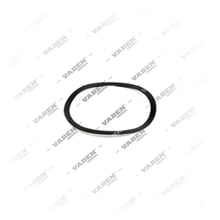
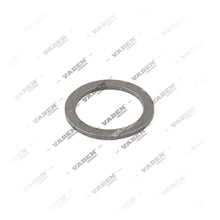
What is the Brake Caliper Shaft Washer?
This part is a low-cost but installation-sensitive wear/accessory item that forms a thin interlayer between the caliper shaft and the housing or mechanism surface it contacts. It is typically checked together with the shaft during caliper maintenance or pad replacement and renewed when necessary. In the Vaden catalog, this category offers shaft washer variants for different caliper types, matched to OEM references.
What are the functions of the Brake Caliper Shaft Washer?
- Axial clearance take-up: balances the assembly tolerance between the shaft and the housing/mechanism surface.
- Load distribution: spreads the axial force on the shaft over a wide surface to prevent point loading.
- Wear prevention: blocks direct metal-to-metal contact, preventing premature wear on the shaft and housing surfaces.
- Vibration damping: reduces micro-vibrations during braking from creating noise and wear on the shaft.
- Correct positioning: helps keep the shaft axially fixed, supporting smooth operation of the caliper mechanism.
What are the symptoms of Brake Caliper Shaft Washer failure?
When the washer wears or breaks, axial clearance on the caliper shaft increases, which can manifest as a light rattling or metallic noise during braking. As the clearance grows, the pad-pressing mechanism can no longer operate fully symmetrically, leading to uneven pad wear and a slight vibration felt at the brake pedal. If the washer dislodges completely or fragments, the shaft comes into direct contact with the housing metal, causing permanent wear on both the shaft and housing, which can eventually lead to the caliper mechanism seizing. Washer wear that goes unnoticed for a long time can cause damage severe enough to require a full caliper overhaul. In such advanced wear cases, permanent marks can also form on the shaft surface, so washer replacement alone may not be sufficient and the shaft should also undergo a dimensional check.
How is the Brake Caliper Shaft Washer inspected?
When the caliper is disassembled, the shaft is removed and the washer is visually checked to confirm it is in place and free of deformation or cracks. The shaft is moved by hand to feel for axial play; excessive movement indicates the washer is worn or missing. The surface where the washer seats should be examined for pitting, shininess, or wear marks, which indicate the washer is not performing its function fully. During routine maintenance such as pad replacement, the washer's condition must always be checked, and a worn washer should be renewed together with the pads. Measuring washer thickness with calipers or a micrometer and comparing it to manufacturer tolerance gives a more reliable result than visual estimation alone.
What should be considered during replacement?
The washer must be placed on the shaft in the correct orientation and sequence, without forcing; incorrect installation can eliminate axial clearance entirely or leave excessive play. Before installation, the contact surfaces of the shaft and washer should be cleaned so that dirt or old grease residue does not prevent proper seating. If recommended by the manufacturer, an appropriate grease should be applied in a thin layer; excessive grease can cause the washer to shift out of place. After installation, the shaft's play should be checked by hand to confirm the clearance is within the normal range.
How to choose the right Brake Caliper Shaft Washer?
Selection should be based on the caliper model and shaft diameter, with the washer's inner/outer diameter and thickness matching the original dimensions exactly.
Brake Caliper Shaft Washer selection criteria| Criterion | Description |
|---|
| Caliper model | The model specified in the vehicle's current OE service manual is authoritative |
| Shaft diameter | The washer's inner diameter must exactly match the shaft dimension |
| Thickness/tolerance | Axial clearance tolerance must match the original value |
| Material | Must be a metal/composite resistant to brake heat and vibration |
| OEM reference | Must be matched to the caliper manufacturer's reference number |
Maintenance and service life
The caliper shaft washer is a low-cost wear part that should be routinely checked and renewed as needed during pad replacements. Regular greasing of the shaft reduces frictional wear on the washer and extends its service life. On vehicles operating in dirty or humid environments, checking the caliper mechanism more frequently allows early detection of washer wear. Because of its small size, the washer is at high risk of being lost during disassembly, so the work area should be kept clean and all removed small parts stored in labeled containers.
VADEN Brake Caliper Shaft Washer
Vaden offers shaft washer variants for different caliper types at OE tolerances. For correct axial clearance and mechanism performance, the part should be selected according to the caliper model and shaft dimension.
Frequently Asked Questions (FAQ)
Why does such a small washer matter so much?
Because it directly determines the caliper shaft's axial clearance and load distribution, a worn or missing washer disrupts the entire operating tolerance of the mechanism, affecting pad wear and brake performance.
How can washer wear be identified?
A light rattling noise during braking, uneven pad wear, or visible axial play at the shaft when the caliper is disassembled are typical symptoms of washer wear.
Is the washer automatically renewed at every pad change?
Not necessarily, but a pad change is the best opportunity to check the washer; it should be renewed if wear or deformation is found.
Does using too much grease during washer installation cause problems?
Yes, excessive grease can cause the washer to shift out of place and attract dirt over time, accelerating wear; a thin layer as recommended by the manufacturer is sufficient.
Can the caliper still be used if the washer breaks completely?
It can function briefly, but since the shaft comes into direct contact with the housing metal, permanent wear develops quickly; the washer should be replaced as soon as it is noticed.