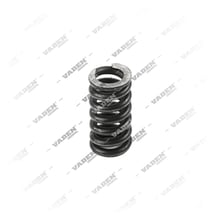
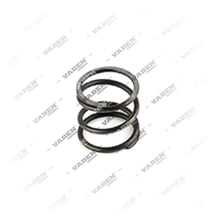
What are the functions of the Brake Caliper Shaft Spring?
The functions of the caliper shaft spring within the brake mechanism can be listed as follows.
- Providing preload: Keeps the shaft in its seat with a constant preload, preventing unwanted clearance from forming.
- Return to position: Helps the shaft return smoothly to its starting position when the brake is released.
- Vibration damping: Reduces the effect of road vibration on the shaft-seat contact, delaying wear.
- Noise and rattle prevention: Cushions the metal contact between the shaft and body, reducing operating noise.
- Mechanism consistency: Supports the repeatable operation of the automatic clearance adjustment mechanism at every braking event.
What are the symptoms of a Brake Caliper Shaft Spring failure?
Fatigue or breakage of the shaft spring creates noticeable symptoms in the caliper mechanism.
- Metallic rattling sound: Rattling noise from the caliper area, especially on rough roads or entering corners.
- Irregularity in pad wear: Uneven pad wear resulting from disrupted shaft positioning.
- Vibration at the brake pedal: A light vibration felt at the pedal due to inconsistent operation of the clearance adjustment mechanism.
- Visibly broken or deformed spring: Seeing that the spring is broken, loose, or has come out of its seat upon disassembly.
- Delayed brake response: A slight delay in brake engagement because the shaft moves with a delay.
How is the Brake Caliper Shaft Spring checked?
Inspection requires disassembling the relevant section of the caliper and accessing the shaft mechanism.
- Visual inspection: The spring is examined for breakage, deformation or excessive looseness.
- Tension check: How firmly the spring holds the shaft in its seat is checked by hand.
- Shaft movement test: The shaft is moved by hand and observed for smooth return to its starting position.
- Corrosion check: The spring surface is examined for rust or signs of material fatigue.
- Noise test: Abnormal sound from the caliper area is listened to and evaluated during a test drive.
What should be considered when replacing it?
Correctly disassembling and reassembling the mechanism in the right sequence is important when replacing the caliper shaft spring.
- Correct installation orientation: The spring's original mounting orientation and position must be preserved during replacement.
- Shaft and seat cleanliness: Dirt and old grease residue on the shaft and seat surface must be cleaned before installation.
- Proper grease use: A thin layer of the heat-resistant grease recommended by the manufacturer should be applied to the shaft surface.
- Parts to check together: The wear condition of neighboring parts such as the shaft, seal and bushing should be evaluated at the same time.
- Post-assembly movement test: It must be verified after installation that the shaft moves freely and smoothly.
How is the Brake Caliper Shaft Spring selected?
Selecting the right spring requires evaluating caliper model, spring type and tension value together.
Caliper shaft spring selection criteria| Criterion | Description |
|---|
| Caliper model match | Application specific to the caliper mechanism the spring belongs to |
| Spring type | Coil or torsion spring, matching the original geometry |
| Material | Spring steel resistant to high temperature and fatigue |
| Tension value | Original preload that holds the shaft firmly with the correct force |
| Corrosion protection | Surface coating resistant to road salt and moisture |
Maintenance and service life
Since the caliper shaft spring operates under constant mechanical stress, it can suffer material fatigue over time; its service life varies with usage intensity and road conditions. During periodic brake maintenance, visual inspection of the spring is recommended whenever the caliper mechanism is opened. Regularly cleaning the shaft and seat and reapplying grease extends the life of both the spring and the mechanism.
VADEN Brake Caliper Shaft Spring
VADEN offers caliper shaft springs manufactured for heavy commercial vehicle disc brake calipers, matching original geometry and tension values. With correct material selection and precise manufacturing, it supports the reliable and consistent operation of the caliper mechanism.
Frequently Asked Questions (FAQ)
Can the vehicle be driven if the caliper shaft spring breaks?
It can be driven for a short time, but because the clearance adjustment mechanism will operate irregularly, pad wear may increase and brake response may become inconsistent; prompt inspection is recommended.
Is this spring replaced alone or together with the mechanism?
It is generally checked together with neighboring parts such as the shaft, seal and bushing and replaced at the same time if needed; replacing the spring alone is also possible, but the condition of neighboring parts should not be ignored.
How is spring fatigue recognized?
The spring appearing loose, not holding the shaft firmly enough, or showing permanent deformation upon disassembly are signs of fatigue.
Is it necessary to apply grease to the caliper shaft spring?
Yes, applying a thin layer of the heat-resistant grease recommended by the manufacturer reduces friction between the spring and shaft and extends service life.
Is there a relationship between this spring and the pad wear sensor?
There is no direct connection; however, a spring failure can affect the clearance adjustment mechanism and indirectly contribute to uneven pad wear and shortened sensor life.