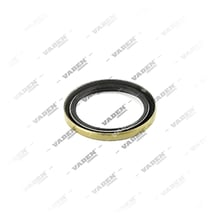
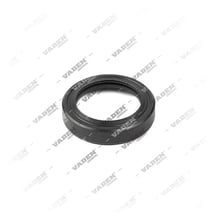
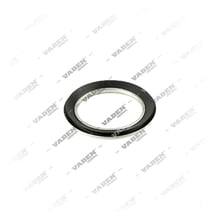
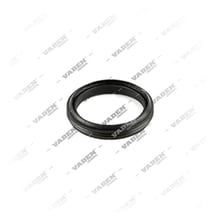
What Is a Caliper Guide Pin Boot?
The Caliper Guide Pin Boot is a bellows-type sealing component that protects the guide pin (shaft) of a heavy commercial vehicle's disc brake caliper from external contaminants. It sits within the Caliper Shaft sub-assembly of the Brake Caliper group and closes the gap between the caliper body and the sliding pin, keeping dust, mud, water, and road salt out of the pin bore. Built from rubber or a synthetic elastomer, it takes a bellows shape secured at both ends with a clamp or retaining ring. On Mercedes-Benz, MAN, Scania, Volvo, DAF, Iveco, and Renault Trucks heavy-duty disc brakes, it is standard on the floating (sliding) caliper architecture. Without it, the pin bore corrodes quickly, disrupting the caliper's free movement and brake balance.
- Caliper Pin Boot: the most common alternative name used in the field.
- Guide Pin Sleeve: describes the structure wrapping the outer surface of the pin.
- Shaft Boot: a short way of referring to the boot fitted over the caliper shaft.
How Does a Caliper Guide Pin Boot Work?
When the brake pedal is pressed, the caliper centers itself by sliding on the guide pin relative to the fixed disc, pressing both brake pads against the rotor surface with equal force. For this sliding motion to stay smooth, the pin surface must remain dry, clean, and lubricated — exactly the environment the Caliper Guide Pin Boot preserves. One end seats firmly against the caliper body, the other against the guide pin; as the pin moves, the boot flexes open and closed like an accordion, keeping the internal cavity sealed so moisture and dirt cannot enter and grease cannot escape. When the boot tears, moisture entering the pin bore causes rust within a few weeks, followed by pin seizure; a seized pin then prevents one side of the caliper from fully opening and closing, leading to one-sided pad wear and the vehicle pulling to one side under braking.
Caliper Guide Pin Boot Technical Specifications
The Caliper Guide Pin Boot is manufactured from heat-resistant EPDM or NBR rubber compounds, formulated to withstand the temperature swings around the brake area along with brake fluid, grease, and road salt. Its inner and outer diameters must match the pin diameter and caliper bore with millimeter-level precision; even a few tenths of a millimeter of deviation can cause premature tearing or loosening. Wall thickness and convolution count are designed around the pin's total sliding travel; insufficient allowance causes the boot to stretch and tear at full brake stroke. Clamp or retaining-ring type also varies by model. Torque, pressure, and tolerance values differ from model to model, so always consult the vehicle's current service manual for exact figures.
Caliper Guide Pin Boot Types and Subgroups
- Single-Convolution Boot: a simple type used in compact calipers with a short sliding stroke.
- Multi-Convolution (Accordion) Boot: preferred in heavy-tonnage calipers needing a long pin stroke, offering a wide flexing margin.
- Clamp-Mounted Type: ends secured with metal clamps, mechanically reinforcing the seal.
- Retainer-Free Press-Fit Type: the rubber seats into the bore under its own tension, requiring no clamp.
- Guide Pin Inner Seal (Inner Boot): provides internal sealing where the guide pin enters the caliper body.
- Dust Cap Integrated Set: a complete repair kit that includes the pin-end dust cap with the boot.
How to Choose the Right Caliper Guide Pin Boot?
Choosing the right Caliper Guide Pin Boot means matching caliper brand, pin diameter, boot length, and convolution count exactly to the vehicle's original equipment. The table below summarizes the key selection criteria.
Caliper Guide Pin Boot Selection Criteria| Criterion | Why It Matters |
|---|
| Caliper Brand and Model | Pin diameter and bore size vary by caliper manufacturer, such as Wabco or Knorr-Bremse |
| Pin Diameter (Inner Size) | Needed so the boot grips the pin tightly without restricting free sliding movement |
| Boot Length and Convolution Count | Critical for the caliper to complete its full brake stroke without the boot tearing |
| Material Type (EPDM/NBR) | Determines temperature and chemical resistance, and therefore service life |
| Mounting Type | Clamp-mounted or press-fit assembly must match the original bore |
| Vehicle Application | Size and durability requirements differ by truck, tractor, bus, or trailer axle |
Caliper Guide Pin Boot Maintenance and What to Watch For
- Perform Periodic Visual Inspections: check the boot for tears, cracks, or hardening at every brake pad replacement.
- Keep the Guide Pin Clean and Lubricated: when replacing the boot, clean the pin and apply a suitable caliper grease — a dry pin wears the boot out quickly.
- Fit the Clamp at the Correct Tightness: a loose clamp allows moisture ingress, while an over-tightened clamp tears the boot prematurely.
- Do Not Twist the Boot During Installation: let the convolutions settle in their natural folding direction, otherwise premature fatigue results.
- Replace as a Set with the Pads: a removed boot should never be reused — fit a new one at every pad service.
- Use Original-Size Parts: a boot with the wrong diameter cannot seal fully and will fail in a short time.
Common Faults and Solutions
- One-Sided Pad Wear on the Caliper: a rusted, seized pin caused by moisture entering through a torn boot; replace the boot and, if needed, the pin, and clean the bore.
- Vehicle Pulling to One Side Under Braking: the caliper on one side cannot slide freely; check the shaft boot, then remove, lubricate, or replace the pin.
- Uneven Heating of the Brake Disc: constant pad-to-disc contact from a seized pin; renew the boot and pin assembly completely.
- Visible Rust in the Pin Bore: moisture ingress after the boot loses its seal; carry out regular visual checks for early detection.
- Abnormal Squealing from the Brake System: a dry pin surface with no lubrication left; remove the boot, clean and lubricate the pin, and renew the seal if necessary.
Why VADEN ORIGINAL?
- OE-Dimension Manufacturing: the rubber compound and dimensions are produced to OE specification, so the part seats fully into the original caliper bore on first fit.
- Extensive OEM Cross-Reference: a reference list compatible with Wabco and Knorr-Bremse calipers helps you quickly find the right part across Mercedes-Benz, MAN, Scania, Volvo, DAF, Iveco, and Renault Trucks fleets.
- Material Tested for Long Service Life: an elastomer compound resistant to temperature swings, grease, and road salt.
- Reliable Stock and Availability: VADEN ORIGINAL parts are exported to more than 100 countries, giving fleets and service points a readily available alternative.
Conclusion
Despite its small size, the Caliper Guide Pin Boot is critical to the healthy operation of a disc brake caliper. Inspected and replaced in time, it prevents pin corrosion, preserves the caliper's free movement, and guarantees balanced, safe braking. With VADEN ORIGINAL quality boots, you can keep the brake system in your heavy commercial vehicles running reliably for the long term.
Frequently Asked Questions (FAQ)
What does a Caliper Guide Pin Boot do?
A Caliper Guide Pin Boot protects the guide pin in a disc brake caliper against dust, moisture, and road salt. By keeping the pin's sliding motion free, it lets the caliper center itself evenly on the disc and press both pads with equal force.
What happens if the Caliper Guide Pin Boot tears?
Moisture and dirt enter the pin bore through the torn boot and corrosion begins quickly. The rusted pin can no longer slide freely, so one side of the caliper cannot fully open and close — leading to one-sided pad wear and the vehicle pulling under braking.
When should the Caliper Guide Pin Boot be replaced?
The boot should be visually inspected at every pad replacement; any boot that is torn, cracked, or hardened must be replaced immediately with a new one. A removed boot should never be reused, and the guide pin should be cleaned and lubricated at the same time.
Which vehicles is the VADEN ORIGINAL Caliper Guide Pin Boot compatible with?
The VADEN ORIGINAL Caliper Guide Pin Boot is compatible with the Wabco and Knorr-Bremse sliding-type calipers fitted on Mercedes-Benz, MAN, Scania, Volvo, DAF, Iveco, and Renault Trucks heavy commercial vehicles. Verifying the caliper brand and pin diameter before ordering is recommended.
My vehicle pulls to one side under braking — could the caliper guide pin boot be the cause?
Yes, a guide pin that has rusted and seized due to a torn shaft boot can prevent one side of the caliper from moving freely, causing the vehicle to pull in one direction under braking. Have the caliper pin and boot inspected.