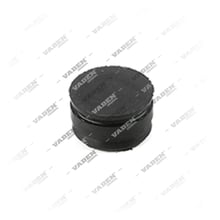
What are the functions of the Caliper Adjuster Shaft Plug?
Despite its small size, the plug performs several functions critical to the caliper's long service life:
- Contamination barrier: Blocks dust, mud, and water from entering the shaft bearing, preventing premature corrosion.
- Grease retention: Delays the internal grease from leaking out or drying up.
- Mechanism protection: Helps the adjuster shaft rotate freely, contributing to correct pad adjustment.
- Access point: Acts as a cover that can be removed and refitted during service, simplifying maintenance work.
- Sealing: Closes the opening in the caliper body in a watertight manner.
What are the symptoms of a failed Caliper Adjuster Shaft Plug?
A missing, cracked, or hardened plug usually shows up as a problem in the adjuster mechanism:
- Disrupted pad adjustment: Dirt entering the shaft bearing can prevent the automatic adjuster mechanism from working smoothly.
- Changed brake pedal feel: When the adjuster mechanism binds, pedal travel can change or brake response can become inconsistent.
- Visible absence: Inspection may reveal the plug is missing from its position or has cracked.
- Signs of rust: Rust and dirt buildup may be seen around the plug or at the shaft end.
- Abnormal noise: Dry friction in the shaft bearing can produce a light squeaking sound.
How is the Caliper Adjuster Shaft Plug inspected?
Inspection should be a natural part of routine brake maintenance:
- Visual inspection: Check the plug on the caliper body for absence, cracking, or hardening.
- Seal check: Remove the plug and observe whether the grease beneath it and the shaft surface have become contaminated.
- Shaft rotation test: Check whether the adjuster shaft turns freely by hand or with an appropriate tool.
- Pad clearance check: Verify the automatic adjuster mechanism is working correctly by measuring pad clearance.
What should be considered when replacing it?
Plug replacement is a simple task, but correct execution preserves the caliper's service life:
- Re-greasing: Once the plug is removed, check the shaft surface and re-lubricate with manufacturer-approved grease if needed.
- Cleanliness: Clean old dirt and rust residue from the seat before installation.
- Full seating: The new plug must be seated fully into the body and not left loose.
- Correct size: Use a plug sized for the caliper model; the wrong size compromises sealing.
- Brake test: Check pad clearance and pedal feel after replacement.
How to choose the right Caliper Adjuster Shaft Plug?
Caliper model and seat dimensions are the deciding criteria when choosing the correct plug.
Caliper Adjuster Shaft Plug selection criteria| Criterion | Description |
|---|
| Outer diameter | Must exactly match the seat dimension in the caliper body |
| Material | Elastomer or plastic resistant to high temperature and oil |
| Seal design | Must have a dust and water resistant seal profile |
| Application | Verify OEM reference against caliper make and model |
| Fitment type | Press-fit or threaded type must match the original plug |
Maintenance and service life
The plug's service life depends on the temperature swings and road conditions it is exposed to. Vehicles regularly operating in mud or salted environments should have inspection intervals shortened. Reviewing the plug during brake maintenance keeps the adjuster shaft running trouble-free over a long period. The vehicle's current service manual is the authority for exact maintenance intervals.
VADEN Caliper Adjuster Shaft Plug
VADEN supplies OE-quality adjuster shaft plugs for heavy commercial vehicle brake calipers. Manufactured to correct dimensions and sealing design, these parts help protect the adjuster mechanism from contamination and keep the brake system operating reliably.
Frequently Asked Questions (FAQ)
What does the caliper adjuster shaft plug do?
It protects the caliper's adjuster shaft bearing from outside dirt and water, keeping the mechanism working smoothly.
What happens if the plug is missing or cracked?
Dirt and moisture can enter the shaft bearing, causing the automatic pad adjuster mechanism to bind and disrupting brake response.
Is a grease check needed when replacing the plug?
Yes, once the plug is removed the shaft surface should be checked and re-lubricated with manufacturer-approved grease if needed.
How often should the plug be checked?
During routine brake maintenance, with more frequent checks for vehicles operating on muddy or salted roads.
What happens if the wrong size plug is used?
A plug that does not seat fully compromises sealing and leads to premature contamination of the shaft bearing.