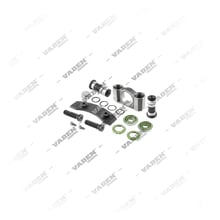
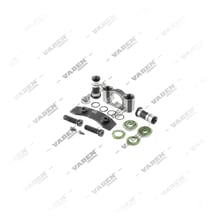
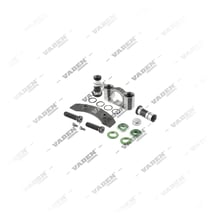
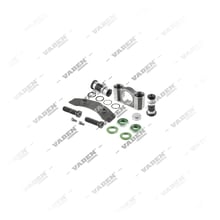
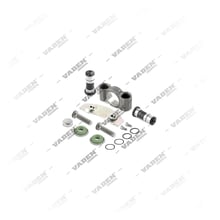
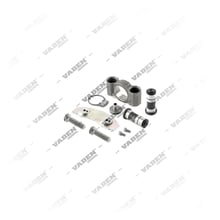
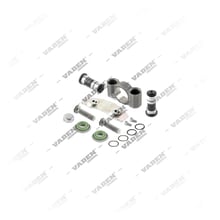
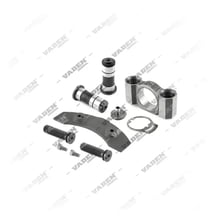
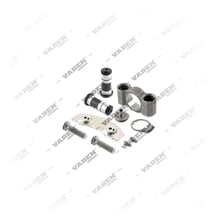
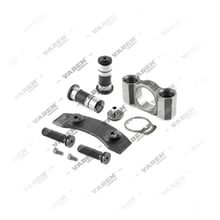
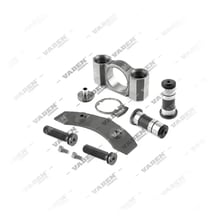
What Is a Caliper Shaft Plate?
The caliper shaft plate is a thin, flat retaining component, typically manufactured from steel or hardened metal, used in the air disc brake calipers of heavy commercial vehicles to lock the caliper shaft's position and prevent axial movement. In the field it is sometimes called a "shaft plate," "caliper thrust plate," or "shaft retaining plate." Positioned within the Brake Caliper > Caliper Shaft subsystem, this component bridges the caliper housing and the shaft end, keeping the shaft from shifting out of its mounting position. Without a caliper shaft plate, the shaft can migrate axially under the repeated load and vibration generated during braking, upsetting pad-pressure balance and shortening caliper service life. Widely used in the Wabco- and Knorr-Bremse-based disc brake calipers fitted to Mercedes-Benz, MAN, Scania, Volvo, DAF, Iveco, and Renault Trucks vehicles, this component may look small, but it plays a critical role in the mechanical integrity of the brake system.
How Does a Caliper Shaft Plate Work?
The caliper shaft is a rotating-sliding spindle that transfers the motion generated by the adjuster mechanism inside the caliper to the pad carrier whenever the brake pedal is applied. The caliper shaft plate secures the outer end of this shaft to the caliper housing, preserving its rotational axis while preventing the shaft from sliding outward out of the caliper. The plate is typically bolted to the caliper housing through two or three mounting holes and makes contact with a groove or shoulder on the shaft, holding axial play close to zero. This fixation keeps the distance between the adjuster mechanism and the pad carrier consistent with every brake application, ensures even pad wear distribution, and makes brake response predictable. If the plate loosens or deforms, it can score the shaft, leading to premature wear in other components inside the caliper.
Caliper Shaft Plate Technical Specifications
Caliper shaft plate design varies in thickness, hole spacing, and mounting geometry depending on the caliper model and shaft diameter. Rather than quoting a fixed torque value, always consult the vehicle's current service manual; a generic range should never be treated as a substitute.
- Material: Corrosion-resistant coated steel provides long-term resistance to road salt and brake dust.
- Surface Flatness: Manufactured to tight tolerance, since it directly affects the shaft's axial clearance.
- Hole Spacing: Positioned to match the mounting holes in the caliper housing exactly.
- Compatibility: Caliper model, shaft diameter, and hole spacing must all match when selecting a plate, or it will not seat correctly.
Caliper Shaft Plate Types and Subgroups
- Flat Retaining Plate: The most common variant, a single flat plate bolted to the caliper housing through two mounting holes.
- Grooved/Shouldered Plate: Its protruding profile seats into the groove on the shaft, restricting axial movement more tightly.
- Reinforced Steel Plate: A thickened version for heavy-load vehicles and fleet vehicles subject to frequent brake cycles.
- Coated (Zinc/Phosphate) Plate: Provides additional corrosion protection in humid and salted environments.
- Plate Set with Integrated Seal: On some caliper models, the plate is supplied as a single set together with a sealing gasket.
How to Choose the Right Caliper Shaft Plate?
The first step in selecting a caliper shaft plate is correctly identifying the vehicle's caliper brand and model, since mounting hole spacing and plate thickness can differ between Wabco and Knorr-Bremse calipers. Second, check the shaft diameter and the width of the groove the plate contacts, because a mismatched plate will secure the shaft either too tightly or too loosely. The third criterion is the vehicle's duty profile: reinforced variants offer longer service life on vehicles running frequent-stop urban routes. The table below summarizes the key criteria to weigh during selection.
Caliper Shaft Plate Selection Criteria| Criterion | Why It Matters |
|---|
| Caliper Brand/Model | Mounting hole spacing and plate geometry are model-specific |
| Shaft Diameter | The plate's contact surface must match the shaft diameter exactly |
| Plate Thickness | Insufficient thickness causes premature deformation; excessive thickness causes fitment errors |
| Surface Coating | Determines corrosion resistance and service life |
| Duty Profile | A reinforced type is preferable for vehicles with frequent brake cycles |
Caliper Shaft Plate Maintenance and Key Considerations
- Tighten Mounting Bolts to the Specified Torque: Under- or over-tightening can loosen the plate or damage the shaft groove; always refer to the vehicle manufacturer's current service manual for the correct value.
- Visually Inspect the Plate During Periodic Brake Maintenance: Replace any plate showing cracking, warping, or excessive wear immediately.
- Keep the Shaft Groove-to-Plate Contact Clean: Accumulated brake dust and dirt increase friction and cause premature wear.
- Monitor for Signs of Corrosion: A plate with damaged coating can develop structural weakness in a short time.
- Assess Alongside the Shaft: When replacing the plate, also check the shaft itself for scoring or wear.
Common Faults and Solutions
- Metallic Rattling Noise During Braking: Usually caused by a loose or deformed plate; check the bolts and replace the plate if necessary.
- Uneven Pad Wear: Results from axial migration of the shaft; loss of the plate's retaining function is a likely cause, so inspect both the plate and shaft together.
- Visible Scoring in the Shaft Groove: Occurs from a worn or low-quality thin plate; replace with a new plate to OEM dimensions.
- A Feeling of Looseness at the Caliper Housing: Can result from mounting bolts not tightened to the correct torque; re-verify the torque value during removal and installation.
- Rust and Corrosion Marks: Seen on plates with damaged coating; switching to a coated variant is recommended for vehicles operating in humid environments.
Why VADEN ORIGINAL?
- Manufactured to OE Dimensions: Caliper shaft plate products are produced to match original mounting tolerances and hole spacing exactly.
- Extensive OEM Cross-Referencing: A product range correctly matched to Wabco- and Knorr-Bremse-based caliper systems.
- Durable Material and Coating: Corrosion-resistant surface treatment delivers long service life and consistent performance.
- Exported to More Than 100 Countries: A quality standard field-tested across diverse climates and road conditions.
- Contributes to System Integrity: Works in harmony with the caliper shaft and the rest of the brake system to support braking safety.
Conclusion
Despite its small size, the caliper shaft plate is a critical retaining component that ensures the caliper shaft is correctly positioned and that the brake system operates predictably. Selecting the right model, installing it to the specified torque, and performing regular visual inspection together guarantee both even distribution of pad wear and long caliper service life. VADEN ORIGINAL caliper shaft plate products, manufactured to OE tolerances with extensive vehicle compatibility, deliver a reliable solution for the braking safety of heavy commercial vehicle fleets.
Frequently Asked Questions (FAQ)
What does a caliper shaft plate do?
The caliper shaft plate secures the shaft inside the brake caliper to the caliper housing, limiting its axial movement. This keeps the distance between the adjuster mechanism and the pad carrier consistent and makes brake response predictable.
What happens if the caliper shaft plate wears out?
A worn or deformed plate allows the shaft to migrate axially. This can cause uneven pad wear, metallic noises during braking, and additional wear in the caliper housing over time.
Which vehicles is the caliper shaft plate compatible with?
VADEN ORIGINAL caliper shaft plate products are compatible with models used in the Wabco- and Knorr-Bremse-based disc brake calipers of brands such as Mercedes-Benz, MAN, Scania, Volvo, DAF, Iveco, and Renault Trucks. Verifying the caliper brand and model before ordering is recommended.
What should be considered when installing a caliper shaft plate?
Mounting bolts should be tightened to the torque value specified in the vehicle manufacturer's current service manual. It should also be checked that the plate makes full contact with the shaft groove and that the mounting holes are correctly aligned.
Does the shaft need to be checked when the plate is replaced?
Yes, a worn plate can often cause light scoring in the shaft groove as well. It is recommended to visually inspect the shaft's surface during plate replacement and evaluate it together with the plate if necessary.