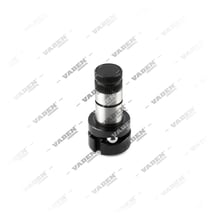
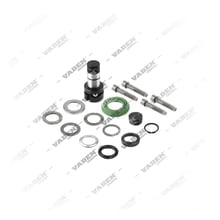
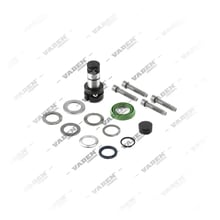
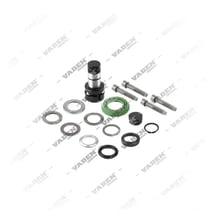
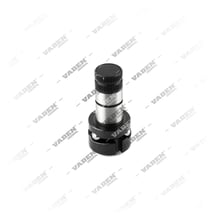
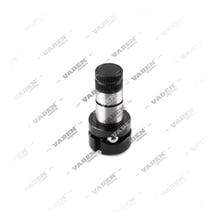
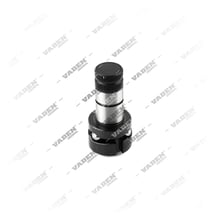
What Is the Caliper Shaft Mechanism?
The Caliper Shaft Mechanism is the motion-transfer assembly inside a heavy-duty commercial vehicle disc brake caliper that converts the caliper shaft's rotary movement into brake pad clamping force. The assembly consists of the shaft, its bearing elements, adjustment components, and drive parts, all housed within the caliper body. In the field it is sometimes called the "caliper actuation mechanism" or "shaft drive group." When the brake pedal is applied, the pneumatic or mechanical input at the caliper first passes through the Caliper Shaft Mechanism before reaching the pressure plate, pushing the brake pad into contact with the disc. Found in the disc brake calipers used on Mercedes-Benz, MAN, Scania, Volvo, DAF, Iveco, and Renault Trucks heavy vehicles, this mechanism is the direct power-transfer lifeline of the braking system. VADEN ORIGINAL manufactures Caliper Shaft Mechanism components to OE dimensions so that caliper performance and brake response stay at the original level.
How Does the Caliper Shaft Mechanism Work?
The Caliper Shaft Mechanism turns the command from the brake pedal into mechanical motion inside the caliper. When pneumatic force from the brake valve reaches the drive lever on the caliper body, that force rotates the shaft through a defined angle. This rotation is converted into axial movement by the eccentric or threaded adjustment elements mounted on the shaft, pushing the pressure plate toward the disc.
During this conversion, the bushings and bearings surrounding the shaft keep the movement friction-free and free of deviation. When the brake is released, return springs bring the shaft back to its starting position and the pad lifts off the disc. The Caliper Shaft Mechanism also works in tandem with the automatic slack adjuster: as the pad wears, it compensates the shaft rotation angle so pedal travel stays constant and brake response remains consistent.
Caliper Shaft Mechanism Technical Specifications
Because Caliper Shaft Mechanism components operate under high mechanical load, they are manufactured from hardened steel or forged alloy. Shaft surfaces are case-hardened in the areas that contact the bushings to reduce wear. Bearing elements are typically needle roller bearings or self-lubricating bushings, in diameters and tolerances that vary by caliper model.
The mechanism's rotation angle, drive lever geometry, and thread pitch differ by caliper manufacturer and model, so the type code and chassis number must always be verified before selecting a part. General torque ranges serve as guidance; the vehicle's current service manual remains the authority for exact figures.
- Material: Hardened steel or forged-alloy shaft, produced with a wear-resistant surface treatment.
- Bearings: Needle roller bearing or self-lubricating bushing types vary by caliper model.
- Tolerance: Shaft diameter and thread pitch are manufactured to tight, caliper-specific tolerances.
Caliper Shaft Mechanism Types and Subassemblies
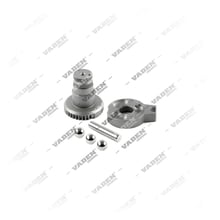
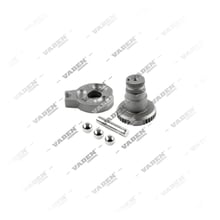
- Shaft Assembly: The main rotating axis that transmits drive force; the center of motion inside the caliper.
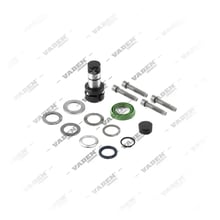
- Bushing and Bearing Set: Lets the shaft rotate inside the caliper body without friction or deviation.
- Drive Lever and Linkage Components: Transfer the pneumatic or mechanical input to the shaft.
- Automatic Slack Adjuster Integration Group: Balances the shaft rotation angle to compensate for pad wear.
- Sealing and Dust Boots: Protect the mechanism from moisture, dust, and road grime.
- Return Spring Assembly: Returns the shaft to its starting position when the brake is released.
How to Choose the Right Caliper Shaft Mechanism?
The first step in choosing a Caliper Shaft Mechanism is identifying the caliper manufacturer and type code (Wabco or Knorr-Bremse, for instance), since shaft diameter, thread pitch, and drive lever geometry are specific to the caliper model. The second step is confirming the OEM reference against the vehicle's chassis number. The table below summarizes the key criteria to weigh during selection.
Caliper Shaft Mechanism Selection Criteria| Criterion | Why It Matters |
|---|
| Caliper Brand and Type Code | Shaft diameter and drive lever geometry vary by caliper model |
| Vehicle Chassis Number (VIN) | Guarantees a correct match to the OEM reference |
| Automatic Slack Adjuster Compatibility | Ensures the mechanism works in sync with the existing adjuster system |
| Bushing/Bearing Tolerance | Prevents excessive play or binding |
| Sealing Kit Condition | Protects the mechanism against moisture and dirt ingress |
Caliper Shaft Mechanism Maintenance and Key Considerations
- Periodic Visual Inspection: Regularly check the boots and seals around the shaft for tearing or cracking.
- Free-Rotation Check: Test that the shaft turns smoothly by hand or with service equipment, without stiffness.
- Mind the Lubrication Points: Apply the manufacturer-specified grease at the designated points, avoiding over-lubrication.
- Verify the Automatic Adjuster Function: After a pad change, confirm the slack adjuster is operating correctly.
- Follow Torque Values During Installation: Base clamping torque on the current service manual and avoid overtightening.
- Use OE-Dimension Parts: Components outside tolerance cause premature wear in the mechanism.
Common Faults and Solutions
- Stiffness Felt at the Brake Pedal: Drying or corrosion at the shaft and bushings is the likely cause; clean, re-grease, and replace the bushing set if needed.
- Uneven Pad Wear Progression: A fault in the slack adjuster integration is the likely cause; inspect the adjuster group and shaft linkage, renewing as needed.
- Squealing or Metallic Noise While Braking: Worn bushings or bearings are the likely cause; replace them.
- Delayed Brake Response: Excessive play in shaft rotation is the likely cause; check the drive linkage and shaft tolerance.
- Moisture or Dirt Buildup in the Boot: A torn sealing boot is the likely cause; renew the kit immediately.
Why VADEN ORIGINAL?
VADEN ORIGINAL manufactures Caliper Shaft Mechanism components to OE dimensions, keeping motion transfer inside the caliper at original precision.
- OE Dimensions and Tolerances: Shaft, bushing, and bearing dimensions match original caliper tolerances precisely.
- Broad OEM Coverage: A wide reference range led by Wabco and Knorr-Bremse speeds up finding the correct part.
- Durable Material Selection: Hardened steel shafts and quality bushing/bearing sets deliver long life under heavy-duty conditions.
- International Reach: VADEN ORIGINAL parts are exported to more than 100 countries, developed to fit fleet operators' needs.
Conclusion
As the motion-transfer center of the disc brake caliper, the Caliper Shaft Mechanism plays a critical role in braking safety. Choosing the right part, keeping up with regular maintenance, and acting promptly all directly affect brake performance and caliper service life. With VADEN ORIGINAL-quality Caliper Shaft Mechanism components, you can keep your fleet's braking system running reliably and consistently.
Frequently Asked Questions (FAQ)
What does the Caliper Shaft Mechanism do?
The Caliper Shaft Mechanism converts the pneumatic or mechanical input force from the brake pedal into rotary motion inside the caliper, then into axial clamping force. This pushes the brake pad against the disc to produce braking.
What are the symptoms of a failing Caliper Shaft Mechanism?
The most common symptoms are a stiff-feeling brake pedal, uneven pad wear progression, squealing noise while braking, and delayed brake response. Any of these calls for inspecting the shaft, bushings, and adjuster group.
How does the Caliper Shaft Mechanism relate to the automatic slack adjuster?
The mechanism works in sync with the automatic slack adjuster, compensating the shaft rotation angle as the pad wears. When this integration fails, pedal travel increases and pad wear can progress unevenly.
What should be checked when choosing a Caliper Shaft Mechanism?
Confirm the caliper brand and type code, the vehicle chassis number, bushing and bearing tolerances, and compatibility with the automatic slack adjuster. Wrong tolerances can cause premature wear and inconsistent brake response.
Which vehicles are VADEN ORIGINAL Caliper Shaft Mechanism parts compatible with?
VADEN ORIGINAL parts are manufactured to OE dimensions for the Wabco and Knorr-Bremse calipers used on Mercedes-Benz, MAN, Scania, Volvo, DAF, Iveco, and Renault Trucks heavy vehicles. Verify the caliper type code and vehicle chassis number before ordering.