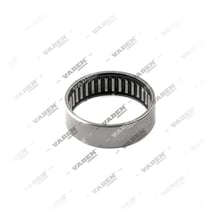
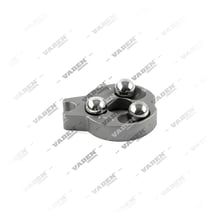
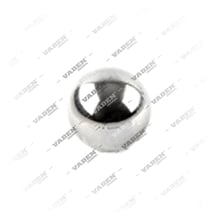
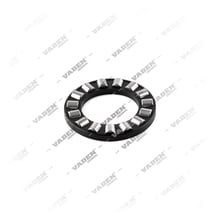
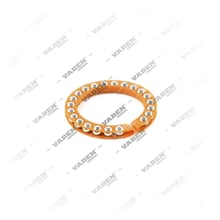
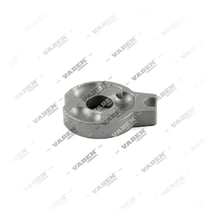
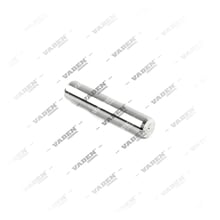
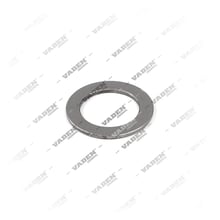
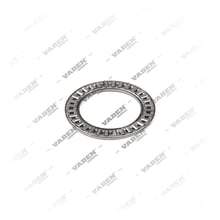
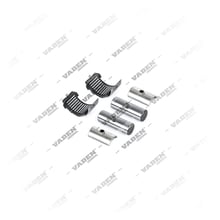
What is a Caliper Adjuster Shaft Bearing?
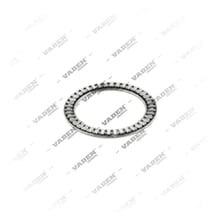
The caliper adjuster shaft bearing is a precision mechanical bearing seated inside the caliper housing that carries the radial (and in some designs axial) loads of the adjuster/actuation shaft while minimizing rotational resistance. It is one of the core requirements for the caliper's adjustment mechanism to work correctly and repeatably. Vaden's catalog in this category covers bearing variants for multiple caliper families (SN, SB, SL, SK and similar), each cross-referenced to OEM part numbers.
What are the functions of the Caliper Adjuster Shaft Bearing?
- Rotational support: allows the adjuster shaft to rotate inside the caliper housing with low friction and no deflection.
- Load carrying: absorbs the radial force generated on the shaft during brake application.
- Alignment retention: keeps the shaft's axial position fixed within the housing, supporting even distribution of pad clamping force.
- Vibration damping: reduces transmission of road and braking shocks to the shaft.
- Seal support: in capped types, prevents grease leakage and ingress of contaminants.
What are the symptoms of a Caliper Adjuster Shaft Bearing failure?
The first sign of a worn bearing is usually a light clicking or grinding noise from the caliper when the brake pedal is applied or released. As bearing clearance develops, the shaft starts to shift on its axis, causing the pad-to-disc clearance to stay uneven and producing inconsistent braking response. In advanced wear, shaft rotation becomes either stiff or, conversely, excessively loose; on some vehicles the EBS/ABS auto-adjust function can throw a fault. If the bearing grease dries out or becomes contaminated, corrosion sets in, which prevents the shaft from rotating fully and causes uneven pad wear. In severe cases the bearing can seize completely, preventing shaft rotation altogether, which causes the caliper to lose its adjustment function and extends braking distance.
How is a Caliper Adjuster Shaft Bearing checked?
To check it, remove the caliper and turn the shaft by hand; it should rotate smoothly with steady resistance — clicking, tight spots, or excessive play are abnormal. Radial shaft play should be measured with a dial gauge and compared against OE tolerance. The bearing bore should be visually inspected for cracking, wear marks, or rust. Check the grease condition; dried out, contaminated, or discolored grease indicates the bearing needs renewal. If a brake roller tester shows a left-right braking force imbalance on the vehicle, the caliper should be removed and the bearing inspected in detail.
What should be considered during replacement?
Follow the caliper manufacturer's specified disassembly sequence, removing the shaft without scoring the shaft or housing surfaces. Press the new bearing in axially with a proper installation tool, without forcing or tilting it in — driving it with a hammer causes permanent damage to the bearing's balls or needles. Apply the recommended type and amount of dedicated caliper grease before and after assembly; general-purpose grease must not be used. If a seal/cap is fitted, install it in the correct orientation and fully seated. After assembly, confirm the shaft turns freely and smoothly by hand, and test the caliper's adjustment function.
How to choose the right Caliper Adjuster Shaft Bearing?
Selection should be based on the caliper model (SN6, SN7, SB7, SL7, SK7, etc.) and OE part number, with the bearing's inner/outer diameter and width matching the original dimensions exactly.
Caliper Adjuster Shaft Bearing selection criteria| Criterion | Description |
|---|
| Caliper model | Exact match to type: SN6/SN7/SB6/SB7/SL7/SM7/ST7/SK7 or similar |
| OE part number | Use the vehicle's/caliper's current OE reference |
| Bearing dimensions | Inner diameter, outer diameter and width must match the original |
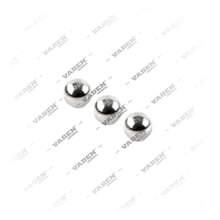
| Bearing type | Needle or ball type, selected per original design |
| Sealing element | Matching cap/seal must be sourced if fitted originally |
Maintenance and service life
Service life of the caliper adjuster shaft bearing largely depends on grease quality, sealing against dust/water ingress, and braking usage intensity. During periodic maintenance, shaft rotational resistance should be checked alongside the caliper adjustment mechanism, and grease renewed when needed. On vehicles with frequent city braking, inspection intervals should be shortened. Keeping the caps/boots that prevent water and road salt from entering the caliper housing intact directly extends bearing life.
VADEN Caliper Adjuster Shaft Bearing
Vaden supplies caliper adjuster shaft bearings for multiple caliper families, built to OE tolerances across a wide OEM cross-reference range. For correct performance, select by caliper model and OE part number rather than brand.
Frequently Asked Questions (FAQ)
Does a failed caliper adjuster shaft bearing affect brake safety?
Yes. Bearing wear prevents the shaft from rotating properly, causing uneven pad-to-disc clearance and increased braking distance. Have it inspected promptly once symptoms appear.
Is it enough to replace only the bearing?
Usually yes, but if the shaft surface also shows wear or pitting, the shaft should be assessed together with it — replacing only the bearing may not be a permanent fix.
At what mileage should it be checked?
There is no fixed mileage; include the caliper mechanism in general checks during periodic brake maintenance, and shorten the interval for high-usage vehicles.
Can general-purpose grease be used?
No. A dedicated caliper grease rated for high temperature and pressure must be used; an unsuitable grease leads to premature wear and failure.
Is noise from this area always caused by the bearing?
No, similar noises can also come from pad wear or loose fasteners; the caliper should be removed and inspected for a definitive diagnosis.