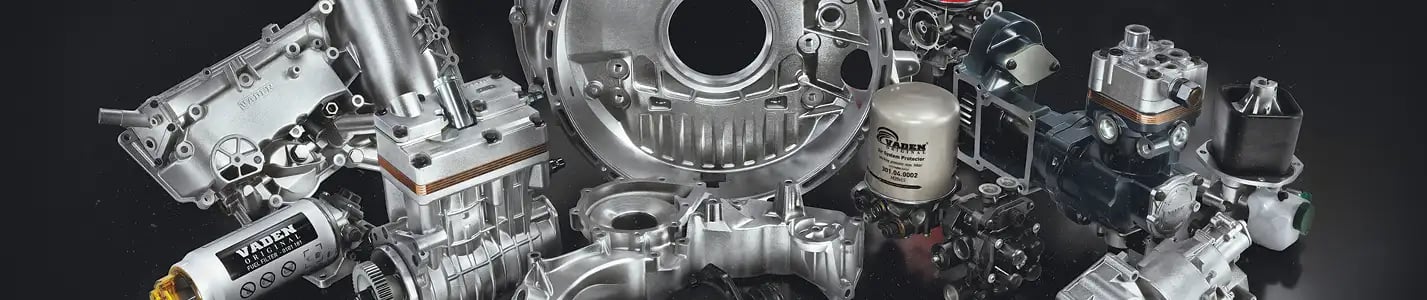
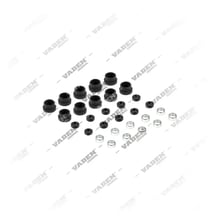
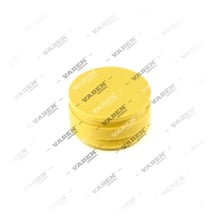
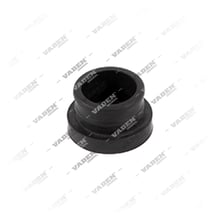
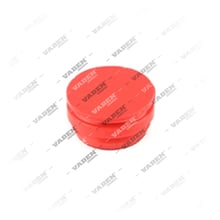
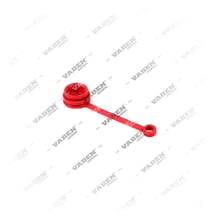
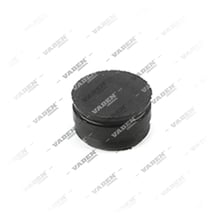
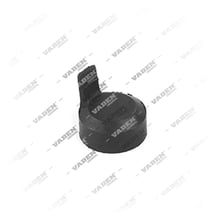
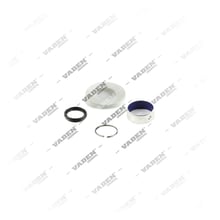
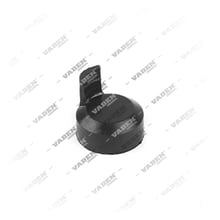
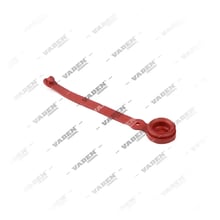
What Is a Caliper Rubber Plug?
The caliper rubber plug is a small but functional rubber sealing component that closes the guide pin bores, bleeder (bleed) nipple openings, and adjustment/service holes on the brake caliper housing. On heavy commercial vehicles - trucks, tractor units, buses, and trailers - the disc brake caliper carries these plugs alongside rubber boots and sleeves; in the field they are also called "caliper boot plug," "bleeder nipple cap," or "pin bore plug." Though it looks minor, the plug shields the caliper's internal metal surfaces from moisture, dust, road salt, and chemicals, so exposed bores do not quickly corrode at the guide pins and nipples. In the VADEN ORIGINAL catalog, it sits within the caliper rubber group as an independent spare part that completes caliper overhaul kits.
How Does a Caliper Rubber Plug Work?
The caliper rubber plug seats into the bore or nipple opening on the caliper housing by press-fit or by threading on, and its flexible rubber body makes full contact to form a closed barrier. During operation the caliper is constantly exposed to vibration, temperature swings, and road grime; the plug holds its position and keeps moisture and dirt out of the guide pin channel or bleeder nipple. The plug on the bleeder nipple matters most: the hydraulic circuit must stay sealed outside of bleeding, and the nipple tip must stay clean, or contaminated particles can enter the brake line during bleeding. Guide pin plugs protect the pin's sliding surface; if that surface rusts or gets dirty, the caliper moves unevenly and the pads wear unevenly as a result.
- Moisture and Dust Barrier: Isolates bore and nipple openings from the outside environment to protect metal surfaces.
- Corrosion Prevention: Slows down rust formation on guide pin and nipple surfaces.
- Bleeding Circuit Protection: Keeps the nipple tip sealed against contamination, helping the hydraulic circuit stay clean.
- Supports Caliper Sliding: Keeps the pin channel clean, contributing to balanced caliper movement.
- Vibration-Resistant Seating: Maintains its seal under road vibration without working loose.
Caliper Rubber Plug Technical Specifications
Caliper rubber plugs are generally made from EPDM or nitrile-based rubber compounds that resist high temperature swings, ozone exposure, and residual oil and grease. Size and geometry vary by caliper manufacturer and model, so plug selection should follow the caliper type code, the guide pin diameter, or the bleeder nipple size. Too soft a hardness value (Shore A) and the plug deforms quickly; too hard and sealing performance drops - a hardness range in line with OE specification should be preferred. For exact dimensions, tolerances, and material hardness, treat the vehicle or caliper manufacturer's current service manual as the authoritative source.
Caliper Rubber Plug Selection and Compatibility Criteria| Criterion | Description |
|---|
| Material | EPDM or nitrile-based rubber, resistant to oil and ozone |
| Application Point | Guide pin bore, bleeder nipple opening, adjustment/service hole |
| Temperature Resistance | Wide range suited to brake system operating temperatures |
| Mounting Type | Press-fit or cap type fitted over the nipple |
| Vehicle Compatibility | Mercedes-Benz, MAN, Scania, Volvo, DAF, Iveco, Renault Trucks applications |
| Quality Standard | VADEN ORIGINAL manufacturing to OEM dimensions |
Caliper Rubber Plug Types and Subgroups
- Bleeder Nipple Plug: A small rubber cap fitted over the tip of the bleed nipple to prevent dirt and moisture ingress.
- Guide Pin Bore Plug: Protects the pin channel in the caliper's sliding housing from outside contaminants.
- Adjustment and Service Hole Plug: Used to close the holes opened for pad inspection or adjustment work.
- Bleed Valve Cap: A separate rubber cap group supplied with the bleed valve on certain caliper types.
- Piston Back Protection Plug: Seals the auxiliary holes around the piston bore to keep dust out.
How to Choose the Right Caliper Rubber Plug?
Choosing the right caliper rubber plug starts with the caliper's brand, model, and type code, then confirming exactly where it will be used - the bleeder nipple, the guide pin, or the service hole. A plug that differs from the original dimension will not seal fully and works loose quickly, leaving the guide pin or nipple exposed to corrosion. On vehicles undergoing caliper overhaul, replacing the plugs together with the rubber boots and sleeves in one pass is more efficient, both in labor and in sealing service life. VADEN ORIGINAL supplies these plugs within its caliper rubber group at OE dimensions with broad vehicle compatibility.
Caliper Rubber Plug Maintenance and Key Points
- Carry Out Periodic Visual Checks: During brake service, confirm the plugs are in place, free of cracks, and not deformed.
- Refit the Plug After Bleeding: If the nipple tip is left exposed, dirt and moisture can reach the hydraulic circuit.
- Avoid Excessive Force During Fitting: Forcing the rubber plug in can tear it or push it into the channel.
- Avoid Chemical Cleaners: Aggressive solvents cause the rubber to harden and crack prematurely.
- Replace as a Complete Set During Overhaul: When the caliper is opened, renew all rubber plugs and boots together.
Common Faults and Solutions
- Rusting at the Guide Pin: A missing or cracked plug lets moisture in; replace the plug and clean and re-grease the pin.
- Leakage or Contamination at the Bleeder Nipple: The plug is lost or has come off; fit a new rubber plug in the correct size.
- Stiffness in the Caliper Sliding Housing: A contaminated pin channel increases friction; clean the channel and reseal it with a new plug.
- Uneven Pad Wear: Contamination in the pin bore prevents balanced caliper sliding; check the plug and pin set together.
- Plug Has Come Loose or Hardened: Extended use or the wrong size has caused the rubber to lose flexibility; replace it with an OE-sized plug.
Why VADEN ORIGINAL?
- Manufactured to OE Dimensions: Caliper rubber plugs are produced to match original geometry and hardness values.
- Broad OEM Cross-Referencing: Offers a wide reference range compatible with different caliper brands and models.
- Durable Rubber Compound: Long sealing service life through materials resistant to heat, ozone, and oil exposure.
- Exported to More Than 100 Countries: Quality-controlled production trusted in international markets.
Conclusion
Small as it is, the caliper rubber plug is a critical sealing component that protects the brake caliper's guide pins, bleeder nipple, and service holes against corrosion and contamination. Replacing it in time supports balanced caliper operation and overall brake system reliability. Manufactured to OE dimensions, the VADEN ORIGINAL caliper rubber plug offers a safe, long-lasting solution for heavy commercial vehicle fleets.
Frequently Asked Questions (FAQ)
What does a caliper rubber plug do?
The caliper rubber plug seals the guide pin bores, bleeder nipple openings, and service holes on the brake caliper against moisture, dust, and dirt. This slows corrosion on the metal surfaces and supports healthy caliper operation.
What happens if the caliper rubber plug is missing?
If the plug is missing or cracked, the exposed bore and nipple surfaces are left open to moisture and rust over time. Rust forming on the guide pin can prevent balanced caliper sliding, which may lead to uneven pad wear.
Why is the bleeder nipple plug important?
The bleeder nipple plug keeps the nipple tip sealed outside of the bleeding procedure, preventing dirt and moisture ingress. Without the plug fitted, contaminated particles can enter the brake hydraulic circuit during bleeding.
Which vehicles is the caliper rubber plug compatible with?
VADEN ORIGINAL caliper rubber plugs are compatible with the disc brake calipers on Mercedes-Benz, MAN, Scania, Volvo, DAF, Iveco, and Renault Trucks heavy commercial vehicles. The caliper type code should be confirmed to determine the correct size.
Should the plugs be replaced during caliper overhaul?
Yes, when the caliper is opened for overhaul, it is recommended to renew the rubber plugs together with the boots and sleeves as a complete set. The old plugs may have hardened or deformed and no longer provide a full seal.