What Is a Caliper Rubber Boot?
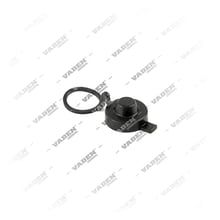
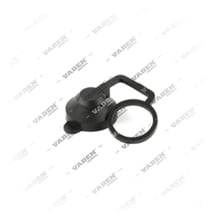
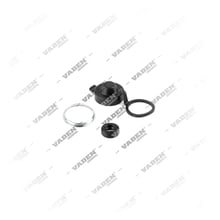
A caliper rubber boot is a flexible, elastomer-based protective component that shields moving parts such as the piston and guide pin inside a heavy-duty vehicle's disc brake caliper from external elements. In the field it is also called a "piston boot," "dust boot," or "piston seal cover." Positioned within the Caliper Rubber subgroup of the Brake Caliper family, this boot seals the gap between the caliper housing and the piston or guide pin, keeping dust, mud, salt water, and road grime away from sensitive metal surfaces. Unlike the metal-bodied, rigid "Caliper Mechanism Cover" (cat691) group, this component is fully rubber-based and built as a bellows that flexes and recovers with piston movement. In truck, tractor unit, bus, and trailer disc brake systems, without a caliper rubber boot the piston surface corrodes quickly and brake performance drops.
How Does a Caliper Rubber Boot Work?
One end of the caliper rubber boot seats into the recess machined into the caliper housing, while the other end grips the groove on the piston or guide pin, forming a flexible sealing barrier between the two moving surfaces. When the brake pedal is applied, the piston moves outward and the rubber bellows opens to accommodate that travel; when the pedal is released and the piston retracts, the boot returns to its original shape. Throughout this motion the boot acts as a watertight seal, protecting the chrome-plated piston surface from moisture and salt while preventing the grease in the guide pin bore from washing out. Once the boot loses its elasticity or tears, this protection disappears entirely.
Caliper Rubber Boot Technical Specifications
Caliper rubber boots are typically manufactured from EPDM- or NBR-based synthetic rubber, chosen for high temperature resistance, resistance to ozone and UV exposure, and chemical stability against brake fluid and grease residues. The operating temperature range generally spans -40°C to +150°C, though exact limits vary by manufacturer. The boot's inner and outer diameter must match the piston or guide pin dimensions to millimeter precision; an incorrect size compromises the seal and can restrict piston travel. The number of bellows folds and wall thickness are engineered to provide enough flex for the full piston stroke. The dimensions and torque values in the vehicle manufacturer's current service manual should always be the reference during installation.
Caliper Rubber Boot Types and Subgroups
- Piston Rubber Boot (Dust Boot): Wraps the outer surface of the caliper piston, moving with the stroke to protect the chrome surface from dirt and moisture.
- Guide Pin Rubber Boot: Covers the pins in the caliper's sliding mechanism, prevents grease loss, and keeps the pin moving freely.
- Caliper Housing Connection Boot: Seals the gap between the caliper housing and the carrier bracket, keeping road grime out of the internal mechanism.
- Piston Boot Sets in Different Diameters: Produced in inner diameters that vary by single-piston, twin-piston, or multi-piston caliper design.
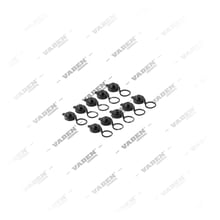
- Complete Rubber Boot Kits: Bundle the piston and pin boots needed for a full caliper overhaul.
How to Choose the Right Caliper Rubber Boot
Choosing the correct caliper rubber boot starts with correctly identifying the caliper brand, model, and piston diameter.
- Check the Caliper Label: Note the manufacturer code and piston diameter stamped on the housing.
- Use the Old Boot as a Reference: Compare the removed boot's inner and outer diameter against the new part.
- Confirm the Vehicle Application: Verify fitment with technical support using the vehicle make and model.
The table below summarizes the key criteria to consider during the selection process.
Caliper Rubber Boot Selection Criteria| Criterion | Description |
|---|
| Caliper Type | The number and size of boots required varies with single-piston, twin-piston, or multi-piston caliper design |
| Piston Diameter | The boot's inner diameter must match the piston's outer diameter to millimeter precision |
| Guide Pin Size | The pin boot must be matched to the pin's outer diameter and bore depth |
| Material Class | A temperature- and oil-resistant elastomer such as EPDM or NBR should be preferred |
| Vehicle Application | Varies by the Wabco or Knorr-Bremse caliper groups used on Mercedes-Benz, MAN, Scania, Volvo, DAF, Iveco, and Renault Trucks vehicles |
| Mounting Style | Bellows, single-fold, or multi-fold designs are determined by the piston stroke |
Caliper Rubber Boot Maintenance and Points to Watch
- Perform Periodic Visual Inspection: Check the boot for tears, cracks, or hardening whenever the brake pads are replaced.
- Clean the Seat Before Installation: Remove old grease and dirt from the caliper housing and piston so the boot seats fully.
- Use the Correct Grease: Apply only rubber-compatible, manufacturer-approved grease to guide pins; incompatible grease can cause the boot to swell.
- Fit the Boot Without Forcing It: Avoid sharp tools during installation — cutting or puncturing the boot destroys the seal instantly.
- Test Piston Movement: After installation, confirm that the piston and guide pin move freely.
Common Faults and Solutions
- Tears or Holes in the Boot: Caused by aging, stone impact, or incorrect installation; the boot must be replaced immediately as a complete unit.
- Rust and Corrosion on the Piston: Results from moisture entering through a torn boot; inspect the piston surface and, if necessary, replace it together with the boot.
- Caliper Seizing on the Guide Pins: Occurs when a damaged pin boot allows grease loss and dirt ingress; clean and lubricate the pins, then replace the boot.
- One-Sided Pull During Braking: Can result from restricted piston or pin movement on one caliper; check the integrity of the rubber boots.
- Abnormal Noise from the Brake System: Can result from a hardened or deformed boot obstructing piston movement; renew the boot set.
Why VADEN ORIGINAL?
- Manufactured to OE Dimensions: Caliper rubber boots are produced in molds matching original equipment dimensions and tolerances.
- Broad OEM Coverage: A product range compatible with Wabco and Knorr-Bremse caliper groups, covering applications for Mercedes-Benz, MAN, Scania, Volvo, DAF, Iveco, and Renault Trucks.
- Durable Elastomer Construction: Built with materials selected for high resistance to temperature, ozone, and oil, targeting a long service life.
- Exported to More Than 100 Countries: A product family tested across diverse climates and road conditions, used across a broad fleet base.
Conclusion
Despite its small size, the caliper rubber boot is a critical sealing component for the long-lasting, safe operation of a disc brake caliper. By protecting the piston and guide pins from moisture, dirt, and corrosion, it keeps the caliper moving correctly and supports the integrity of the brake system. Timely inspection and replacement prevent larger, costlier caliper failures. VADEN ORIGINAL caliper rubber boots, manufactured to OE dimensions, offer a reliable choice for heavy-duty commercial fleets.
Frequently Asked Questions (FAQ)
What does a caliper rubber boot do?
A caliper rubber boot is a flexible sealing component that protects the piston or guide pin inside a disc brake caliper from dust, water, and dirt. This protection prevents corrosion on the piston surface and keeps the caliper's moving parts operating smoothly.
What is the difference between a caliper rubber boot and a caliper mechanism cover?
A caliper rubber boot is a flexible elastomer bellows-type seal that moves along with the piston or pin. A caliper mechanism cover, by contrast, is made of metal or rigid material and is used to close off a different section of the caliper mechanism; the two are treated as separate categories.
When should a caliper rubber boot be replaced?
The boot should be replaced without delay whenever a visual inspection reveals tearing, cracking, or hardening, or when rust marks appear on the piston. Brake pad replacements are a good opportunity to check the boot's condition.
Does a torn caliper rubber boot affect brake performance?
Yes, moisture and dirt entering through a torn boot cause corrosion on the piston surface, which can prevent the piston from moving smoothly. This can result in one-sided pull, uneven pad wear, or reduced brake response.
Which vehicles are VADEN ORIGINAL caliper rubber boots compatible with?
VADEN ORIGINAL caliper rubber boots are manufactured to dimensions matching the Wabco and Knorr-Bremse caliper groups used on heavy-duty commercial vehicles such as Mercedes-Benz, MAN, Scania, Volvo, DAF, Iveco, and Renault Trucks. To confirm exact fitment, it is recommended to consult technical support with the caliper model information.