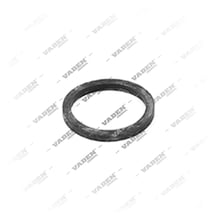
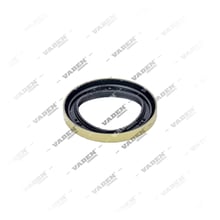
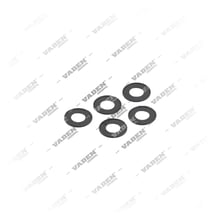
What Is a Caliper Mechanism Seal?
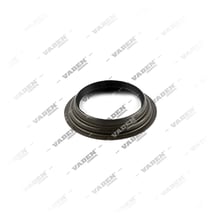
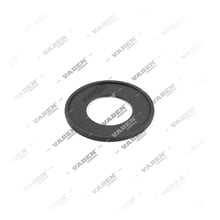
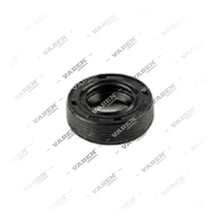
The Caliper Mechanism Seal is the sealing element inside a heavy commercial vehicle's disc brake caliper that protects the adjuster mechanism (automatic clearance adjuster) from outside contamination. This seal closes the gap between the caliper housing and the adjuster shaft, keeping dust, mud, water and road salt out of the mechanism. In the field it is sometimes called the "mechanism gasket" or "adjuster shaft seal." Positioned in the Brake Caliper > Caliper Mechanism chain, this component is critical to the service life of the mechanism that balances pad wear and automatically adjusts the pad-to-disc clearance. Without the Caliper Mechanism Seal, the adjuster gears corrode within a short time, leading to inconsistent brake performance.
How Does a Caliper Mechanism Seal Work?
The Caliper Mechanism Seal is fitted around the rotating shaft of the adjuster mechanism and seats into a groove in the caliper housing, forming a dynamic sealing barrier. Every time the brake is applied, the adjuster shaft rotates through a small angle; the seal maintains contact throughout this movement, keeping the connection between the mechanism and the outside environment continuously closed. This keeps the lubricating grease inside the mechanism from escaping and prevents road dirt and moisture from getting in. As long as the mechanism turns freely, the automatic clearance adjustment works correctly, and the distance between pad and disc is kept precise on every brake cycle. The seal's rubber body is engineered to combine flexibility with sealing performance; once hardening or cracking begins, this balance is lost and the mechanism is left unprotected.
Caliper Mechanism Seal Technical Specifications
The Caliper Mechanism Seal is typically manufactured from NBR (nitrile rubber) or high-temperature EPDM/silicone-based elastomers; these materials resist the temperature swings, brake dust and road salt found in the brake area. Dimensions vary with the caliper model and adjuster shaft diameter; inner diameter, outer diameter and seal width are produced to millimeter precision matching the caliper's OE specification. Installation depth and lip angle are optimized to minimize friction during the mechanism's rotating motion while still maintaining sealing performance. Compatibility criteria include the caliper manufacturer (Wabco- and Knorr-Bremse-type designs), caliper model and adjuster shaft diameter; verification against the type plate on the caliper is recommended before ordering. Temperature resistance generally spans roughly -40°C to +150°C; the vehicle's current service documentation should be used as the definitive reference for exact tolerances.
Caliper Mechanism Seal Types and Subgroups
- Shaft Seal (Adjuster Shaft Seal): The main, most frequently replaced sealing element surrounding the mechanism's rotating adjuster shaft.
- Bellows-Type Seal (Dust Boot): A flexible, accordion-shaped type that follows the axial movement of the adjuster shaft.
- O-Ring Type Seal: A simple ring form used at static connection points between the mechanism cover and the caliper housing.
- Combined Seal Kit: A full repair kit that brings together the shaft seal, cover gasket and, where needed, small O-rings.
- High-Temperature Version: A specially formulated variant for vehicles exposed to high brake heat, such as heavy urban or mountain-route duty.
How to Choose the Right Caliper Mechanism Seal
Choosing the right Caliper Mechanism Seal starts with correctly identifying the caliper's make and model; calipers that look identical can have different shaft diameters and seal seating grooves.
- Read the Caliper Type Plate: Confirm the model information from the type plate on the caliper before ordering.
- Measure the Shaft Diameter: Use the inner diameter of the removed old seal as a reference to confirm the size of the new seal.
- Match the OE Part Number: Where possible, cross-check the old part number against the new product.
The table below summarizes the main criteria to consider during selection.
Caliper Mechanism Seal Selection Criteria| Criterion | Check Point |
|---|
| Caliper Manufacturer | Compatibility with Wabco- and Knorr-Bremse-type caliper designs |
| Adjuster Shaft Diameter | Exact match between seal inner diameter and shaft size |
| Material Type | Choice of NBR or high-temperature-resistant elastomer |
| Mounting Position | Whether it is a shaft seal, cover gasket or O-ring |
| Vehicle Usage Profile | Urban, long-haul or mountainous-terrain operation |
| OE Reference Number | Confirmed against the type plate on the caliper |
Caliper Mechanism Seal Maintenance and Key Points
- Check at Every Pad Change: Visually inspect the seal for cracking, hardening or deformation at every pad replacement.
- Use the Correct Grease: Use a compatible, high-temperature brake grease; the wrong grease can swell the seal and cause premature deformation.
- Verify Lip Orientation: If the sealing lip is fitted facing the wrong direction, leakage begins within a short time.
- Test Mechanism Freedom: After replacement, check that the adjuster shaft turns freely by hand.
- Avoid High-Pressure Washing: Spraying high-pressure water directly at the caliper area can shorten the life of even a sound seal.
Common Failures and Their Solutions
- Brake Noise and Vibration: The seal may have lost its sealing ability, letting dirt into the mechanism and wearing the gears; the mechanism should be cleaned and the seal kit replaced.
- Uneven Pad Wear: Moisture leaking past the seal may have corroded the mechanism; replacing the seal, and the mechanism if necessary, is recommended.
- Stiffness in the Adjuster Shaft: Grease may have been lost through a dried-out seal; clean the shaft, re-grease it and renew the seal.
- Visible Grease Leakage: There may be a tear in the seal lip or damage to the seating groove; the seal kit should be replaced completely.
- Delayed Feel at the Brake Pedal: The automatic adjuster may be responding late; the seal and mechanism should be checked together.
Why VADEN ORIGINAL?
- OE Dimensions and Material Quality: VADEN ORIGINAL Caliper Mechanism Seal products are manufactured to match the original mechanism tolerances exactly.
- Broad OEM Cross-Reference: Correct matching is straightforward for vehicles such as Mercedes-Benz, MAN, Scania, Volvo, DAF and Iveco that use Wabco- and Knorr-Bremse-type caliper designs.
- Tested Sealing Performance: Parts are supplied after passing sealing and temperature-resistance testing during production.
- Global Quality Standard: Part of a product range VADEN exports to more than 100 countries.
- Lower Total Cost: A seal of genuine-equivalent quality prevents the larger repair costs that a full mechanism replacement would otherwise require.
Conclusion
Despite its small size, the Caliper Mechanism Seal protects the disc brake caliper's automatic adjuster mechanism from outside contamination and directly affects the long-term reliability of the brake system. Regular inspection at pad changes, and prompt renewal at the first sign of wear, preserves both the life of the mechanism and the consistency of brake performance. A seal kit of VADEN ORIGINAL quality is a simple but effective way to keep planned maintenance costs predictable across heavy commercial vehicle fleets.
Frequently Asked Questions (FAQ)
What does a Caliper Mechanism Seal do?
The Caliper Mechanism Seal protects the rotating shaft of the automatic clearance adjuster mechanism in a disc brake caliper from dust, water and dirt. Once the seal loses its sealing ability, moisture and dirt entering the mechanism cause corrosion, which can lead to uneven adjustment of the pad-to-disc clearance.
When should the Caliper Mechanism Seal be replaced?
As a general rule, the mechanism seal should be visually inspected at every pad change and renewed immediately if cracking, hardening or grease leakage is observed. For the exact replacement interval, refer to the vehicle's current service manual.
What happens if the seal is not replaced in time?
A seal that has lost its sealing ability lets dirt and moisture into the mechanism. This can corrode the mechanism gears, stiffen the shaft, and ultimately disrupt automatic clearance adjustment, causing uneven pad wear.
Which vehicles is the Caliper Mechanism Seal compatible with?
VADEN ORIGINAL Caliper Mechanism Seal products are compatible with calipers used on heavy commercial vehicles such as Mercedes-Benz, MAN, Scania, Volvo, DAF and Iveco that feature Wabco- and Knorr-Bremse-type caliper designs. For exact compatibility, verify the OE part number on the caliper.
What material should be used when replacing the seal?
When re-greasing the mechanism, use a high-temperature brake grease compatible with the seal material. Unsuitable grease types can cause the seal to swell or harden prematurely, compromising the seal within a short time.