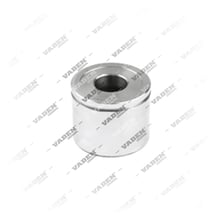
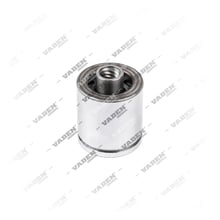
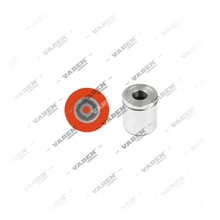
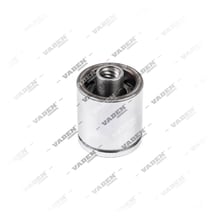
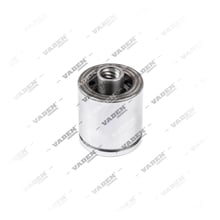
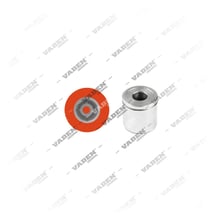
What Is a Caliper Piston?
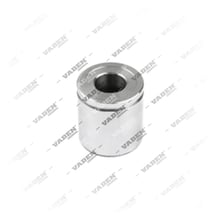
A Caliper Piston is the moving compression element inside the air-brake disc calipers of heavy commercial vehicles that presses the brake pad against the rotor. Sitting inside the caliper housing at the heart of the caliper mechanism, it transmits the force generated when the brake pedal or brake valve is applied directly onto the back of the pad. In the field it is sometimes simply called a "caliper piston" or "brake piston." Truck, tractor unit, bus and trailer disc brake systems commonly use dual or multi-piston layouts, with one or more pistons fitted per wheel. When the Caliper Piston wears or seizes, braking force is distributed unevenly and stopping distance can lengthen — which is why this part plays a direct role in the vehicle's overall braking safety.
How Does a Caliper Piston Work?
When the brakes are applied, the adjuster spindle or pneumatic actuator inside the caliper mechanism transmits motion to the piston, which then moves forward along its axis to press the pad against the rotor surface. The mechanism works together with the slack adjuster, automatically resetting the piston's position as the pad wears so that running clearance stays constant. When the brake is released, the elasticity of the seals and the retraction mechanism pull the piston back slightly, lifting the pad off the rotor and breaking contact. How smoothly the piston slides at every stage of this cycle determines the overall performance of the caliper mechanism.
- Force Transmission: Converts the motion from the adjuster spindle or pneumatic actuator into linear clamping force.
- Automatic Clearance Adjustment: Works together with the slack adjuster, resetting the piston's position as the pad wears.
- Sealing and Protection: The O-ring and dust boot keep the piston sealed against dirt, moisture and road salt while maintaining air-tightness.
- Retraction: Pulls the pad slightly away from the rotor when the brake is released, preventing unnecessary drag.
Caliper Piston Technical Specifications
A Caliper Piston is typically manufactured from hardened steel or a corrosion-resistant coated body; its surface is precision-ground and coated to extend seal life and reduce friction. Piston diameter and stroke length vary by caliper model and axle load, so correct selection means verifying the caliper manufacturer, model code and piston diameter together. Because exact torque and fitting tolerances differ from vehicle to vehicle, installation should always follow the vehicle's or caliper manufacturer's current service manual. O-ring and dust boot sets are made from special rubber compounds resistant to heat and brake fluid, engineered to resist hardening at high brake operating temperatures.
Caliper Piston Types and Subgroups
- Single-Piston Assembly: In light- and medium-duty calipers, a single piston transmits the entire clamping force to the pad.
- Dual/Multi-Piston Assembly: In heavy-duty calipers, two or more pistons distribute the clamping force more evenly across the pad surface.
- Piston O-Ring and Seal Kit: The seal set that keeps the interface between piston and caliper housing air- and moisture-tight.
- Dust Boot (Piston Body): The ribbed rubber component protecting the piston's exposed face from dirt, dust and road salt.
- Adjuster Collar and Bearing Set: Supporting components that keep the piston correctly positioned relative to the slack adjuster.
- Piston Repair Kit: A complete overhaul set combining the piston, seals, boot and fasteners in one package.
How to Choose the Right Caliper Piston
Choosing the right Caliper Piston means verifying the caliper brand, model code, piston diameter, stroke length and piston count (single/dual) all together. Cross-checking OE numbers from caliper manufacturers such as Wabco, Knorr-Bremse and Bendix against VADEN ORIGINAL part codes confirms application compatibility. The table below summarizes the key criteria to weigh when selecting.
Caliper Piston Selection Criteria| Criterion | Why It Matters |
|---|
| Caliper Brand/Model Code | Piston diameter and housing bore vary by caliper model; a mismatched piston ruins the seal |
| Piston Diameter and Stroke | An incorrect measurement disrupts pad contact and the distribution of braking force |
| Piston Count (Single/Multi) | Choosing a layout that doesn't match axle load causes brake imbalance and premature wear |
| Seal and Boot Material | Heat-resistant rubber preserves both sealing performance and piston service life |
| OE/OEM Reference Number | Cross-referencing guarantees correct application and fitting tolerance |
Caliper Piston Maintenance and Points to Watch
- Inspect the Surface Before Installation: Replace the piston if its surface shows scoring, rust or pitting; a damaged surface wears out the seal quickly.
- Use the Correct Seal and Boot: When repairing a piston, use an O-ring and dust boot set in the original size — rubber of a different hardness leads to leaks.
- Check the Guide Pins: Seized guide pins load the piston at an angle, causing uneven wear.
- Keep the Brake Fluid Clean: Contaminated brake fluid corrodes the piston surface, so regular fluid changes matter.
- Follow the Correct Installation Torque: Tighten fasteners to the torque value specified by the manufacturer; check the vehicle's current service manual for the exact figure.
Common Faults and Solutions
- Brake Pulling to One Side: A piston on one side has seized or stuck; remove it, clean the surface and renew the seal and piston set if needed.
- Uneven Pad Wear: In a multi-piston layout, one piston is moving late or early; check the piston and adjuster mechanism and replace the worn set.
- Continuous Scraping Noise from the Rotor: The piston isn't retracting; inspect the dust boot and O-ring, and renew the seized piston.
- Pressure Loss in the Brake Line: The piston seal may be leaking; replace the seal kit.
- Brake Fluid Leaking Around the Piston: A worn or hardened seal is causing the leak; carry out a complete overhaul with a piston repair kit.
Why VADEN ORIGINAL?
VADEN ORIGINAL Caliper Piston parts are manufactured with a precision-machined body to OE dimensions and heat-resistant sealing material.
- Manufactured to OE Dimensions: Piston diameter, stroke and surface tolerances match original specifications exactly.
- Broad OEM Coverage: Offers a comprehensive range compatible with Wabco, Knorr-Bremse and Bendix caliper mechanisms.
- Wide Vehicle Compatibility: Fits calipers on Mercedes-Benz, MAN, Scania, Volvo, DAF, Iveco and Renault Trucks.
- Tested Quality: Every piston passes quality control aimed at reliable operating tolerance and long service life.
- Trusted Worldwide: VADEN ORIGINAL parts are exported to more than 100 countries and are the choice of fleet operators around the world.
Conclusion
The Caliper Piston is an indispensable component for vehicle braking safety, ensuring the brake caliper presses the pad against the rotor evenly and consistently. Correct selection, regular maintenance and the use of original-size seals keep braking performance reliable over the long term. With VADEN ORIGINAL quality Caliper Pistons and repair kits, you can achieve dependable, long-lasting braking performance across your heavy commercial vehicle fleet.
Frequently Asked Questions (FAQ)
What does a Caliper Piston do?
The Caliper Piston transmits the force generated when the brakes are applied to the pad, pressing it against the rotor surface. This action slows or stops the vehicle; smooth piston operation is essential for an even distribution of braking force.
What happens when a Caliper Piston seizes?
When the piston seizes, the pad can either stay in constant contact with the rotor or fail to make contact at all, leading to brake pulling, uneven pad wear and a continuous scraping noise. A seized piston should be inspected promptly and replaced if necessary.
Which vehicles use a Caliper Piston?
The Caliper Piston is used in heavy trucks, tractor units, buses and trailers equipped with disc brake systems. It is commonly found in Wabco- or Knorr-Bremse-equipped caliper models from manufacturers such as Mercedes-Benz, MAN, Scania, Volvo, DAF, Iveco and Renault Trucks.
How often should a Caliper Piston be inspected?
The piston and its surrounding seals and boot should be checked during routine brake maintenance, especially at pad changes. If leaks, seizing or surface damage are found, prompt action is recommended rather than waiting.
Are VADEN ORIGINAL Caliper Pistons OE-compatible?
Yes, VADEN ORIGINAL pistons are manufactured to OE dimensions and offer broad OEM coverage with caliper mechanisms such as Wabco, Knorr-Bremse and Bendix. Verifying the caliper brand and model code before ordering is recommended.